

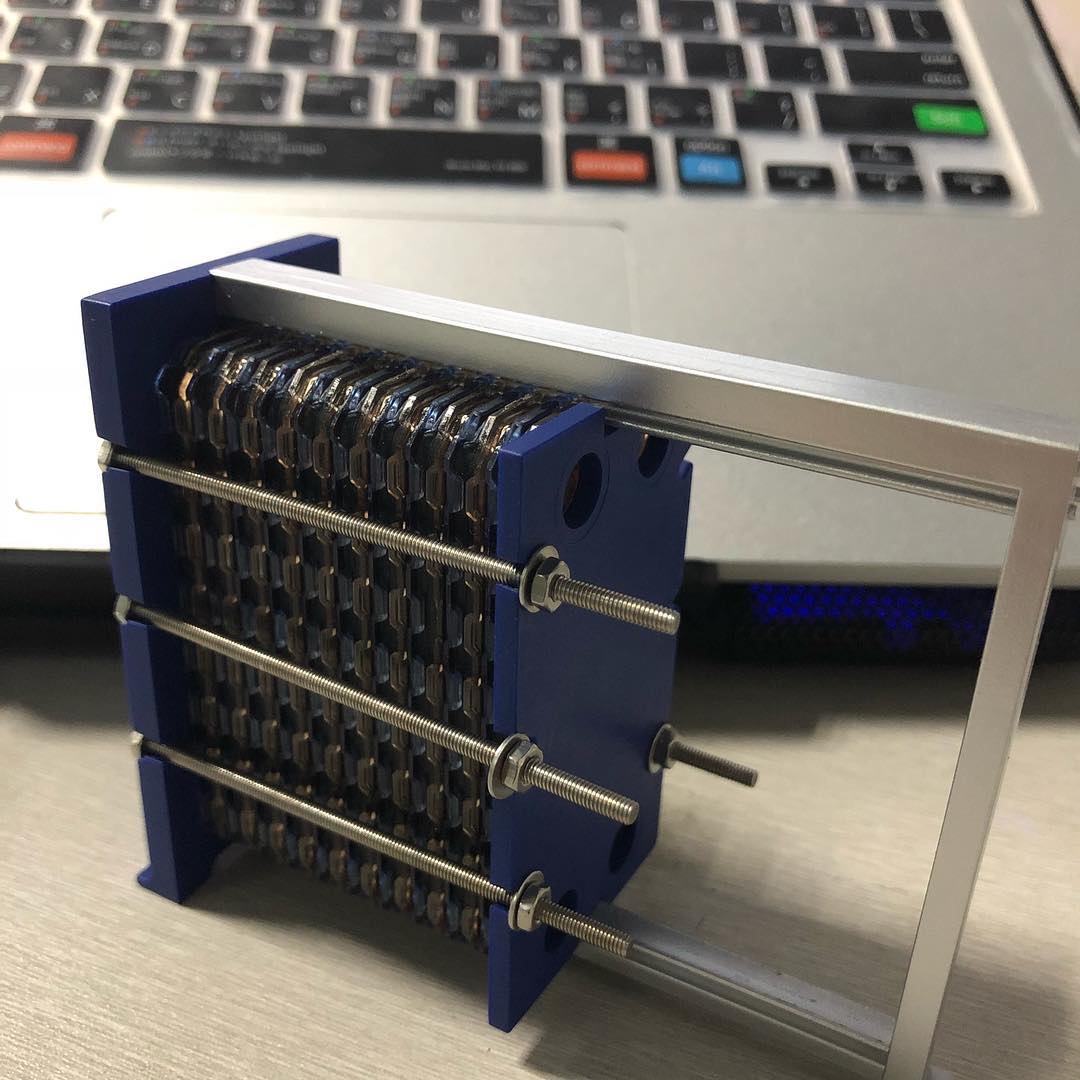
NBR gasket vs EDPM gasket in Plate heat exchanger
Choosing between NBR (Nitrile Butadiene Rubber) and EPDM (Ethylene Propylene Diene Monomer) is one of the most common decisions, and getting it wrong leads to rapid gasket failure.
The choice is almost entirely determined by the chemical compatibility with the fluids and the operating temperature.
Head-to-Head Comparison Table
| Feature | NBR (Nitrile) Gasket | EPDM (Ethylene Propylene) Gasket |
| Key Strength | Excellent resistance to OILS, FUELS, and PETROLEUM-BASED FLUIDS. | Excellent resistance to HOT WATER, STEAM, and WEATHER. |
| Chemical Resistance | Good for: Oils, fats, greases, aliphatic hydrocarbons, water, alcohols. Poor for: Ozone, ketones, esters, acetic acid, strong acids/alkalis, chlorinated & aromatic hydrocarbons. | Good for: Hot water, steam, alkalis (caustic), mild acids, detergents, ozone, weathering. Poor for: Oils, greases, gasoline, kerosene, aliphatic & aromatic hydrocarbons. |
| Maximum Temperature | ~100°C to 110°C (212°F to 230°F) | ~150°C to 170°C (302°F to 338°F) |
| Common Applications | • Hydraulic oil coolers • Lube oil coolers • Engine jacket water coolers (with glycol) • Some food processing with fats | • HVAC systems (hot water, chilled water) • District heating • Cooling tower water • Geothermal systems • Low-pressure steam • Chemical processes with caustics |
| Key Weakness | Swells and degrades in contact with oils it’s not designed for (e.g., vegetable oil can be an issue). Degrades in ozone/sunlight. | Destroyed by oils and fuels. Even a small amount of oil contamination can cause severe swelling and failure. |
Detailed Analysis
NBR (Nitrile) Gasket: The “Oil-Resistant” Choice
NBR is a copolymer of acrylonitrile and butadiene. The key to its properties is the acrylonitrile content: higher content means better oil and fuel resistance.
- When to Choose NBR:
- Your fluid is an oil, fuel, or hydrocarbon. This is the primary reason to choose NBR. If you are cooling hydraulic oil, lube oil, or diesel, NBR is almost always the correct choice.
- Your fluid is water-based but contains traces of oil.
- For many standard industrial water/glycol mixtures, especially at lower temperatures.
- When to Avoid NBR:
- For systems using steam or very high-temperature water (consistently above 110°C).
- With ketones, esters, or strong acids.
- In outdoor applications where it will be exposed to ozone and sunlight without protection.
EPDM (Ethylene Propylene) Gasket: The “Hot Water & Weather” Choice
EPDM is a terpolymer of ethylene, propylene, and a diene. This structure gives it excellent resistance to heat, oxidation, and weathering.
- When to Choose EPDM:
- Your fluid is hot water or low-pressure steam. This is its home turf. EPDM is the standard for HVAC heating systems and district heating.
- Your fluid is a alkali (caustic) or mild acid.
- For cooling tower water, which often contains chlorines and other oxidizing biocides that EPDM resists well.
- In outdoor installations where the gasketed edges of the PHE will be exposed to ozone and weathering.
- When to Avoid EPDM:
- ABSOLUTELY AVOID if there is any possibility of contact with oil, grease, or fuel. This is the most common mistake. EPDM will absorb oil, swell dramatically, and become soft and useless, leading to immediate leakage.
- With concentrated acids or solvents.
The “Water” Confusion and How to Decide
This is where most confusion arises, as both can be used with water. Here’s how to break it down:
| If your water-based system involves… | Choose… |
| Hydraulic Oil, Lube Oil, or Diesel | NBR |
| Temperatures consistently above 110°C (230°F) | EPDM |
| Cooling Tower Water (with chlorine) | EPDM |
| Caustic (Alkali) Chemicals | EPDM |
| Glycol-Water Mixtures (Standard HVAC Chilled Water) | Either (NBR is common, EPDM also works) |
| Standard Hot Water Heating (below 110°C) | EPDM (Industry standard) |
| An outdoor environment (exposed to ozone) | EPDM |
Summary: The Final Choice
- Think OIL? → Choose NBR.
Think HOT WATER, STEAM, or WEATHER? → Choose EPDM.