

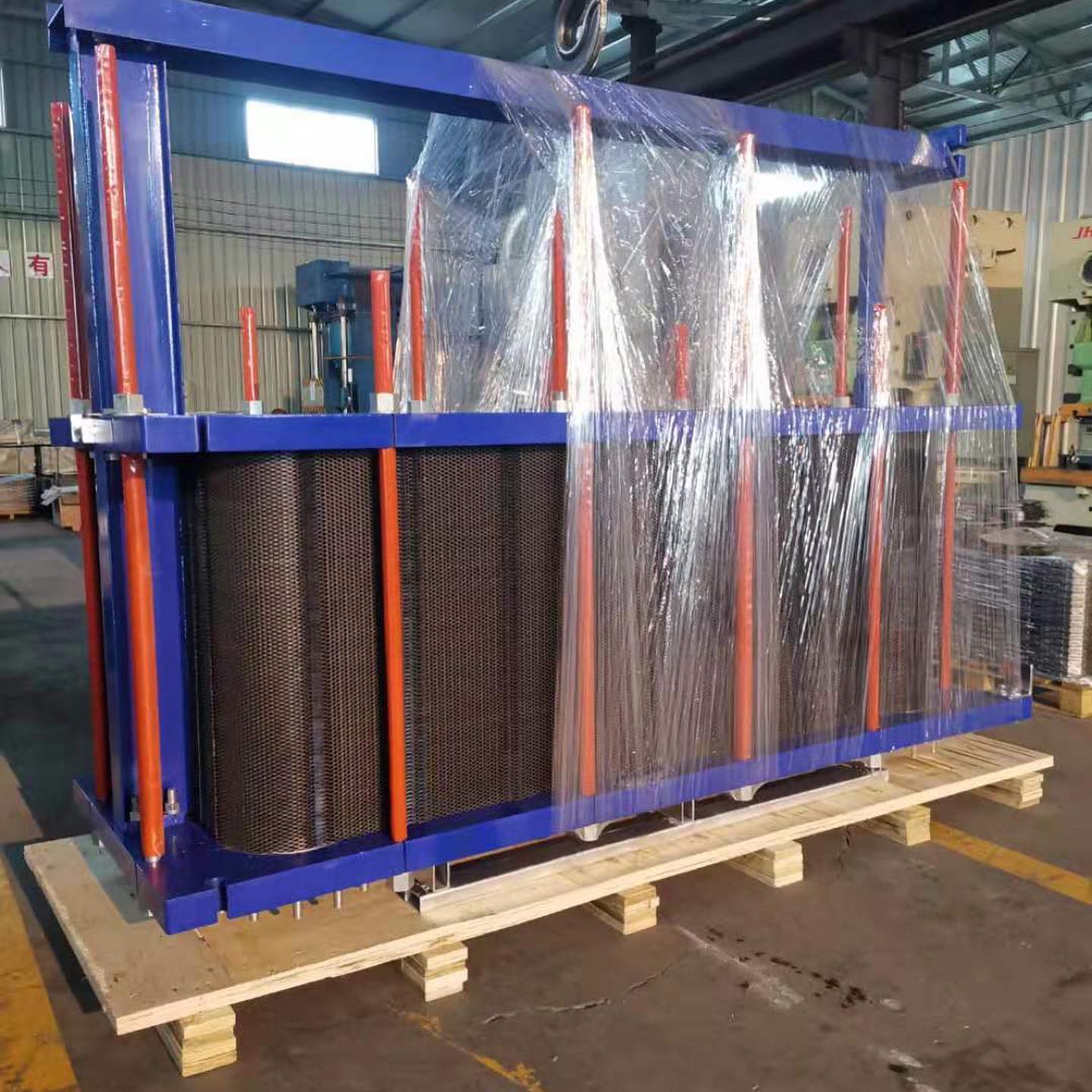
Role of Brazed plate heat exchanger in Chiller?
The Brazed Plate Heat Exchanger (BPHE) plays a critical role in modern, efficient chillers, often serving as the core component where the actual heat transfer occurs.
In a chiller, its primary role is to facilitate the phase change of the refrigerant, either by absorbing heat to evaporate it or by rejecting heat to condense it.
There are two main roles a BPHE can play in a chiller:
- As the Evaporator
- As the Condenser
Many modern, compact chillers use two BPHEs—one for each function.
1. Role as the Evaporator
In this role, the BPHE is where the chilling effect is actually produced.
- Function: To absorb heat from the chilled water system, causing the liquid refrigerant to boil and turn into a cold, low-pressure vapor.
- Process:
- Cold, liquid refrigerant enters the BPHE.
- Warm water returning from the building’s cooling system (e.g., from fan coils or air handling units) is pumped through the alternate channels of the BPHE.
- Heat flows from the warm water, through the thin metal plates, and into the cold refrigerant.
- This heat transfer causes the refrigerant to evaporate (boil), changing from a liquid to a gas.
- In doing so, the water on the other side is significantly cooled (e.g., from 12°C down to 7°C) and is sent back to the building to provide air conditioning.
- The now cool, gaseous refrigerant exits the evaporator and travels to the compressor.
Visual Summary (Evaporator):
Chilled Water (IN: Warm) –> | BPHE | –> Chilled Water (OUT: Cold)
Refrigerant (IN: Liquid) –> | BPHE | –> Refrigerant (OUT: Vapor)
Heat flows from Water to Refrigerant
2. Role as the Condenser
In this role, the BPHE is where the heat collected from the building (plus the heat of compression) is rejected.
- Function: To reject heat from the refrigerant to a cooling medium, causing the hot, high-pressure refrigerant vapor to condense back into a liquid.
- Process:
- Hot, high-pressure refrigerant vapor from the compressor enters the BPHE.
- Cooler water from a cooling tower or a dry cooler is pumped through the alternate channels.
- Heat flows from the hot refrigerant, through the plates, and into the cooler water.
- This heat transfer causes the refrigerant to condense, changing from a gas back to a liquid.
- The cooling water is warmed up (e.g., from 30°C to 35°C) and is sent to the cooling tower to reject its heat to the atmosphere.
- The now warm, high-pressure liquid refrigerant exits the condenser and moves to the expansion valve.
Visual Summary (Condenser):
Cooling Water (IN: Cool) –> | BPHE | –> Cooling Water (OUT: Warm)
Refrigerant (IN: Vapor) –> | BPHE | –> Refrigerant (OUT: Liquid)
Heat flows from Refrigerant to Water
Why are BPHEs Ideal for Chillers?
The characteristics of the BPHE align perfectly with the demands of a modern chiller:
- High Efficiency: The corrugated plates create extreme turbulence, which leads to a very high heat transfer coefficient. This allows for:
- Close Temperature Approach: The refrigerant and water can approach each other’s temperatures more closely (e.g., within 1-2°C), which improves the chiller’s overall efficiency (COP).
- Effective Phase Change: The design is excellent for the boiling and condensing processes.
- Extremely Compact: BPHEs have a very high surface area density. A chiller with BPHEs can be significantly smaller and lighter than one using traditional shell-and-tube heat exchangers, saving valuable mechanical room space.
- Withstands High Pressure: The brazed construction can handle the high pressures of modern refrigerants (especially HFCs and HFOs) much better than gasketed plates, making them safer and more reliable.
- Cost-Effective for Manufacturing: For chiller OEMs (Original Equipment Manufacturers), BPHEs are a cost-effective, high-performance component that simplifies assembly and reduces the overall size and cost of the unit.
- Reduced Refrigerant Charge: The internal volume of a BPHE is very small compared to a shell-and-tube. This means the chiller requires less refrigerant, which is both an economic and an environmental benefit (especially with high-GWP or expensive refrigerants).
Schematic of a Chiller with Two BPHEs
A simple refrigerant cycle would look like this, with the BPHEs at the center:
Compressor → BPHE (Condenser) → Expansion Valve → BPHE (Evaporator) → back to Compressor
In summary, the role of the Brazed Plate Heat Exchanger in a chiller is to serve as the highly efficient, compact, and robust engine where the fundamental heating and cooling of the process fluid occurs, enabling the chiller to provide reliable cooling in a small footprint.