

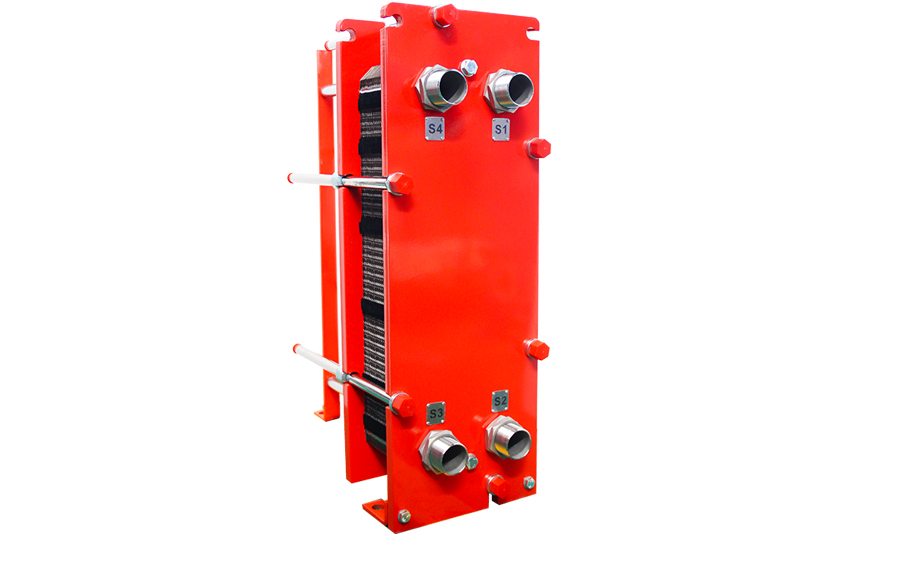
When to Choose Gasketed plate Heat Exchanger?
when to choose a Gasketed Plate Heat Exchanger (GPHE).
The decision to use a GPHE is primarily driven by the need for flexibility, easy maintenance, and cost-effective operation in less extreme service conditions.
The Primary Rule of Thumb
Choose a Gasketed Plate Heat Exchanger when your application involves non-aggressive fluids, requires regular cleaning or maintenance, or needs operational flexibility, and operates within moderate temperature and pressure limits.
It is the workhorse for standard industrial and commercial duties where serviceability is key. Specific Criteria for Selection
You should choose a Gasketed Plate Heat Exchanger in the following scenarios:
1. When the Fluids Require Frequent Cleaning or Inspection
- Why: This is the single biggest advantage. The unit can be easily opened by sliding back the pressure plate, providing full access to all plates for mechanical cleaning, inspection, or gasket replacement.
- Examples:
- Food & Beverage: Milk pasteurization, juice processing, and beer brewing. These processes require strict hygiene and frequent cleaning-in-place (CIP) or even disassembly for inspection.
- Fouling Services: Cooling tower water, river water, or process streams containing mild scaling or particulates that require periodic de-clogging.
- Slurries or Viscous Fluids: Fluids that can settle or polymerize and need physical cleaning.
2. When Process Conditions Change or for Future-Proofing
- Why: The heat transfer capacity can be easily modified by adding or removing plates within the existing frame. This provides incredible flexibility.
- Examples:
- A plant expansion that increases the heat load.
- Seasonal duty changes that require different heating or cooling capacities.
- When the process is still being optimized and future changes are anticipated.
3. When Working with Non-Aggressive, Standard Fluids
- Why: Gaskets are available in various elastomers (Nitrile, EPDM, Viton) to handle a wide range of standard industrial fluids, but they have limits.
- Examples:
- Heating and Cooling Water: In HVAC, district heating, and industrial cooling loops.
- Glycol Solutions: For freeze protection.
- Mild Oils: For lubrication or hydraulic system cooling.
- Sea Water: (With careful gasket and plate material selection).
4. When Moderate Pressure and Temperature are Sufficient
- Typical Limits: They are ideal for applications within these common ranges:
- Pressure: Up to ~25 bar (360 psi)
- Temperature: Up to ~180°C (355°F) (depending on the gasket material).
- Examples:
- Most commercial HVAC systems.
- Industrial process cooling and heating below these thresholds.
5. When Low Initial Cost and Easy Maintenance are Priorities
- Why: While the initial unit cost might be higher than a brazed unit, the long-term maintenance is straightforward and often less expensive than replacing a sealed unit. Gasket kits are relatively inexpensive.
- Examples:
- Standard industrial applications where downtime for maintenance is planned and manageable.
- Facilities with in-house maintenance teams capable of performing the service.
Critical Considerations and Warnings
Before selecting a Gasketed Plate Heat Exchanger, ensure your application does NOT fall into these categories:
- Aggressive Fluids: Avoid if your fluids (acids, strong solvents, chlorides) will attack the gasket elastomer.
- Extreme Temperatures/Pressures: Do not use if your operating conditions exceed the limits of the gasket material or the plate pack compression.
- Toxic or Lethal Services: A gasket failure could lead to an external leak, which is unacceptable for highly hazardous fluids.
- Where Any Leakage is Unacceptable: Even a small, visible external leak from a gasket may be a problem in ultra-clean or critical environments.
Summary: Decision Checklist
Choose a Gasketed Plate Heat Exchanger if you answer “YES” to most of the following questions:
- Serviceability: Will the fluids require the unit to be opened for inspection or mechanical cleaning?
- Flexibility: Might the heat duty or process conditions change in the future, requiring a capacity adjustment?
- Fluid Compatibility: Are the fluids non-aggressive and compatible with standard elastomeric gaskets?
- Operating Limits: Are the temperature and pressure within standard gasketed PHE ranges (e.g., <25 bar, <180°C)?
- Safety: Are the fluids non-toxic and non-hazardous, making a potential external gasket leak a manageable maintenance issue rather than a safety crisis?
If you meet these criteria, a Gasketed Plate Heat Exchanger offers an unbeatable combination of efficiency, flexibility, and maintainable design. If your needs involve higher pressures/temperatures, hazardous fluids, or a sealed system, you would then look towards Brazed, Semi-Welded, or Fully Welded models.