

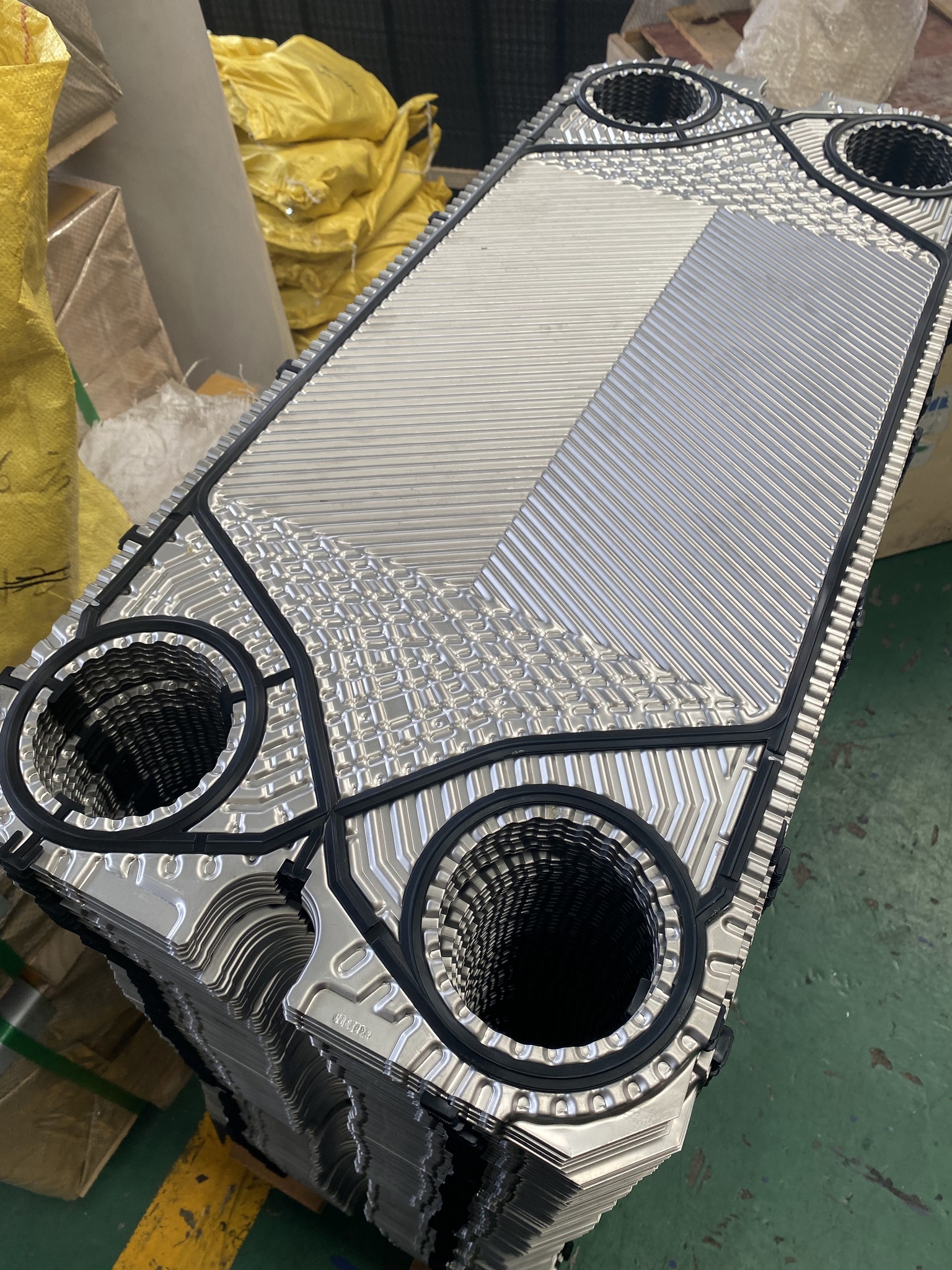
When Choose Semi Welded plate heat exchanger?
Choosing a Semi-Welded Plate Heat Exchanger is a strategic decision for specific scenarios where you need a balance of robustness and serviceability.
Here is a clear, detailed guide on when to make this choice.
The Primary Rule of Thumb
Choose a Semi-Welded Plate Heat Exchanger when you have one difficult or sensitive fluid and one fluid that requires maintenance.
It is the ideal compromise, offering the containment security of a weld for one fluid and the serviceability of a gasket for the other.
Specific Criteria for Selection
You should choose a Semi-Welded Plate Heat Exchanger in the following scenarios:
1. To Safely Contain a Hazardous, Toxic, or Expensive Fluid
- Why: The hazardous fluid is completely enclosed within the laser-welded plate pairs, eliminating the risk of it leaking to the atmosphere.
- Examples:
- Ammonia (R717) refrigeration systems. This is the most classic application. Ammonia is toxic, and its containment is a top safety priority.
- Toxic chemicals in a process stream.
- Expensive media where any loss is unacceptable.
2. To Prevent Cross-Contamination of Fluids
- Why: The design provides a high-integrity barrier. If a leak occurs, it will be from the gasketed side to the outside, providing a visible warning. This prevents the two process fluids from mixing, which is critical for product quality or safety.
- Examples:
- In a pharmaceutical process where a buffer solution must not mix with a product stream.
- Potable water heating where boiler water must not contaminate drinking water.
3. When One Fluid is Corrosive or Aggressive
- Why: The corrosive fluid can be placed on the welded side, protecting it from contact with any gasket material. This allows you to use standard gasket materials (like EPDM or NBR) on the other, less demanding side.
- Examples:
- A chemical process where one side is a mild acid and the other is cooling water.
. When One Service is Prone to Fouling
- Why: This is a critical advantage. The side that is prone to scaling, sediment, or biological growth (like cooling tower water, river water, or certain process streams) should be placed on the gasketed side. This allows you to open the unit and mechanically clean those channels.
- Examples:
- An ammonia condenser cooled by cooling tower water. The ammonia is on the sealed welded side, and the fouling water is on the serviceable gasketed side.
- A process cooler where one stream contains particulates.
The decision matrix becomes very clear when you define your two fluids:
| Fluid A (Assign to WELDED Side) | Fluid B (Assign to GASKETED Side) | |
| Characteristics | • Hazardous or Toxic • Expensive • Corrosive • Requires high purity | • Prone to Fouling or Scaling • Requires periodic cleaning • Less critical, non-hazardous • Cleanable (e.g., water) |
| Examples | Ammonia, Refrigerants, Acids, Solvents, Process Chemicals | Cooling Water, River Water, Brine, Geothermal Fluid |
Critical Considerations Before Choosing
- You Must Know Your Fluids: The success of this design hinges on correctly assigning the fluids to the welded and gasketed sides. A mistake here defeats the purpose.
- Pressure/Temperature is High, But Not Extreme: Semi-welded units handle higher pressures and temperatures than fully gasketed units, but they are generally not as robust as fully welded models due to the remaining gasketed side.
- Maintenance is Simplified, Not Eliminated: You still have maintenance on one side—gasket inspection and replacement for the serviceable fluid channels.
- Cost: It is more expensive than a gasketed unit but often less expensive than a fully welded unit for similar materials.
Summary: Decision Checklist
Choose a Semi-Welded Plate Heat Exchanger if you answer “YES” to the following question:
Do I have one fluid that needs to be permanently contained (due to hazard, value, or corrosiveness) AND a second fluid that is prone to fouling and requires periodic cleaning?
If YES, then a Semi-Welded PHE is likely your best option.
Practical Real-World Example:
Application: A large industrial cold storage facility.
- Fluid A (Welded Side): Ammonia Refrigerant. It’s toxic and must be absolutely contained. Leakage is a major safety risk.
- Fluid B (Gasketed Side): Cooling Water. It comes from a cooling tower and is prone to scaling and biological fouling. It needs to be cleaned mechanically every year.
The semi-welded design perfectly matches this need: it safely contains the ammonia while allowing easy access to clean the scaling from the water channels.