

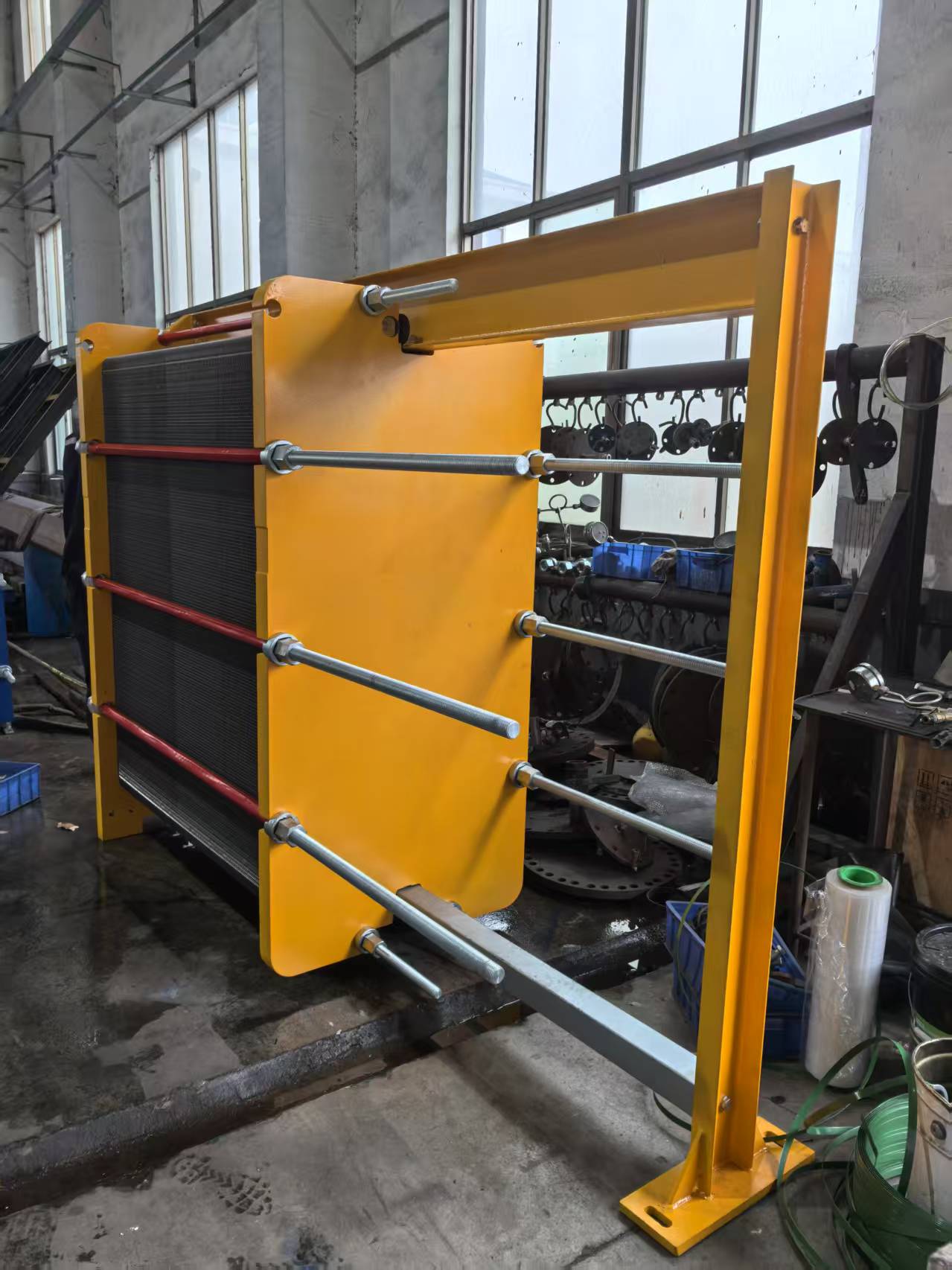
Advantages of Welded Plate Heat Exchangers
- Handles High Temperatures and Pressures: The welded construction is much stronger than gaskets or braze material, allowing them to operate at significantly higher temperatures (up to 350°C / 660°F and beyond) and pressures (over 80 bar / 1160 psi in some models).
- Handles Aggressive and Hazardous Fluids: Without elastomeric gaskets, they are ideal for:
- Corrosive fluids: Acids, alkalis, and solvents that would degrade gaskets.
- Toxic or hazardous media: The welded seal provides a much higher integrity containment, preventing dangerous leaks.
- Refrigerants: Especially ammonia (NH₃), which requires robust construction.
- High Reliability and Long Life: With no gaskets to fail, the risk of leakage is drastically reduced. The welded unit is less susceptible to damage from pressure surges or vibration.
- Compact and Efficient: Retains the compact footprint and high thermal efficiency of the plate heat exchanger design, often being much smaller than a shell-and-tube exchanger for the same duty.
- Lower Long-Term Maintenance Cost: Eliminates the cost and downtime associated with gasket replacement. However, this comes at the trade-off of not being able to clean it mechanically.