

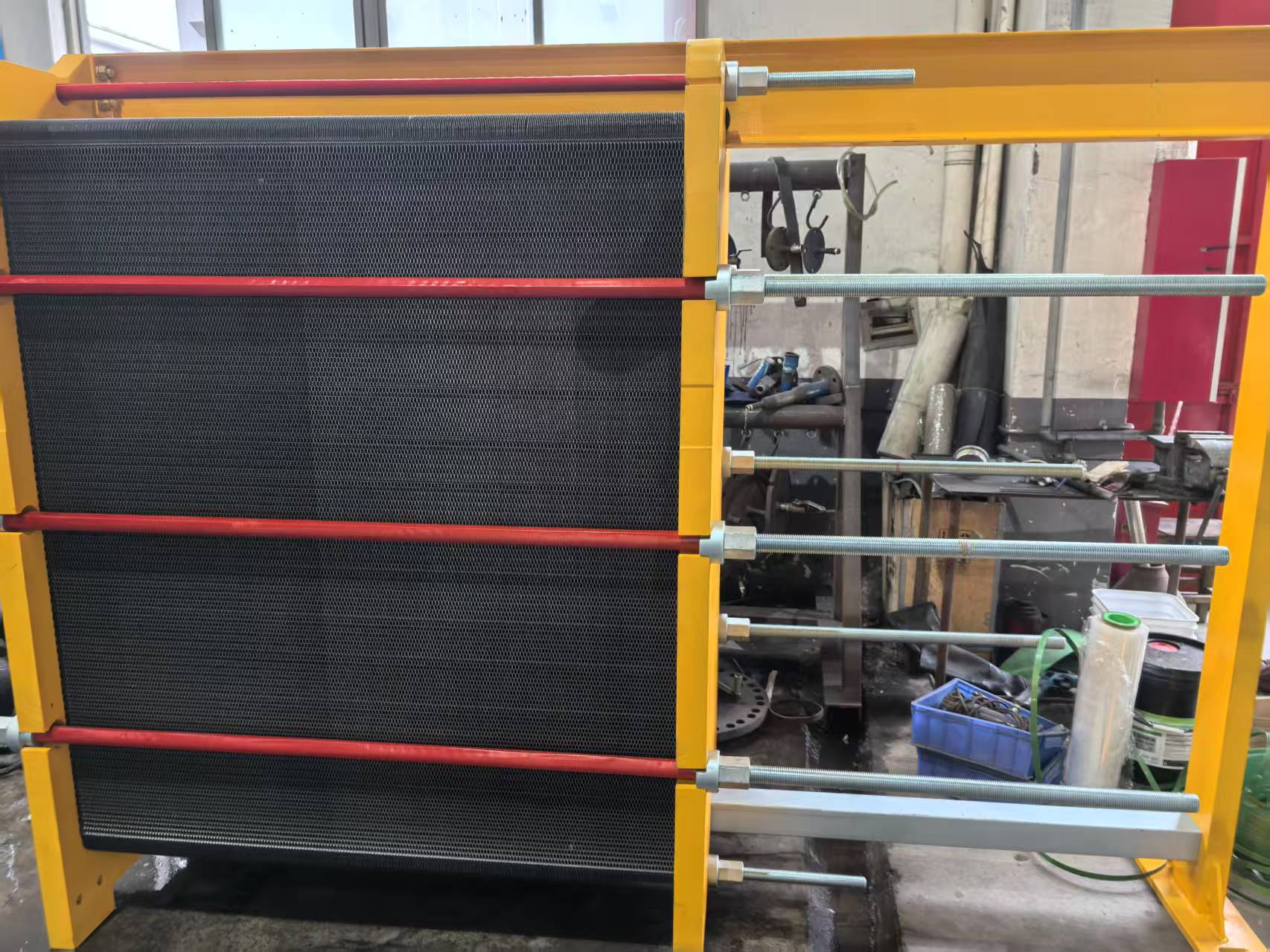
Key Features of Welded plate heat exchanger & How It’s Different
The core distinction lies in its sealing method:
- Gasketed PHE: Uses removable gaskets.
- Brazed PHE: Uses a brazing alloy (like copper) to fuse plates.
- Welded PHE: Uses actual welds (laser, TIG) to fuse the plates themselves.
This fundamental difference leads to all its unique characteristics. How It Works
The operating principle is the same as other plate heat exchangers: two fluids flow on opposite sides of a metal plate, transferring heat without mixing. The welded design primarily changes the construction and durability, not the basic heat transfer process.
- Plate Pack: A stack of corrugated plates is aligned.
- Welding: The plate pack is welded together along the edges and at strategic contact points. In some designs, plates are first welded into pairs (“cassettes”).
- Flow Channels: The welding pattern creates sealed, alternating channels for the two fluids. The welds ensure complete separation between the media.
- Heat Transfer: As with other PHEs, the corrugated plates induce turbulence, leading to highly efficient heat transfer.