

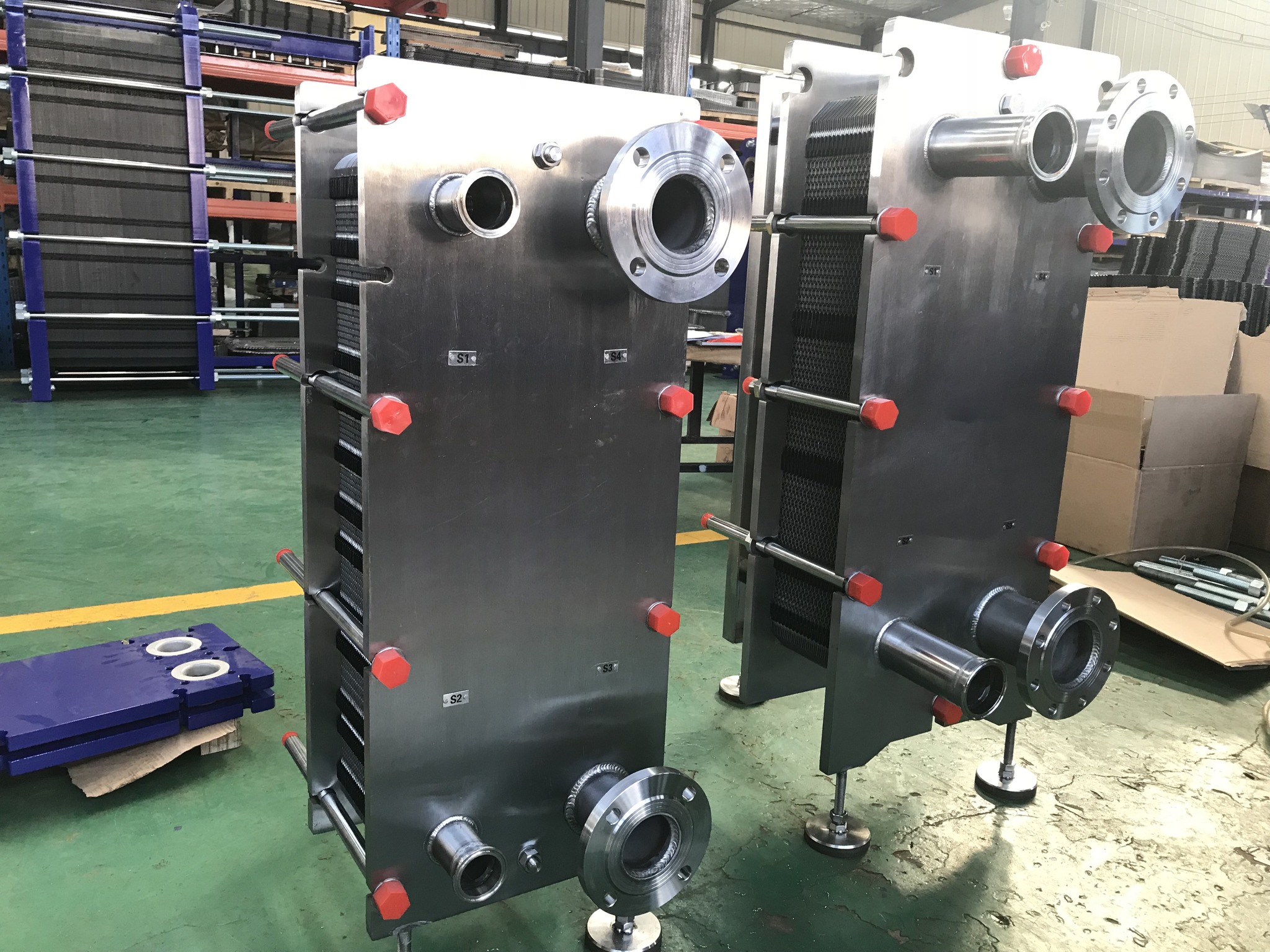
The fundamental principle is indirect heat transfer. The two fluids flow on opposite sides of each plate, and heat moves from the hotter fluid to the colder one through the plate material without the fluids ever mixing.
Here’s a step-by-step breakdown:
- Plate Pack: The core of the PHE is a stack of multiple plates, each separated by a gasket.
- Channel Formation: When compressed together, the plates form two separate channel systems—one for the hot fluid and one for the cold fluid.
- Flow Pattern: The plates are arranged so that hot and cold fluids flow in alternating channels. The gaskets are designed to ensure the fluids are directed properly and do not mix.
- Counter-Current Flow: Most PHEs are designed for counter-current flow, where the two fluids flow in opposite directions. This configuration maintains a more consistent temperature difference across the entire length of the exchanger, maximizing efficiency compared to parallel flow.
- Heat Transfer: As the hot fluid flows through its channels, it transfers heat through the thin metal plate to the colder fluid flowing in the adjacent channels. The corrugated (“washboard”) pattern of the plates creates turbulence, which breaks up the boundary layer of fluid on the plate surface and significantly enhances the heat transfer rate.