

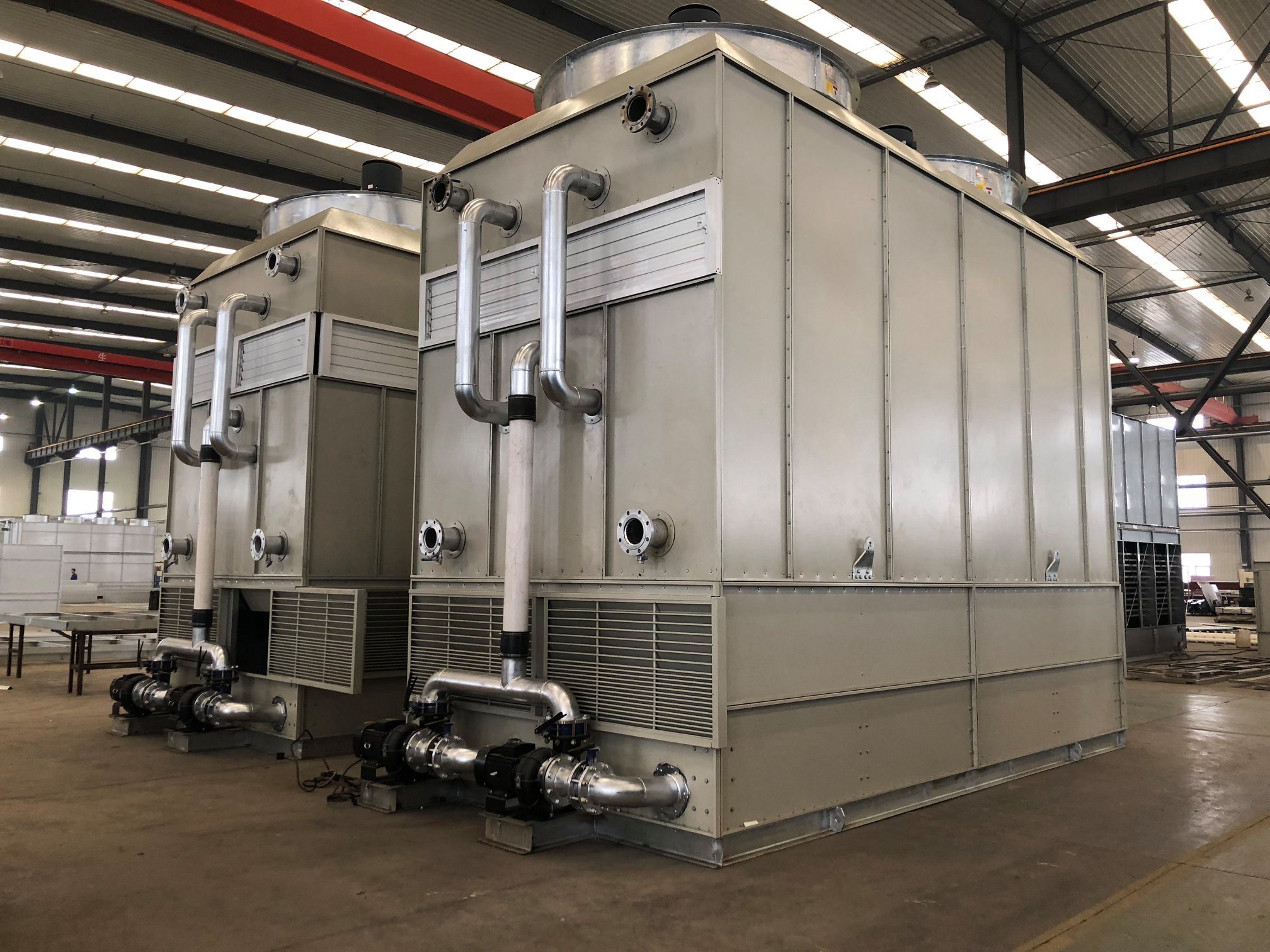
The heat exchanger coil (primary cooling coil) in a closed-circuit cooling tower (CCT) is a critical component, and its material must balance thermal efficiency, corrosion resistance, durability, and cost. Below are the most common materials used, along with their pros, cons, and typical applications:
. Copper (Cu) – Most Common for HVAC & General Use
- Advantages:
- Excellent thermal conductivity (best heat transfer).
- Naturally corrosion-resistant (forms a protective patina).
- Lightweight and easy to fabricate.
- Disadvantages:
- Vulnerable to ammonia, sulphides, and acidic water (in spray loop).
- Higher cost than carbon steel.
- Best for:
- HVAC systems, chillers, and light industrial use.
2. Stainless Steel (SS 304 / SS 316) – Corrosion-Resistant Choice
- Advantages:
- Highly resistant to rust, chlorides, and harsh environments (SS 316 > SS 304).
- Long lifespan with minimal maintenance.
- Disadvantages:
- Lower thermal conductivity than copper (~15% of Cu).
- More expensive upfront.
- Best for:
- Coastal areas (salt exposure), chemical plants, food/pharma industries.
3. Carbon Steel (with Epoxy/Galvanized Coating) – Budget Option
- Advantages:
- Lowest cost material.
- Strong and durable if properly coated.
- Disadvantages:
- Prone to rust if coating degrades.
- Requires regular maintenance (inspections, recoating).
- Best for:
- Non-corrosive environments with tight budgets (often used in power plants).
4. Titanium (Ti) – Premium for Extreme Conditions
- Advantages:
- Ultra-corrosion-resistant (handles seawater, acids, high chlorides).
- Lightweight and strong.
- Disadvantages:
- Very expensive (5–10x copper/stainless steel).
- Best for:
- Offshore oil rigs, desalination plants, aggressive chemical processes.
5. Cupronickel (90/10 or 70/30 Cu-Ni) – Marine & High-Salinity Use
- Advantages:
- Combines copper’s conductivity with saltwater resistance.
- Good biofouling resistance.
- Disadvantages:
- Higher cost than pure copper.
- Best for:
- Ships, coastal cooling towers, brackish water applications.
Material Selection Guide
| Material | Thermal Conductivity | Corrosion Resistance | Cost | Best Used In |
| Copper | ★★★★★ (Best) | ★★★☆ (Good) | $$$ | HVAC, chillers |
| Stainless 316 | ★★☆ (Moderate) | ★★★★★ (Best) | $$$$ | Coastal, chemical plants |
| Carbon Steel | ★★★ (Good) | ★☆ (Poor, unless coated) | $ | Budget industrial |
| Titanium | ★★☆ (Moderate) | ★★★★★ (Extreme) | $$$$$ | Seawater, harsh chem |
| Cupronickel | ★★★★ (High) | ★★★★ (Very Good) | $$$$ | Marine environments |
Key Factors Influencing Material Choice
- Water Quality (chlorides, pH, contaminants).
- Environmental Conditions (coastal, industrial pollution).
- Budget (upfront vs. lifecycle costs).
- Maintenance Capability (e.g., can you inspect/recoat carbon steel?).
Recommendations by Industry
- HVAC & Data Centres → Copper (best efficiency).
- Oil/Gas, Chemical Plants → Stainless 316 or Titanium.
- Marine/Desalination → Cupronickel or Titanium.
General Industry (Low Budget) → Epoxy-Coated Carbon Steel.