

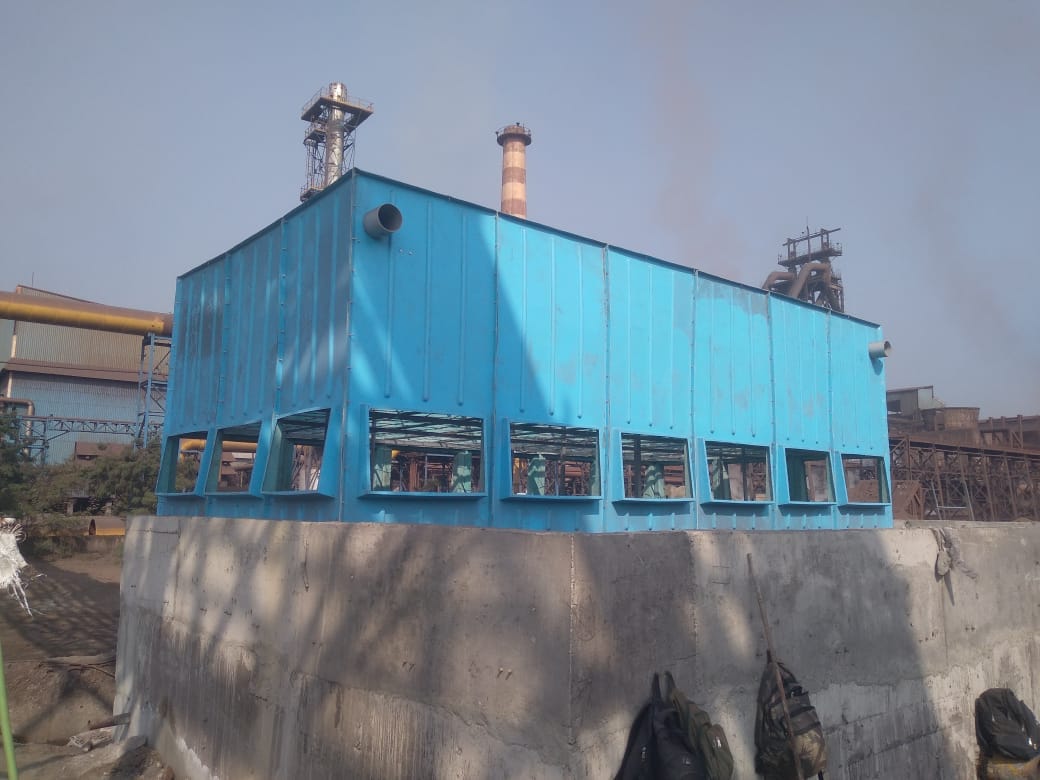
Choosing the “right” cooling tower isn’t about picking the “best” type—because there is no universally best type. It is about picking the type that best matches your specific operational constraints, physical site, and financial goals.
To make this decision, engineers use a systematic process. Here is the exact decision-making framework used by plant engineers and HVAC consultants to select the perfect tower for their project.
Step 1: The Non-Negotiable Physical Constraints (The “Must-Haves”)
Before you look at efficiency or cost, you must answer these three binary questions. If you get these wrong, the tower simply won’t work on your site.
1. What is your water quality?
- Dirty water (pond, river, or recycled wastewater with debris/algae): Choose Cross Flow. Its large, open gravity basins rarely clog.
- Clean, treated water (chilled water loops, city water): Choose Counter Flow. It handles clean water efficiently, and its enclosed spray headers keep sunlight out, preventing algae growth. (If you choose Counter Flow with dirty water, you will be unclogging nozzles every week).
2. How much physical space do you have?
- Tight footprint (rooftop, cramped mechanical yard, or between existing buildings): Choose Counter Flow. For the exact same cooling capacity, a Counter Flow tower has a smaller ground footprint (about 10-15% smaller) than a Cross Flow tower.
- Plenty of open land: Choose Cross Flow. You have the room, so you can take advantage of its lower operating costs.
3. What is your winter climate?
- Freezing winters with frequent tower shutdowns: Choose Cross Flow. The open top basin drains completely and easily. You can walk up and physically break up any ice.
- Mild winters (or you run 24/7/365): Choose Counter Flow. The freeze risk is less of a concern.
Step 2: The Financial Trade-Off (CAPEX vs. OPEX)
This is where 80% of projects make their final decision. You must decide if you want to save money today or save money every day for the next 20 years.
Choose Counter Flow if:
Your project has a tight upfront capital budget. Counter Flow towers are physically smaller and use less structural steel/FRP, so the initial purchase price is typically 10% to 20% lower than a Cross Flow tower of the same capacity.
Choose Cross Flow if:
You are looking at the Total Cost of Ownership (TCO) over 10–20 years.
- Cross Flow uses less pump energy (gravity feed, no spray pressure) and less fan energy (lower air pressure drop).
- Over a decade, these energy savings often exceed the higher initial purchase cost.
- Additionally, maintenance labor is drastically cheaper. A Cross Flow basin can be cleaned by a single technician in 15 minutes without shutting down; a Counter Flow nozzle cleanup requires a full shutdown and confined-space entry.
Step 3: The Maintenance Philosophy (Your Crew’s Capability)
Be brutally honest about your maintenance team:
- If you have a small, overworked crew with limited specialized tools: Choose Cross Flow. The open, walkable basin is foolproof. Anyone with a screwdriver and a hose can maintain it.
- If you have a highly trained, dedicated crew and don’t mind planned shutdowns: Choose Counter Flow. They have the expertise to handle internal nozzle inspections and confined-space protocols.
Step 4: The Big “Rule Breaker” – Size and Capacity
As mentioned earlier, if your project is truly massive (think power plants over 500 MW), the decision is made for you:
- You must choose Cross Flow (specifically, Natural Draft Cross Flow). Counter Flow technology simply cannot scale to the size of a hyperbolic concrete tower. The air distribution falls apart.
The Ultimate Decision Matrix (Cheat Sheet)
Use this cheat sheet to make your final call:
| Your Priority / Constraint | Choose This Type | Why? |
| Limited floor space / Rooftop installation | Counter Flow | Smallest footprint for the same cooling capacity. |
| Very tight upfront budget | Counter Flow | Lower initial purchase cost. |
| Dirty, debris-filled water (river/pond water) | Cross Flow | Open basins resist clogging; no small nozzles to block. |
| Expensive electricity costs in your region | Cross Flow | Lower pump and fan energy consumption over 20 years. |
| Understaffed maintenance team | Cross Flow | Walkable, open basin; 15-minute cleaning without shutdown. |
| Harsh freezing winters with seasonal shutdowns | Cross Flow | Easy to drain completely and visually inspect for ice. |
| Ultra-pure, chemically treated water | Counter Flow | Enclosed headers prevent sunlight, algae, and airborne debris. |
| Nuclear or giant coal power plant (>500 MW) | Cross Flow (Natural Draft) | The only design that scales to that massive size. |
| Lowest 20-year Total Cost of Ownership | Cross Flow | Energy savings + lower maintenance labor outweigh higher initial cost. |
Final Rule of Thumb from an Engineer
If a client asks me for a recommendation without giving me any specifics, here is my default advice:
- For 70% of commercial HVAC projects (hospitals, malls, office towers): I recommend Counter Flow because space is always at a premium in cities, and the water is clean city water.
- For 80% of heavy industrial projects (refineries, chemical plants, factories): I recommend Cross Flow because water is often dirty, maintenance crews are busy, and there is usually plenty of open land outside the plant.