

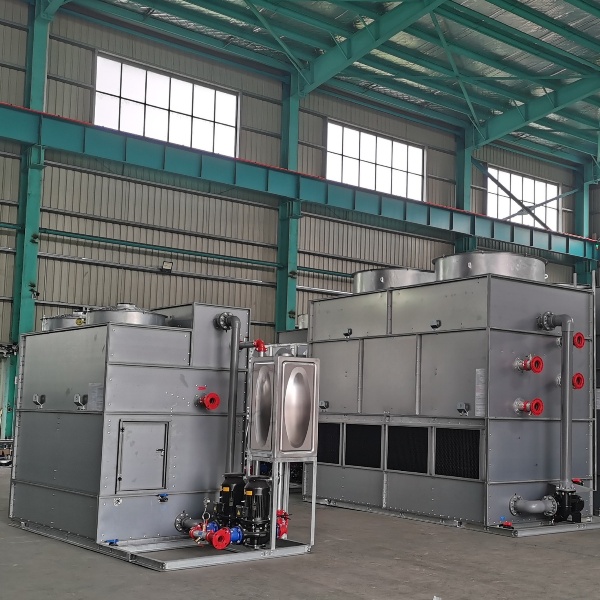
How to prevent Fouling in heat exchanger
Preventing fouling in heat exchangers requires a multi-layered strategy that combines smart design, advanced materials, and optimized operation. The most effective approach is to build “anti-fouling” properties into the system from the very beginning .
Here is a breakdown of the key prevention methods, organized by strategy.
1. Smart Material & Surface Selection
The interface where the fluid meets the tube surface is the critical battleground against fouling. Modifying this surface to prevent deposits from sticking is a highly effective first line of defense .
- Anti-Fouling Coatings: Applying specialized coatings creates a surface that is harder for foulants to adhere to.
- Advanced Nano-Coatings: Tests on a green functionalized graphene nanoplatelet (GGNP) coating applied to stainless steel showed a 73.94% reduction in CaCO₃ scale and a 45% improvement in overall heat transfer .
- Low-Energy Surfaces: Coatings like Ni-P-PTFE reduce surface energy and increase hydrophobicity, which weakens the adhesive strength of crystals, making deposits looser and easier to remove .
- Ceramic and Oxide Coatings: Flame-treating polymer surfaces or applying thin aluminum oxide (Al₂O₃) or SiO₂/TiO₂ nano-coatings has been shown to significantly reduce fouling adhesion .
- Surface Topography Engineering: Surface texture plays a crucial role.
- Smooth Surfaces: A smooth surface gives foulants fewer places to grip and nucleate .
- Engineered Patterns: Laser surface patterning or ion implantation can manipulate surface energy at the microscopic level, which can suppress nucleation and reduce crystal adhesion .
2. Optimized Design & Operation
The way you design and operate the heat exchanger has a direct impact on how quickly fouling develops.
- Optimize Flow Velocity: Maintaining an optimal and sufficiently high flow velocity is critical. It increases wall shear stress, which helps to continuously “scrub” deposits away from the surface and prevents particles from settling .
- Manage Temperature: A local hot spot can be the perfect place for crystallization fouling to begin. Research shows that for certain applications, keeping the surface temperature within a specific range (e.g., 180–210 °C) can minimize the deposition rate . Managing the local temperature distribution to avoid extreme gradients is key .
- Consider the Heat Exchanger Type: Some designs are inherently more anti-fouling. For instance, plate heat exchangers promote high turbulence, which can disrupt deposition equilibria, while pillow plate heat exchangers can have their geometry optimized through computational modeling to significantly reduce fouling factors .
3. Chemical & Online Controls
For many systems, chemical treatment and physical cleaning agents are essential for ongoing prevention.
- Antiscalants and Chemical Inhibitors: Adding chemicals to the fluid can prevent salt crystals from forming and depositing. This is a common method to tackle crystallization fouling in cooling water systems .
- Online Mechanical Cleaning: Some innovative devices use cleaning “artifacts” (small particles or objects) that are carried by the fluid flow to physically remove deposits without stopping the system. CFD (Computational Fluid Dynamics) simulation is often used to design these devices for maximum efficiency .
- Electromagnetic Treatment: Applying low-frequency electromagnetic fields to the fluid stream has been shown to interfere with the crystallization process, significantly reducing calcium carbonate scaling in some cases .
A Strategic Framework for Prevention
Choosing the right combination of strategies depends on your specific application. The table below offers a general comparison of these approaches:
| Prevention Strategy | Primary Mechanism | Typical Applications |
| Advanced Coatings | Reduces foulant adhesion and nucleation | High-fouling liquids, saline water, exhaust gases |
| Flow Optimization | Increases shear stress for deposit removal | Most fluid systems, especially those with particulate matter |
| Temperature Management | Reduces the driving force for salt crystallization | Cooling water systems, desalination, high-temperature exhaust |
| Chemical Inhibitors | Prevents salt crystallization or neutralizes biofoulants | Cooling towers, water treatment, closed-loop systems |
| Online Cleaning | Provides physical removal without process shutdown | Hard-to-reach systems, continuous processes requiring high uptime |
An effective anti-fouling strategy is rarely a single “magic bullet.” It is a holistic design philosophy. By integrating a carefully selected surface treatment (like a low-energy coating) with an optimized flow velocity and, if needed, a chemical inhibitor program, you can dramatically extend the lifespan of your heat exchanger, maintain its efficiency, and significantly reduce costly downtime.
If you can share more details about the specific process fluid and operating conditions, I might be able to provide more tailored guidance on which strategies are most promising.