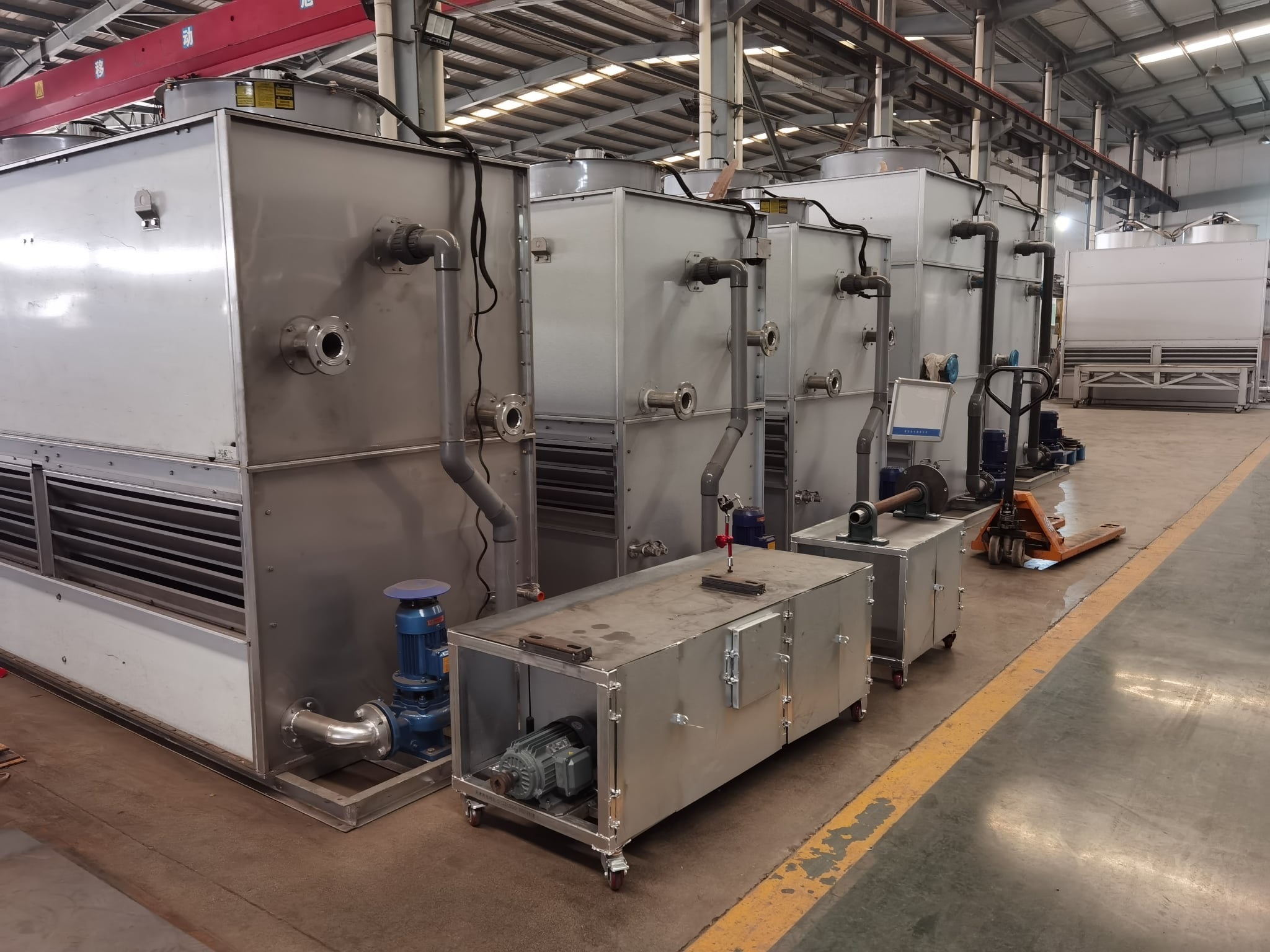
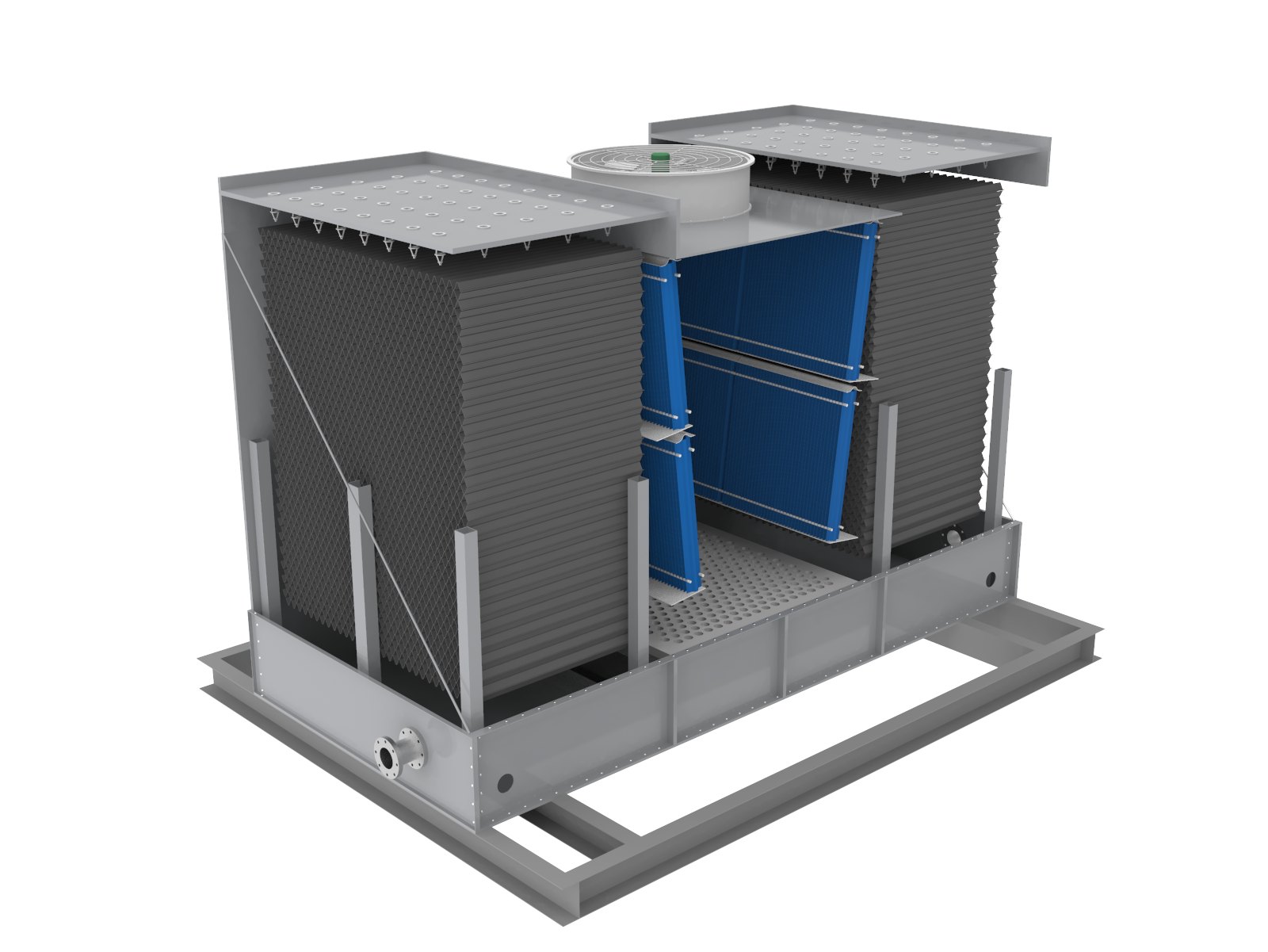
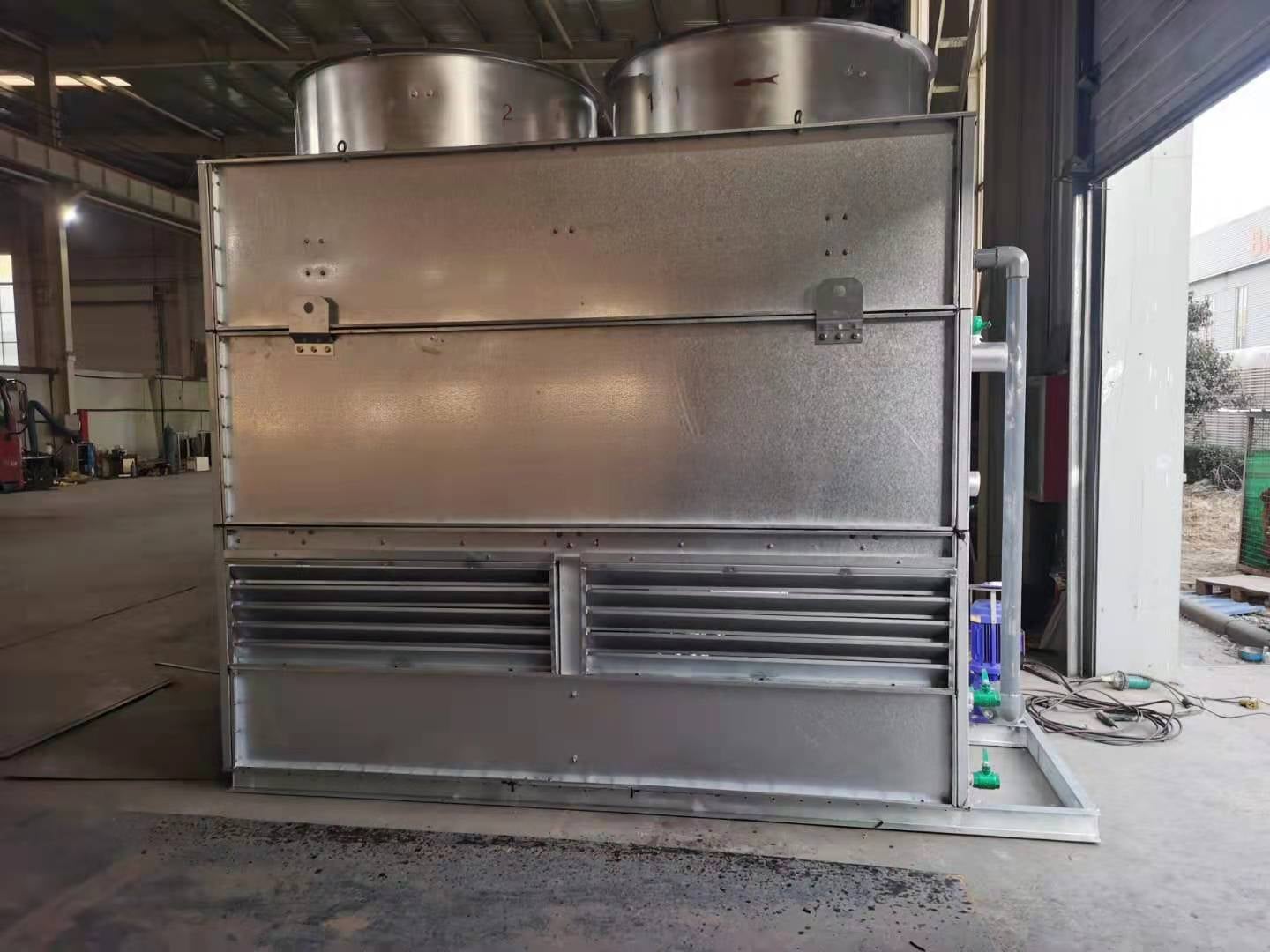
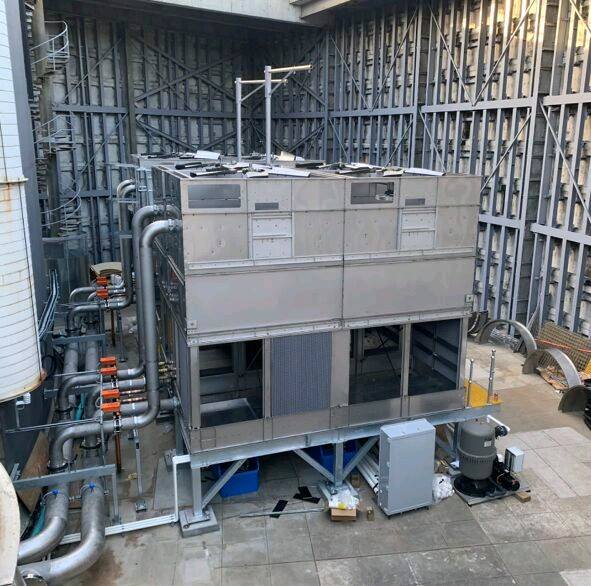
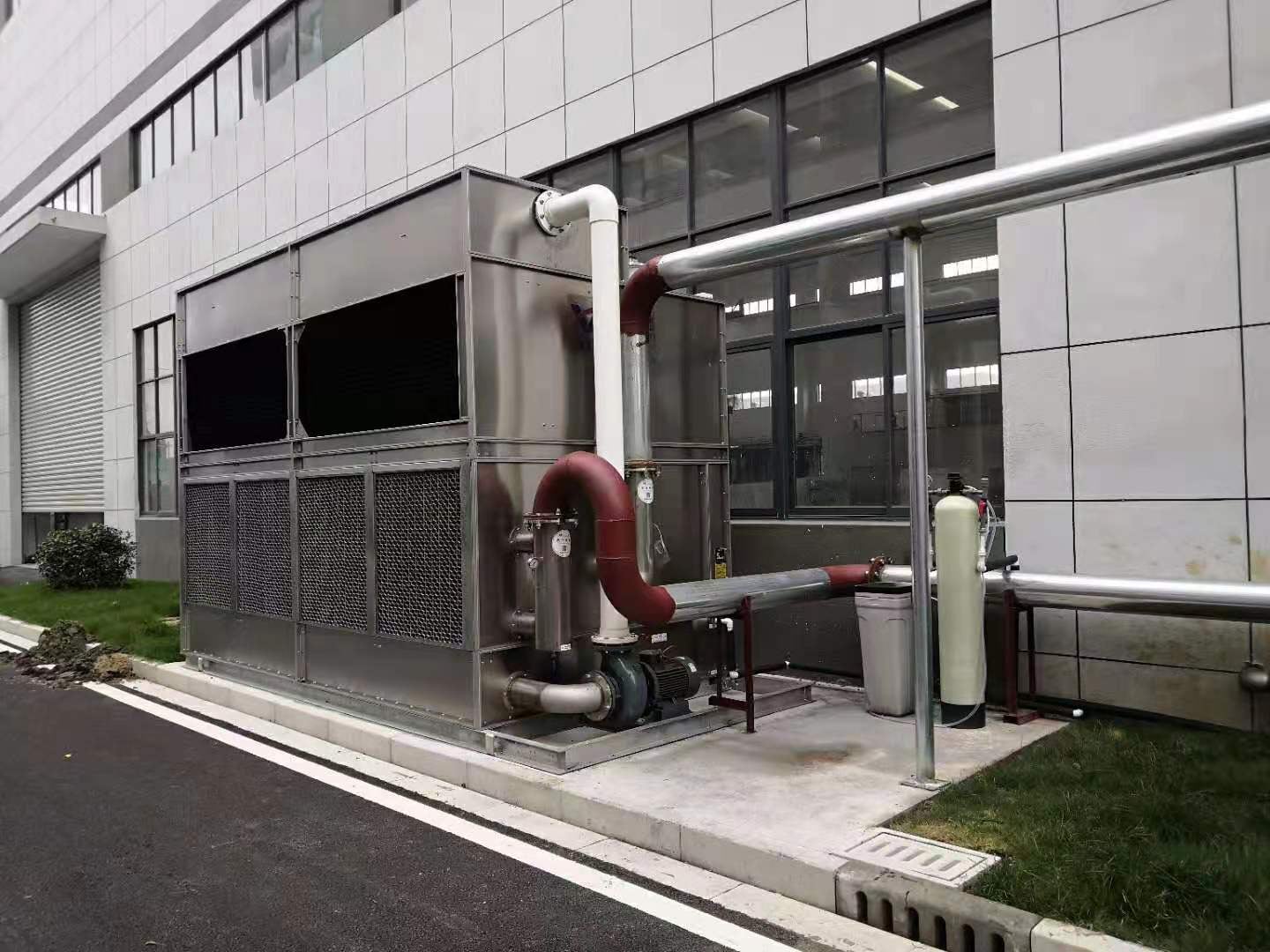
Forced Draft (V-Flow) Closed Circuit Cooling Tower Forced Draft V-Flow Closed Circuit Cooling Tower by explaining each part of its name and how it works. V-Flow (or Vertical Flow): This describes the path of the spray water (the separate, external water loop) and air. The spray water is pumped to the top and...
Common Applications of Closed-Circuit Cooling Towers (All Types) the choice between Forced Draft, Induced Draft, or Hybrid depends on the specific priorities: footprint, maintenance access, water availability, plume visibility concerns, and local climate conditions. The closed circuit design itself is selected when fluid purity and system...
Advantages of Closed-Circuit Cooling Towers (All Types) Lower System Pumping Head: Often located at grade level, unlike open towers which may be on roofs Reduced Maintenance on Primary System: Less corrosion and fouling in the chilled water or process loops.
Comparison of Forced Draft vs Induced Draft Vs Hybrid Closed Circuit Cooling Tower Feature Forced Draft (V-Flow) Induced Draft (Counterflow) Hybrid (Dry/Wet) Air Flow Fan pushes air horizontally in/vertically out. Fan pulls air vertically up through the unit. Typically induced draft. Footprint Compact. Larger footprint for same capacity. Larger due...