

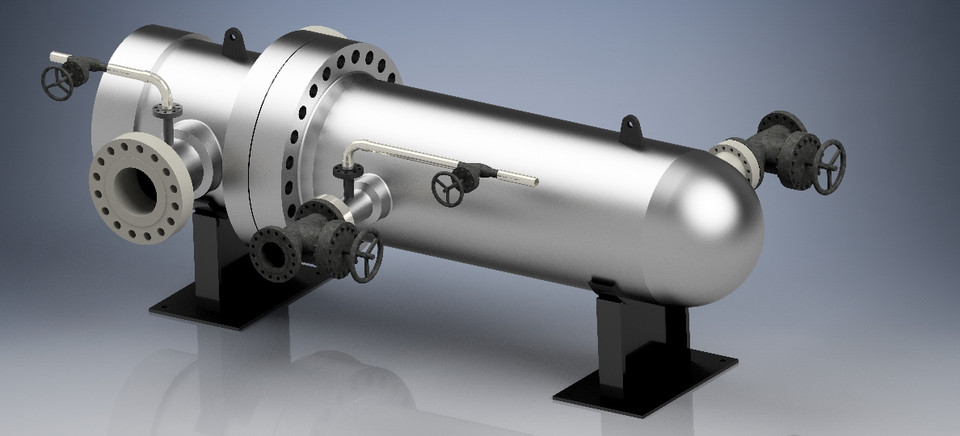
Why Aluminum Brass Tubes Are Used in Marine Oil Coolers
Aluminum brass (CuZn20Al, UNS C68700) is a copper alloy specifically engineered for marine and seawater cooling applications. It is widely used in shell-and-tube oil coolers for ships, offshore platforms, and desalination plants due to its unique corrosion-resistant properties.
Key Reasons for Using Aluminum Brass in Marine Oil Coolers
1. Superior Corrosion Resistance in Seawater
- Resists biofouling & saltwater corrosion better than plain copper or admiralty brass.
- Contains 2% aluminum (Al), which forms a protective oxide layer against seawater.
- Less prone to dezincification (a common issue in brass alloys exposed to seawater).
2. Good Thermal Conductivity
- While not as conductive as pure copper, it still provides efficient heat transfer (~109 W/m·K).
- Balances cooling performance with durability in harsh marine environments.
3. Resistance to Erosion & Impingement Attack
- Seawater contains sand, bubbles, and high-velocity flow, which can erode metal.
- Aluminum brass has better erosion resistance compared to plain copper tubes.
4. Cost-Effective Compared to Titanium & Cu-Ni Alloys
- Titanium (best for seawater but expensive) is overkill for many applications.
- Copper-Nickel (90/10 or 70/30) is excellent but pricier than aluminum brass.
- Aluminum brass offers a good balance of performance and cost for marine oil coolers.
5. Compatibility with Antifouling Measures
- Can be used with chlorination or ferrous sulphate dosing to prevent marine growth.
- Less prone to pitting corrosion compared to stainless steel in chlorinated seawater.
Comparison with Other Marine Cooler Tube Materials
| Material | Corrosion Resistance | Thermal Conductivity | Cost | Best For |
| Aluminum Brass | Excellent (seawater) | Good (~109 W/m·K) | Moderate | General marine oil coolers |
| Copper-Nickel (90/10) | Excellent (better than brass) | Good (~50 W/m·K) | High | Critical marine systems |
| Titanium | Best (immune to seawater) | Low (~22 W/m·K) | Very High | Nuclear, high-end marine |
| 316L Stainless Steel | Good (but can pit in chlorides) | Poor (~16 W/m·K) | Moderate | Non-saltwater applications |
When is Aluminum Brass NOT Suitable?
- Highly polluted seawater (high sulphide content can attack brass).
- Extremely high-velocity seawater flow (may cause erosion—Cu-Ni is better).
- High-temperature (>80°C) systems (may accelerate corrosion).
Aluminum brass is the preferred choice for most marine oil coolers because it:
✔ Resists seawater corrosion & biofouling
✔ Provides good heat transfer
✔ Is more affordable than titanium or Cu-Ni alloys
✔ Handles moderate seawater flow velocities For extreme marine conditions, copper-nickel (90/10 or 70/30) or titanium may be better, but at a higher cost.