

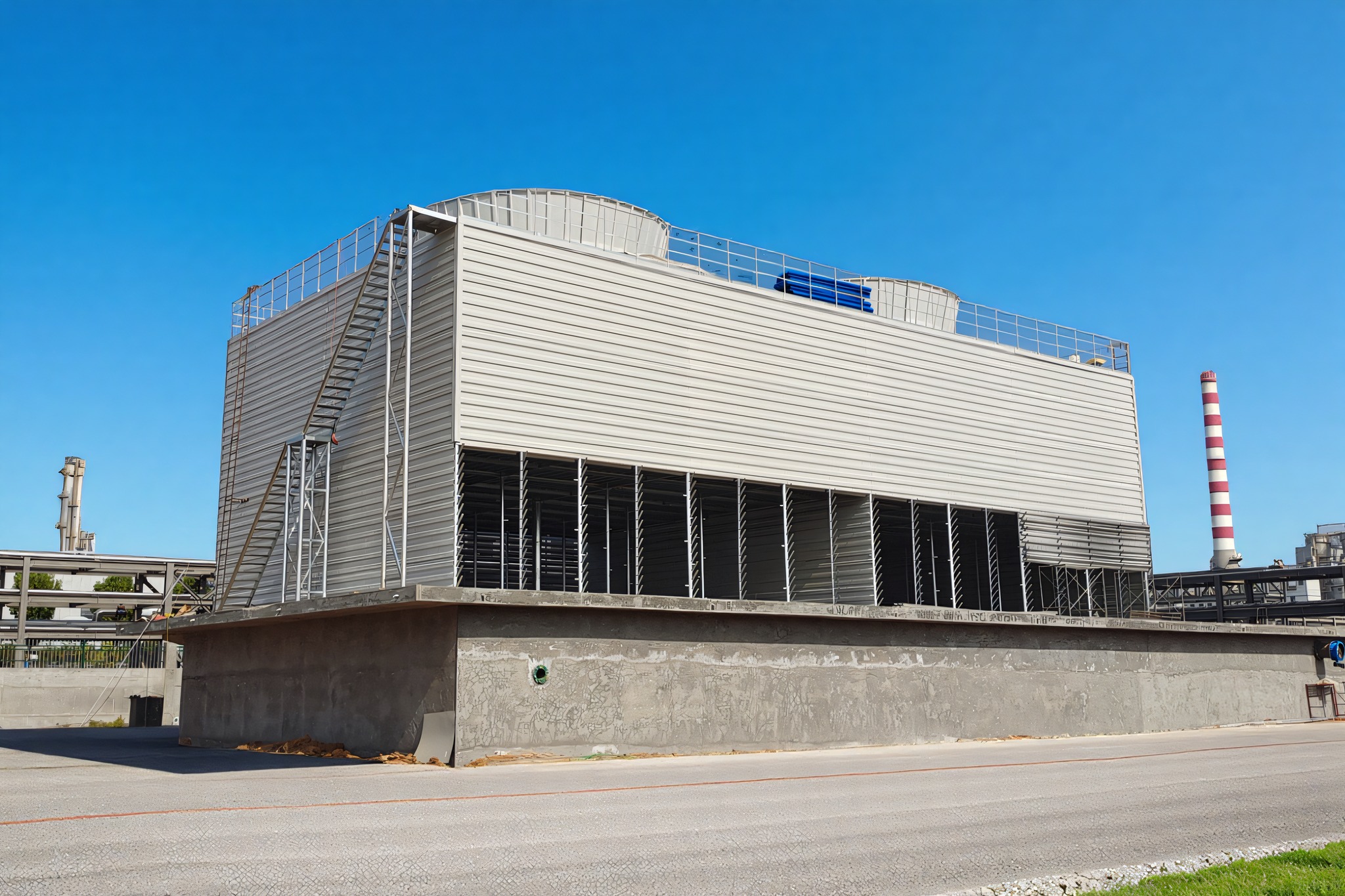
The motor is a critical component of a mechanical draft cooling tower (both field-erected and factory-assembled), acting as the heart of the air movement system. Here’s a comprehensive breakdown of cooling tower motors, with a focus on their application in large
Core Function
The motor’s sole purpose is to drive the fan(s) that create the airflow necessary for evaporative cooling. It converts electrical energy into the mechanical rotation that pulls (induced draft) or pushes (forced draft) air through the tower.
Key Characteristics & Design Requirements
Due to the harsh, demanding environment, cooling tower motors are specialized industrial components.
- Harsh Operating Environment:
- High Humidity & Moisture: Constant exposure to 100% relative humidity, mist, and spray.
- Wet/Dry Cycles: Leading to condensation inside the motor.
- Corrosive Atmosphere: Chemicals from water treatment (biocides, scale inhibitors), and in coastal areas, salt spray.
- Elevated Ambient Temperatures: Located near the hot, moist exhaust plume.
- Heavy-Duty Mechanical Duty:
- High Inertia Loads: Must accelerate large, heavy fan blades (often 20+ feet in diameter) from rest.
- Continuous Operation: Often runs 24/7 for months at a time, especially in process industries.
- Variable Load: Load can change slightly with ambient conditions, fan pitch, or debris accumulation.