

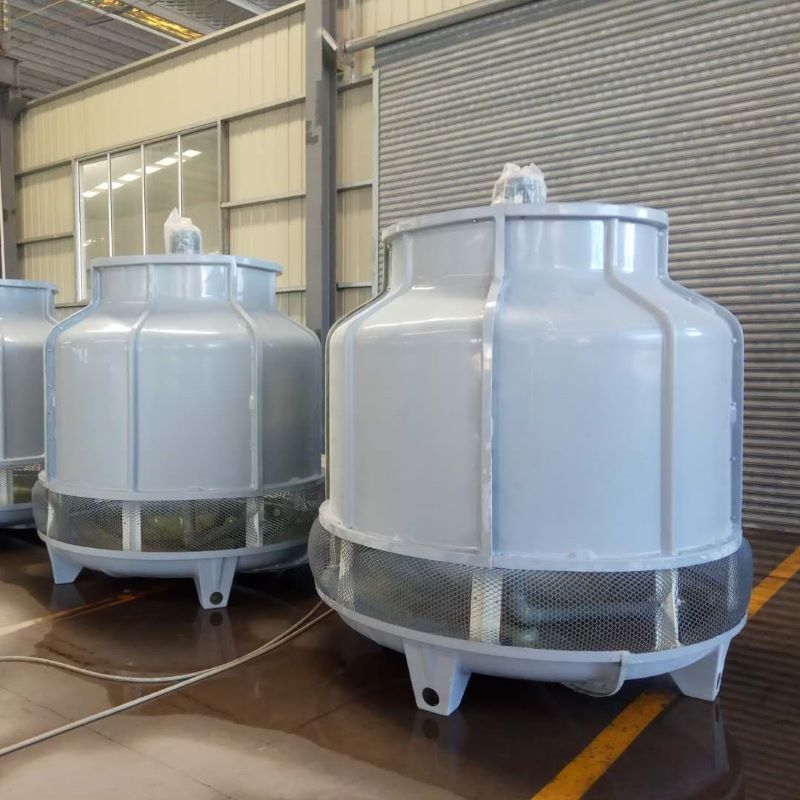
how to Fix Air inlet Height in cooling tower
Fixing or optimizing the air inlet height in a cooling tower is a critical design and maintenance issue that directly impacts performance, efficiency, and safety. It involves balancing airflow, water containment, and access.
Here’s a comprehensive guide on how to approach fixing the air inlet height, covering both design-stage decisions and retrofit solutions for existing towers.
Core Principle: Why Inlet Height Matters
The air inlet (typically louvers or open sides at the base) must:
- Provide sufficient airflow area to minimize air velocity and pressure drop (saving fan energy).
- Prevent water splash-out from the fill and distribution system.
- Allow for proper maintenance access to the cold water basin and interior.
- Avoid air recirculation (where hot, moist exhaust air is sucked back into the inlet).
A. For New Cooling Tower Design (Fixing the Height in Plans)
This is the ideal stage to determine the optimal height using engineering calculations.
Step 1: Determine Key Parameters
- Total Airflow (CFM/m³/hr): From thermal design.
- Design Air Velocity at Inlet: Typically 300 to 600 FPM (1.5 to 3 m/s). Lower velocity = less pressure drop but larger opening.
- Tower Basin Dimensions: Length and width.
Step 2: Calculate Minimum Free Area
- Formula:
Air Inlet Free Area (ft²/m²) = Total Airflow (CFM/m³/hr) / Design Air Velocity (FPM/m/s) - This gives the total unobstructed area needed for the louvers.
Step 3: Determine Inlet Height
- Formula:
Inlet Height (ft/m) = Total Required Free Area / Total Inlet Perimeter - For a rectangular single-cell tower: Perimeter =
2 x (Length + Width). Height is then applied around the basin. - For a multi-cell or round tower, the calculation is adjusted per cell or circumference.
- Add a Safety Margin: Industry practice often adds 18-24 inches (0.45-0.6 m) to the calculated height to account for:
- Louver blade obstruction (they reduce free area by ~40-50%).
- Splash containment.
- Future scaling or icing that might partially block louvers.
Step 4: Consider Critical Layout Factors
- Splash Guards: Internal baffles may be needed above the inlet to catch drifting droplets.
- Basin Access: Ensure the final height still allows personnel entry for cleaning.
- Recirculation: Inlet should be positioned as far as possible from the exhaust and/or use inlet louvers angled downward to pull air from a lower, cooler zone.
B. For Existing Towers (Retrofitting/Modifying Inlet Height)
This is often done to resolve performance problems like high fan power, splash-out, or recirculation.
Scenario 1: Inlet is Too LOW (Restricted Airflow)
Symptoms: High fan motor amps, excessive pressure drop, reduced cooling capacity, fan stall.
Solutions:
- Increase Free Area (Primary Fix):
- Replace Louvers: Install new louvers with a more open blade angle or wider spacing.
- Remove Obstructions: Clear debris, vegetation, or storage items blocking the inlet.
- Install Air Inlet Screens with Larger Mesh: If screens are present, use a mesh with lower resistance.
- Physically Raise the Inlet Structure (Major Modification):
- Extend the Casing: This is a significant structural retrofit. The entire tower casing (walls) is extended vertically from the basin curb, raising the louver opening.
- Add a Curb Extension: Install a fiberglass or steel curb on top of the existing basin curb to lift the tower structure.
- ⚠️ Requires careful structural and hydraulic review: Ensure the cold water basin can handle the modified loads and that piping connections remain viable.
Scenario 2: Inlet is Too HIGH (Splash-Out & Poor Distribution)
Symptoms: Water droplets escaping the tower, wet area around the base, potential icing in winter, uneven air distribution across the fill.
Solutions:
- Install Internal Splash Baffles:
- Attach PVC or fiberglass sheets inside the tower, just above the inlet, angled to deflect falling droplets back into the basin.
- This is the most common and cost-effective fix.
- Add External Splash Aprons:
- Install angled sheets or gutters on the outside of the inlet to catch and channel escaped water back to the basin.
- Modify Water Distribution:
- Often, splash-out is caused by clogged nozzles or misaligned distribution pans creating localized heavy spray. Fixing the distribution system can reduce the need for inlet modification.
- Partially Block the Inlet (Last Resort):
- Installing blank-off panels on the lower portion of overly high inlets. This must be done with extreme caution to avoid creating new airflow problems and should be guided by an engineer.
Key Safety & Performance Checks Before Any Modification
- Structural Integrity: Any change to the casing affects wind loading. Consult the OEM or a structural engineer.
- Fan Performance Curve: Changing inlet height/area alters the system resistance curve. Verify the fan can operate efficiently at the new point without overloading the motor.
- Cold Water Basin Clearance: Ensure there is still enough room for safe entry and that the distance from basin water level to fill support is adequate.
- Manufacturer Guidelines: Always check the original design specifications and consult with the cooling tower manufacturer if possible.
General Rule of Thumb (For Crossflow Towers Especially)
The air inlet height is often pragmatically set to allow for:
- Adequate access to the basin (typically a minimum of 3-4 feet / ~1 m from ground to the bottom of the fill).
- Free area that is 1.5 to 2 times the fan stack area.