

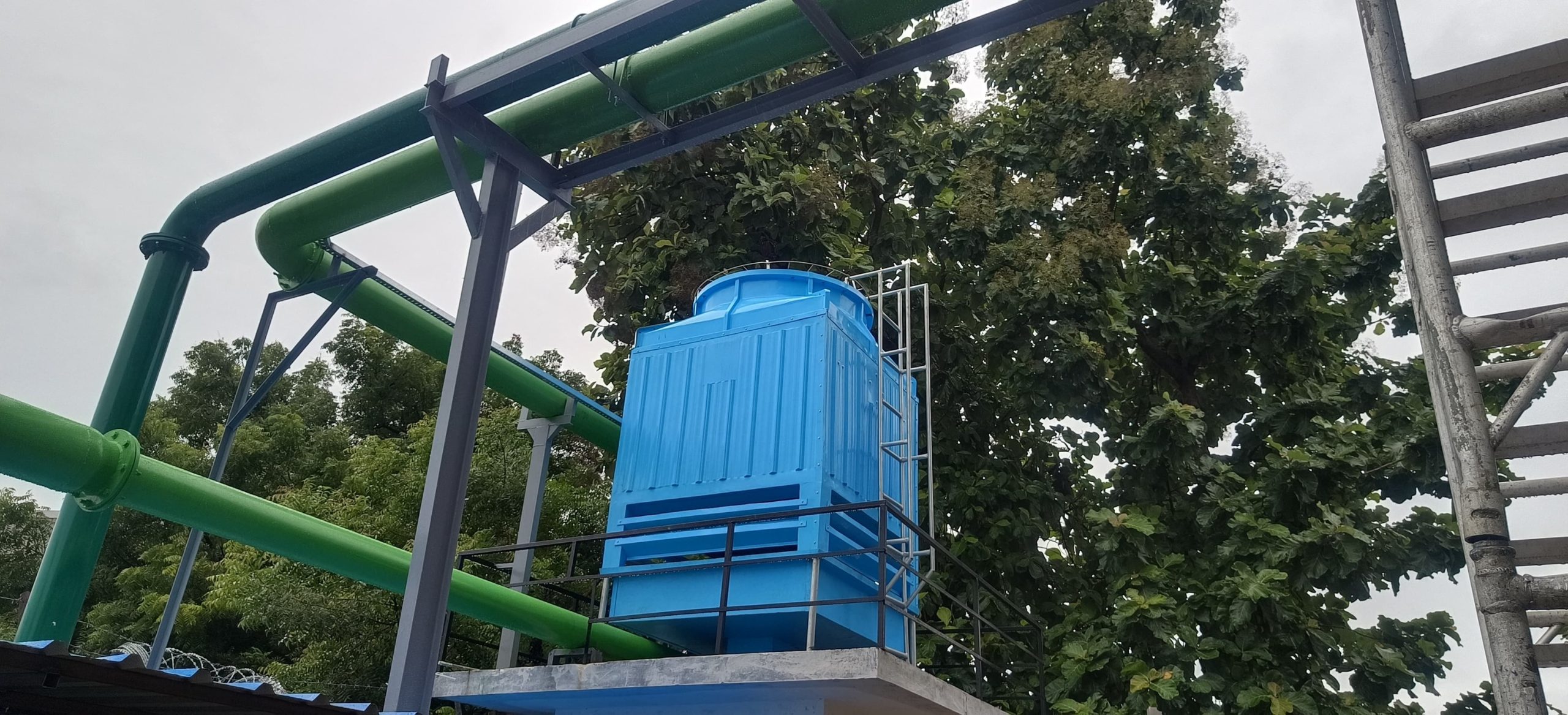
PROCESS-SPECIFIC COOLING DEMANDS IN COOLING TOWER
Temperature Ranges & Precision:
- Ultra-Low Temperature Cooling (5-15°C):
- Supplied to glycol chillers for condensation of low-boiling solvents
- Used in crystallization processes for high-purity materials
- Medium-Temperature Cooling (15-25°C):
- Reactor temperature control for most polymerizations
- Solvent recovery condensers
- High-Temperature Cooling (25-35°C):
- Equipment cooling (compressors, hydraulic systems)
- Vacuum system condensers
Critical Thermal Parameters:
- Approach Temperature: The difference between cooling water temperature and ambient wet-bulb temperature is crucial for process stability
- Temperature Stability: Many processes require water temperature variation <1°C/hour
- Flow Consistency: Pulsation-free flow to prevent reaction upsets
SPECIALIZED COOLING SYSTEMS
1. Cascade Cooling Systems
Multiple cooling loops at different temperatures for complex processes:
text
High-temp process → Primary cooling (30°C) → Secondary cooling (20°C) → Tertiary cooling (10°C)
2. Closed-Loop Cooling Circuits
Essential for:
- Corrosive environments (chlorinated polymers, acidic catalysts)
- High-purity requirements (medical-grade polymers)
- Preventing contamination of sensitive reactions
3. Hybrid Air/Water Systems
Used where:
- Low ambient conditions could freeze cooling water
- Water conservation is critical
- Plume abatement is required for environmental compliance
INDUSTRY-SPECIFIC TECHNICAL CHALLENGES
Material Compatibility Issues:
- Corrosive Intermediates: Many synthetic materials involve chlorinated, fluorinated, or acidic compounds requiring special metallurgy (titanium, Hastelloy, fluoropolymer-lined systems)
- Fouling Potential: Some polymerizations produce low-molecular-weight oligomers that can precipitate in heat exchangers
- Viscous Fluids: High-viscosity polymer melts require specialized heat exchanger designs
Process Integration:
- Heat Recovery: Many polymerization processes generate recoverable heat at 80-150°C
- Cogeneration: Integration with steam systems for distillation and drying
- Trim Cooling: Fine temperature adjustments using mixing valves
QUALITY CONTROL IMPLICATIONS
Material Properties Affected by Cooling:
- Molecular Characteristics:
- Molecular weight distribution
- Branching frequency
- Tacticity (stereoregularity)
- Morphological Properties:
- Crystallinity degree and crystal size
- Phase separation in copolymers
- Orientation in fibers
- Performance Properties:
- Tensile strength and modulus
- Thermal resistance
- Chemical resistance
- Optical clarity
Statistical Process Control (SPC):
Cooling water parameters are often key process variables in SPC charts:
- Temperature trends correlated with product specifications
- Flow rate consistency tied to reaction kinetics
- Pressure drop monitoring for fouling detection
ENERGY & SUSTAINABILITY ASPECTS
Energy Intensity:
Synthetic materials manufacturing is energy-intensive. Cooling systems account for:
- 25-40% of total plant electricity consumption
- 60-80% of water withdrawal (mostly evaporated)
Innovations:
- Variable Frequency Drives (VFDs) on pumps and fans for load matching
- Waste Heat Recovery from exothermic reactions
- Advanced Fill Media for improved heat transfer efficiency
- Zero Liquid Discharge (ZLD) systems for water conservation
- Intelligent Controls using AI for predictive maintenance and optimization
FUTURE TRENDS
- Digital Twins: Virtual models of cooling systems for optimization
- Advanced Materials: Nanocoating’s for anti-fouling, graphene-enhanced heat transfer
- Adiabatic Cooling: For ultra-high efficiency in dry climates
- Circular Water Systems: Integration with process water networks
- Decentralized Systems: Modular cooling for flexible manufacturing