

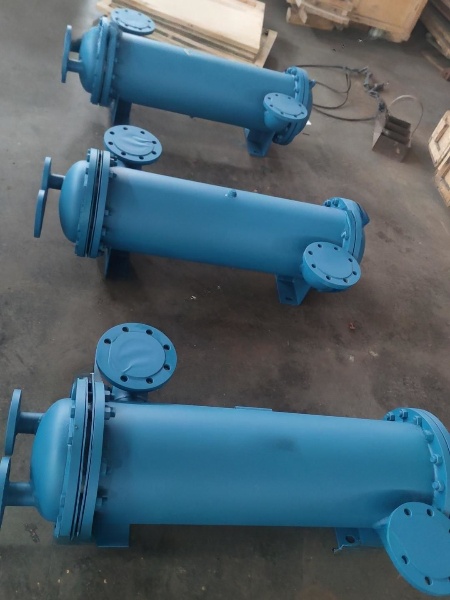
Advantages of an Air-Cooled Oil Cooler
Air-cooled oil coolers are prized for their simplicity and effectiveness, especially in high-performance and heavy-duty applications. Their advantages stem from their direct method of heat rejection.
1. Ultimate Cooling Capacity and Efficiency
This is the primary advantage. Air-cooled coolers reject heat directly to the atmosphere, which is the final heat sink.
- No Intermediate Step: Unlike water-cooled systems that first transfer heat to coolant (which then must be cooled by the radiator), air-cooled systems have a direct path: Oil -> Air.
- Ideal for Extreme Conditions: This makes them exceptionally effective under sustained heavy loads, high RPMs, or in high ambient temperatures where the engine’s main cooling system might be struggling near its limit.
2. Independent of Engine Coolant Temperature
The performance of an air-cooled oil cooler is not tied to the temperature of the engine’s coolant.
- Solves a Overheating Problem: If the engine’s radiator is inefficient or the coolant is overheating, a water-cooled oil cooler becomes less effective. An air-cooled unit will continue to cool the oil effectively as long as it has airflow, providing a critical layer of redundancy.
- Consistent Performance: Its cooling capacity is primarily dependent on vehicle speed (airflow) and ambient air temperature, not the status of the engine’s cooling system.
3. Simpler Design and Fewer Failure Points
The system is mechanically straightforward.
- No Internal Leak Risk: A water-cooled oil cooler has internal seals that separate oil and coolant. If these fail, it can lead to catastrophic mixing (oil in coolant or coolant in oil). An air-cooled system completely eliminates this risk.