

Common Types of Heat Exchangers
There are many designs, but these are the three most common you will encounter:
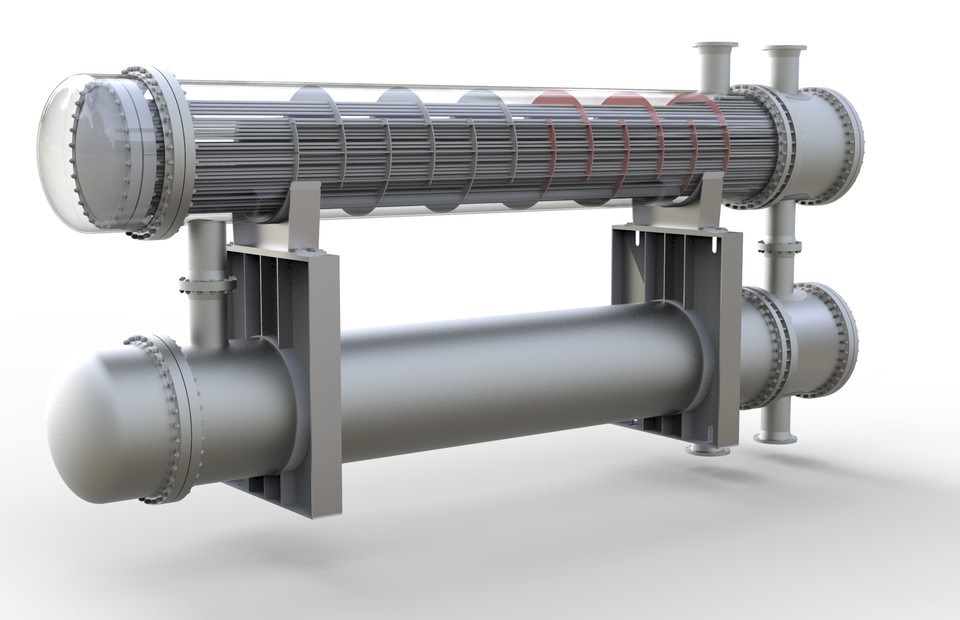
- Shell and Tube: This consists of a large outer pressure vessel (the “shell”) with a bundle of tubes running through it. One fluid flows through the tubes, and the other fluid flows over the tubes, inside the shell.
- Used for: High-pressure applications, oil refineries, large power plants, and chemical processing.
- Plate and Frame: This uses a series of thin, corrugated metal plates stacked together and clamped in a frame. The hot and cold fluids flow through alternating gaps between the plates.
- Pros: Very compact and highly efficient because the corrugated plates create a lot of turbulence and surface area.
- Used for: HVAC systems, food processing, and swimming pool heaters.
- Fin Tube (or Air Cooled): This uses tubes with metal “fins” attached to the outside to dramatically increase the surface area. One fluid flows inside the tube, while air (often blown by a fan) flows over the fins on the outside.
Used for: Car radiators, air conditioning condenser units, and engine oil coolers