

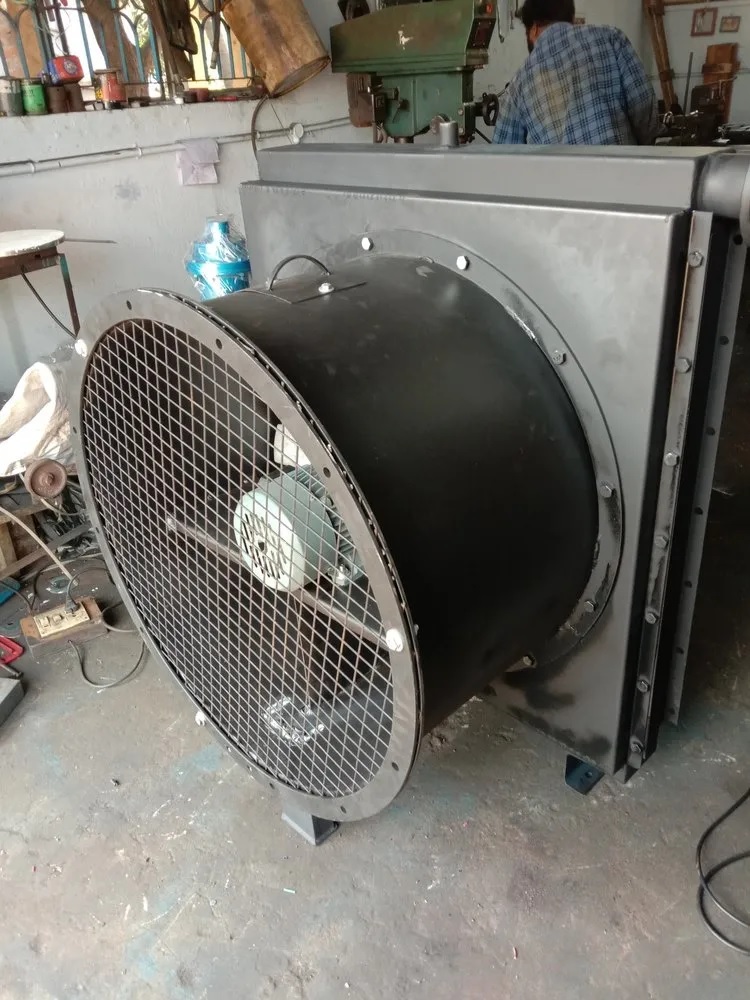
Aluminum Fins vs. Stainless Steel Fins in Air-Cooled Oil Coolers
The choice between aluminum and stainless-steel fins depends on factors like heat transfer efficiency, corrosion resistance, weight, cost, and application environment. Below is a detailed comparison:
1. Heat Transfer Efficiency
| Material | Thermal Conductivity (W/m·K) | Impact on Cooling Performance |
| Aluminum | ~160-200 | Superior heat dissipation – Ideal for high-efficiency cooling. |
| Stainless Steel | ~15-20 | Poor heat transfer – Requires larger surface area for same cooling effect. |
Winner: Aluminum (Best for applications needing fast cooling, like engines and hydraulics).
2. Corrosion Resistance
| Material | Resistance to Corrosion | Best Environments |
| Aluminum | Good (but can corrode in salty/acidic conditions unless coated/anodized). | Dry, industrial, automotive. |
| Stainless Steel | Excellent (resists saltwater, chemicals, and high humidity). | Marine, offshore, chemical plants. |
✅ Winner: Stainless Steel (Best for harsh, corrosive environments).
. Weight & Durability
| Material | Weight | Mechanical Strength |
| Aluminum | Lightweight (~1/3 of steel) | Prone to bending/fin damage if thin. |
| Stainless Steel | Heavy (~3x aluminum) | More rigid, withstands high pressure/impact. |
✅ Winner:
- Aluminum (Better for vehicles, aviation, and weight-sensitive uses).
- Stainless Steel (Better for heavy machinery, offshore rigs).
4. Cost & Maintenance
| Material | Cost | Maintenance Needs |
| Aluminum | Lower cost | May need coatings in corrosive settings. |
| Stainless Steel | 2-3x more expensive | Almost maintenance-free in harsh conditions. |
Winner: Aluminum (More cost-effective for most industrial uses).
5. Common Applications
| Material | Typical Uses |
| Aluminum Fins | – Automotive (engine/transmission coolers) – HVAC systems – Industrial hydraulics – Power generators |
| Stainless Steel Fins | – Marine & offshore oil coolers – Chemical processing plants – Food/pharmaceutical industries – High-pressure hydraulic systems |
Which One Should You Choose?
✔ Choose Aluminum Fins If:
- You need maximum heat transfer efficiency.
- Weight savings are critical (e.g., vehicles, aircraft).
- The environment is not highly corrosive.
- Cost is a major factor.
✔ Choose Stainless Steel Fins If:
- The cooler is exposed to saltwater, chemicals, or extreme humidity.
- Long-term durability is more important than cooling speed.
- The application involves high-pressure or abrasive conditions.
Final Verdict
- Best for most applications: Aluminum (due to better cooling, lighter weight, and lower cost).
Best for harsh environments:Stainless steel (when corrosion resistance is critical).