

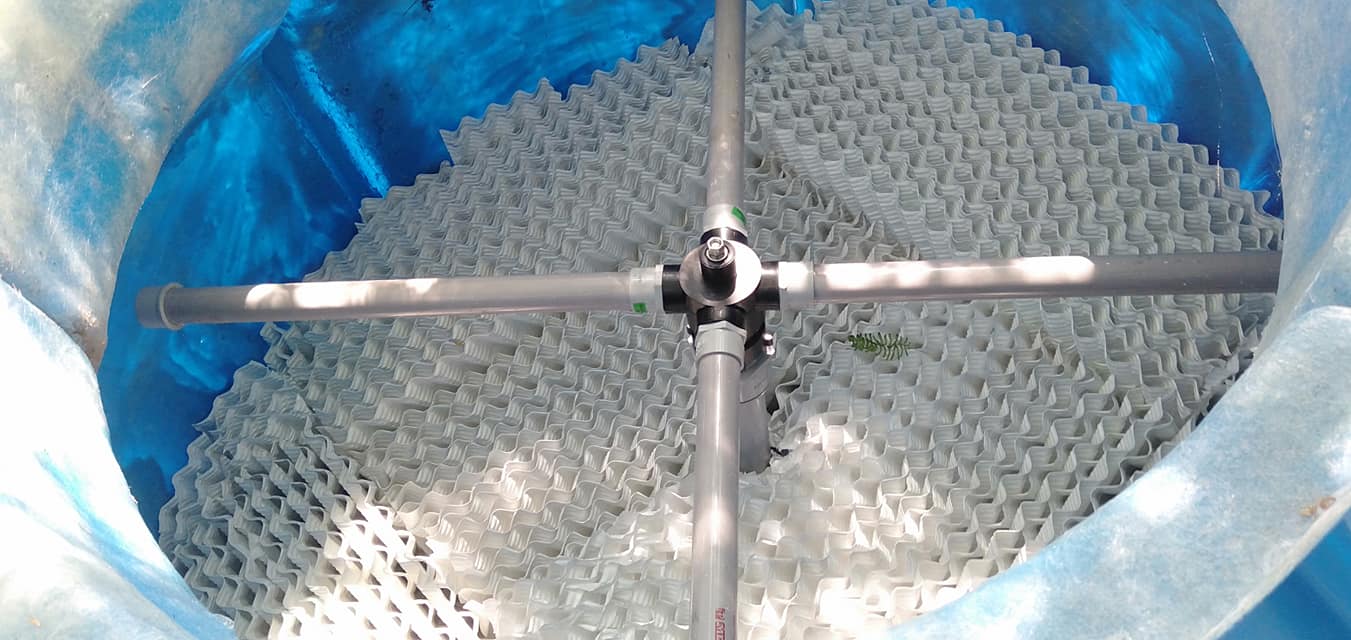
Types of Cooling Towers Common in Plastics
- Closed-Circuit Cooling Towers (Fluid Coolers): Increasingly popular. The process water (clean, treated) flows through a sealed coil, and tower water evaporates on the outside of the coil. This keeps the process loop clean, preventing fouling of sensitive mold channels and reactor jackets—a major maintenance advantage.
- Induced Draft Crossflow or Counterflow Towers: The standard workhorse for open-loop systems serving general plant cooling.
- Hybrid (Wet/Dry) Towers: Used where water conservation is critical or in areas with strict plume (visible vapor) regulations.
Critical Industry-Specific Considerations
1. Water Quality is Paramount
- Mold & Reactor Protection: Even tiny amounts of scale, corrosion, or biofilm can clog the intricate, small-diameter cooling channels in expensive molds (costing $100k+). This leads to uneven cooling, part defects (warpage, sinks), and costly downtime for cleaning.
- Treatment Regime: Similar to refineries but often with a stronger emphasis on filtration and corrosion inhibition. Side-stream sand filters, water softeners, and rigorous chemical treatment (biocides, scale inhibitors) are standard.
2. Temperature Stability & Control
- Consistency is Key: Fluctuations in cooling water temperature can cause variations in part dimensions (tolerances), surface finish, and mechanical properties in injection molding. Modern systems use precise control valves and variable-speed drives on pumps/fans.
- Different Temperatures for Different Needs: A plant may have multiple loops:
- Tower Water Loop: ~30°C (for general cooling)
- Process Chiller Loop: ~5-10°C (for mold cooling)
- Reactor Loop: A specific, tightly controlled temperature.
3. Energy Efficiency = Direct Cost Savings
- For Injection Molders: The cooling phase can account for over 50% of the total cycle time. More efficient cooling (colder, faster water) directly increases production capacity.
- Chiller Efficiency: A 1°C reduction in cooling tower water temperature can improve chiller efficiency (COP) by 2-3%, leading to substantial electricity savings.
4. Environmental, Health & Safety (EHS)
- Legionella Management: As in all cooling towers, rigorous water treatment and monitoring are legally required to prevent bacterial outbreaks.
- Water Conservation: In water-scarce regions, high-cycle-concentration operation, blowdown control, and water reuse are critical.
- Plume Abatement: Some facilities in populated areas use hybrid or dry systems to minimize the visible vapor plume.
Economic Impact
- Production Bottleneck: In many plastic plants, cooling capacity can be the limiting factor for production output. Upgrading the cooling system is often a direct path to increasing revenue.
- Product Quality: Consistent cooling is directly linked to lower scrap rates, fewer defects, and higher product quality.
- Maintenance Costs: A well-maintained cooling system prevents catastrophic failures in molds and reactors, avoiding production stops that can cost tens of thousands per hour.