

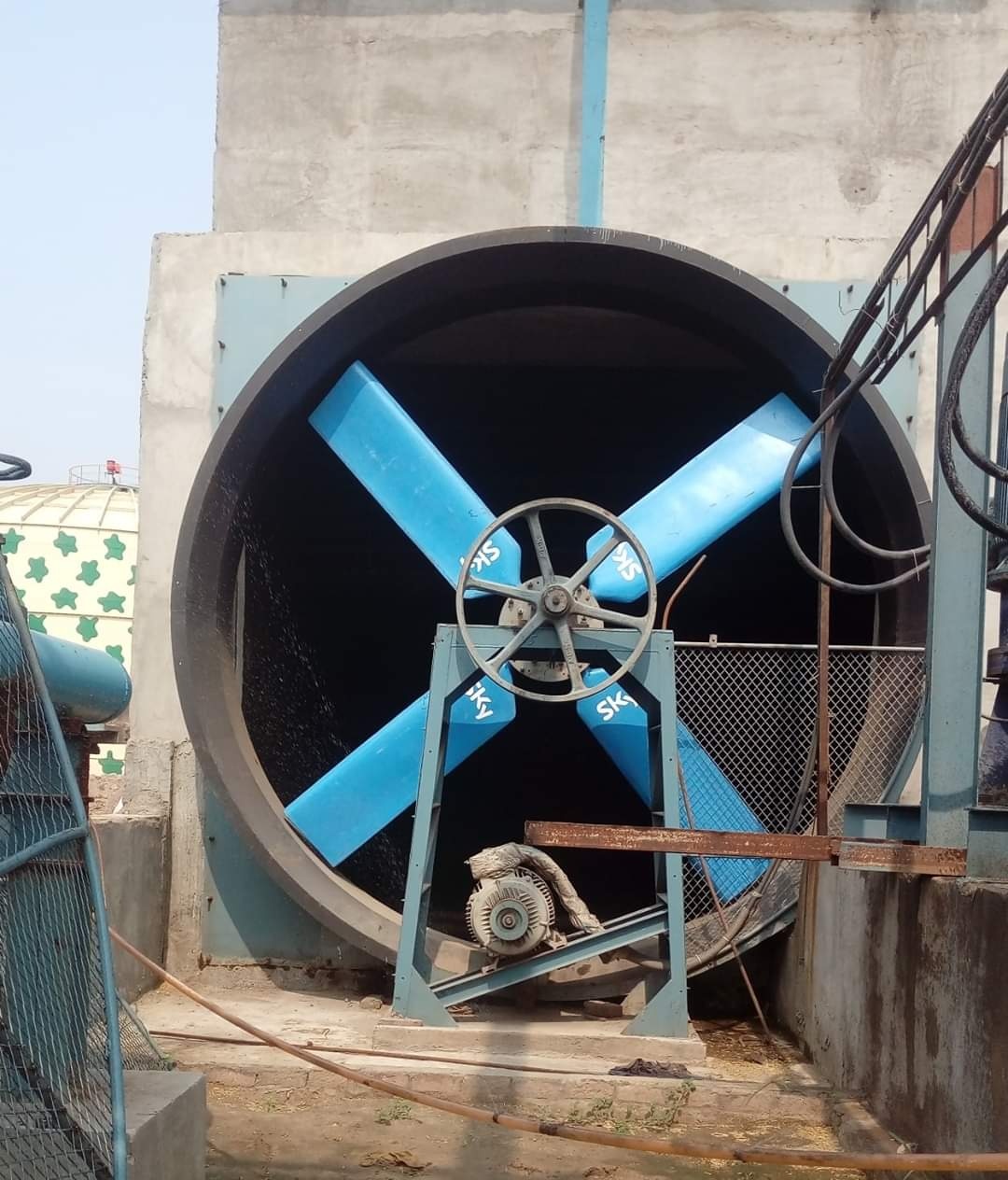
cooling tower for Plastics manufacturing industry The use of cooling towers in the plastics manufacturing industry is just as critical as in refining, but with a distinct focus on the polymerization and plastic-forming processes. Cooling towers are
the indispensable workhorses that manage the intense heat generated during these reactions and shape processes.
Here’s a detailed breakdown of their specific applications in plastics manufacturing:
Core Role: Process Heat Rejection
The fundamental job is to provide a continuous, reliable supply of chilled water (typically 27-35°C or 80-95°F) to remove the enormous exothermic heat from polymerization and to solidify plastic products rapidly for quality and throughput.
Key Applications by Process
1. Polymerization Reactor Cooling (The Heart of Plastics Making)
This is the single largest and most critical use. The chemical reactions that create polymer resins (e.g., polyethylene, polypropylene, PVC, PET, polystyrene) are highly exothermic.
- Function: Reactor jackets and internal cooling coils use chilled water from the cooling tower to precisely control the reaction temperature.
- Why it’s Critical: Precise temperature control is vital for:
- Reaction Rate: Prevents runaway reactions (a major safety hazard).
- Product Quality: Determines molecular weight, branching, and crystallinity—key properties of the final plastic.
- Catalyst Efficiency: Optimizes catalyst performance and yield.
2. Extrusion & Pelletizing (Resin Production)
After polymerization, the molten polymer is extruded and cut into small pellets (the raw material sold to plastic product manufacturers).
- Die Face Cutting (Underwater Pelletizing): Molten polymer strands are cut by a rotating knife inside a water-filled chamber. This water must be continuously chilled by the cooling tower to instantly solidify the pellets, prevent them from sticking together, and maintain consistent shape.
- Strand Pelletizing: Molten strands are cooled in a water bath before being cut. The bath temperature is tightly controlled by the cooling tower system.
3. Plastic Molding & Forming Processes (Conversion)
This is where pellets are melted and shaped into final products. Cooling dictates cycle time and quality.
- Injection Molding: The molten plastic is injected into a cold mold. Mold Temperature Control Units (TCUs) circulate chilled water through channels in the mold to rapidly solidify the part. Faster cooling means shorter cycle times and higher production rates.
- Blow Molding (for bottles, containers): The “parison” (hot tube of plastic) must be cooled to set the final shape. Internal and external cooling (often using chilled air or water) is essential.
- Film Blowing & Casting (for plastic bags, packaging): The molten plastic bubble or sheet is cooled by air rings and chill rolls. Chill rolls are internally cooled with chilled water from the tower. Precise cooling prevents haze, controls clarity, and enhances strength.
4. Auxiliary Equipment Cooling
- Hydraulic Systems: The massive hydraulic pumps on injection molding machines generate significant heat. Chilled water cools the hydraulic oil to maintain viscosity and system efficiency.
- Air Compressors: Intercoolers and aftercoolers on plant air compressors rely on cooling tower water.
- Process Chillers: Large central chillers (which provide colder, closed-loop coolant for molds) reject their heat to the cooling tower water in their condenser circuit. The cooling tower’s efficiency directly dictates the chiller’s efficiency and power consumption.