

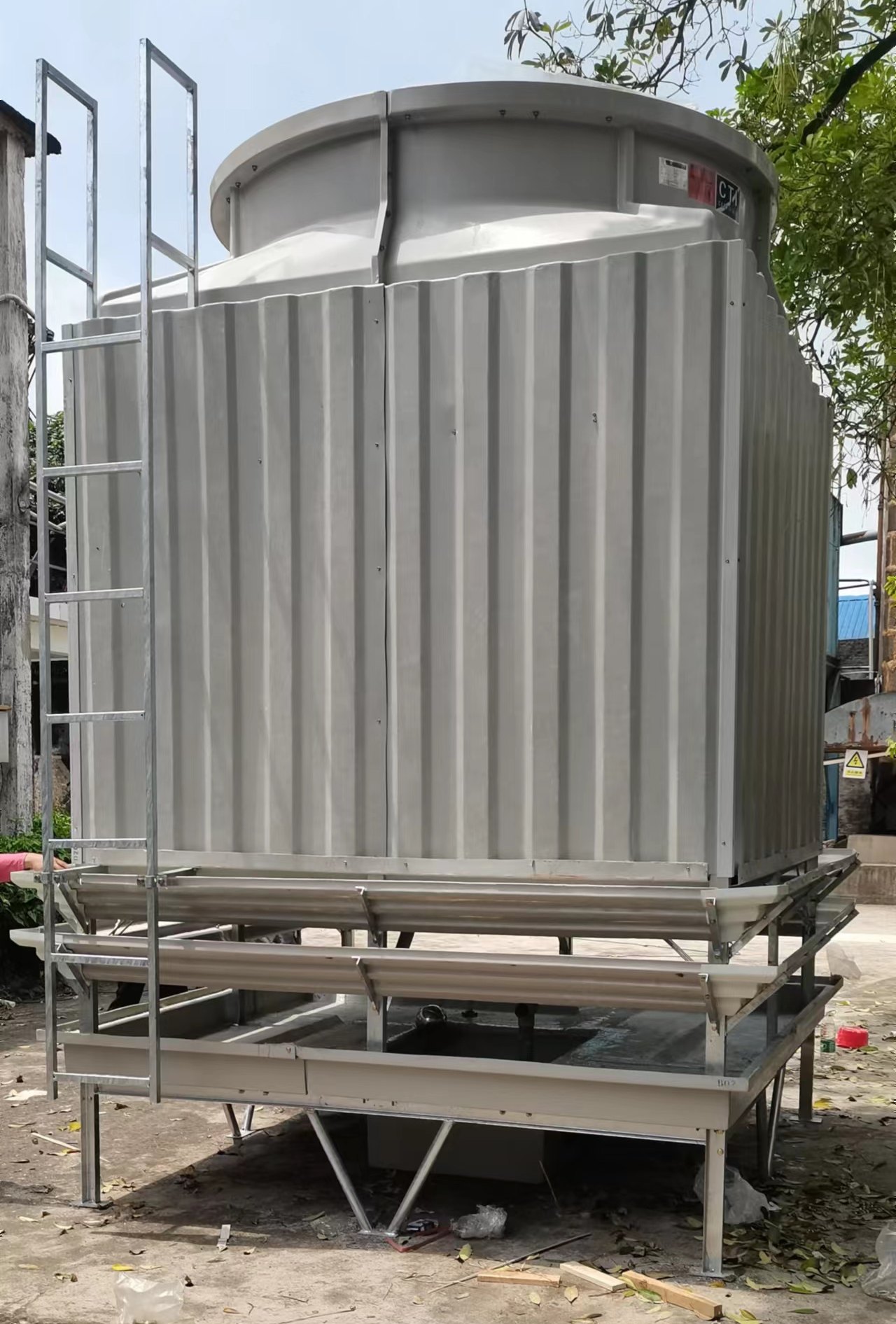
Unique Requirements & Challenges in Chem/Pharma for cooling tower
1. Water Quality: The Purity Imperative
- Pharmaceutical (FDA-Regulated): Uses high-purity water as coolant. Systems often employ closed-loop cooling towers with a plate heat exchanger separating the tower water from the ultra-clean process cooling water (PCW) loop. This prevents contamination of process equipment with scale, biofilm, or treatment chemicals.
- Chemical: Must handle potential catastrophic leaks. If a process heat exchanger fails, acids, solvents, or monomers could contaminate the cooling water. Systems need robust monitoring (pH, conductivity) and emergency dump capabilities.
2. Reliability & Redundancy: “Zero Failures” Mentality
- A batch of pharmaceuticals can be worth millions of dollars and take weeks to produce. A cooling failure that ruins a batch is catastrophic.
- Cooling systems are designed with full redundancy: multiple independent cooling towers, pumps on automatic standby, and often a backup connection to a city water supply or emergency tank.
3. Corrosion & Materials of Construction
- Chemical plants often use specialized materials (stainless steel 316L, duplex steels, titanium, or non-metallic fills) in towers and piping to resist corrosive atmospheres (e.g., from chloralkali plants) or contaminated water.
Legionella & Biofilm Control: A Major Risk
- Warm, aerated cooling tower water is an ideal breeding ground for Legionella bacteria. An outbreak originating from a plant can have severe public health and liability consequences.
- Stringent water treatment protocols are mandated, often including:
- Automated biocide dosing (oxidizing + non-oxidizing).
- Continuous monitoring of disinfectant levels.
- Regular testing for Legionella.
- Detailed maintenance logs for regulatory audits (FDA, EPA, OSHA).
5. Temperature Stability Over Absolute Coldness
- While power plants seek the coldest water for efficiency, chem/pharma plants often need stable, consistent water temperature (±0.5°C) to maintain process set points, even if it’s slightly warmer. Control systems are paramount.