

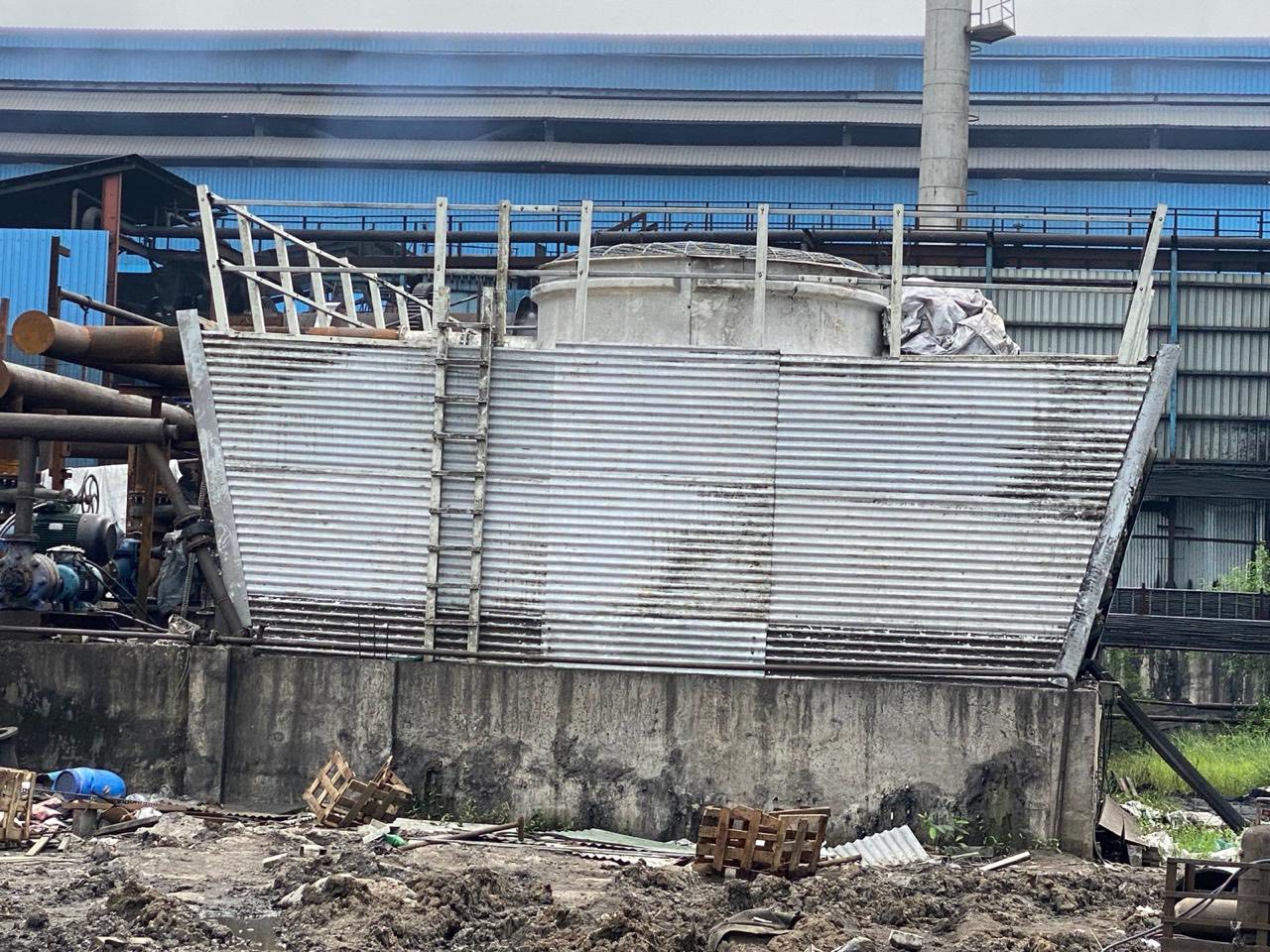
Cooling tower for Thermal Power Plants
Here is a detailed look at Cooling Towers for Thermal Power Plants, building on the foundational role they play.
In thermal power plants (coal, gas, nuclear, biomass), cooling towers are not an optional add-on but a critical component of the heat rejection system. They directly determine plant efficiency, location feasibility, and environmental footprint.
1. Core Function: The Condenser’s Partner
The steam turbine is the workhorse, but the condenser is what makes the cycle work. After expanding through the turbine, the low-pressure steam must be condensed back into water to be pumped back to the boiler. This condensation releases a massive amount of latent heat (about 2,200 kJ per kg of steam).
- The Problem: The condenser needs a constant supply of cool water to absorb this heat.
- The Solution: The cooling tower cools down the now-warmed cooling water from the condenser so it can be reused in a closed loop.
Simple Cycle:
Boiler → Turbine → Condenser (heat transfer to cooling water) → Cooling Tower (heat rejected to air) → Back to Condenser
. Why are they so large? The Scale of Heat Rejection
The numbers are staggering. A typical 500 MW coal plant converts only about 35-40% of the heat from fuel into electricity. The remaining 60-65% is waste heat that must be dissipated.
- This means a 500 MW plant may need to reject over 700 MW of thermal energy—equivalent to the heat from about 700,000 household kettles running continuously.
- Cooling towers handle this monumental task by evaporating vast amounts of water. A plant of this size can evaporate several million gallons of water per day.
3. Types of Cooling Towers Used in Thermal Plants
A. Natural Draft Cooling Towers
- Iconic hyperbolic shape. The design uses the chimney effect: warm, moist air inside the tower is less dense and rises, pulling in cooler air at the base.
- No large fans. Operate on physics alone, leading to very low electrical operating costs.
- Massive scale: Can be over 200 meters (650 ft) tall and 150 meters in diameter at the base.
- Typical Use: Large base-load plants (nuclear, big coal) where continuous, high-capacity cooling is needed. High capital cost, but justified over a 30-40 year lifespan.
B. Mechanical Draft Cooling Towers
- Use large electric fans to force air through the tower.
- Induced Draft (Most Common): Fans at the top outlet pull air upward. Better air distribution, less recirculation.
- Forced Draft: Fans at the bottom inlet push air in. Simpler fan maintenance but prone to uneven airflow.
- Typical Use: Smaller plants, combined-cycle gas turbines (CCGT), or as modular units. More flexible, lower initial cost, but higher operating cost (fan power).
C. Wet vs. Dry vs. Hybrid Systems
- Wet Cooling Towers (Above): Rely on evaporation for most of the cooling. Highly efficient but have high water consumption (evaporation + drift + blowdown to control dissolved solids).
- Dry Cooling Towers: Use air-cooled condensers (ACC). No evaporation, just sensible heat transfer to air via finned tubes. Use 80-90% less water, but are much more expensive, less efficient (especially on hot days), and require enormous surface areas. Used in arid regions.
- Hybrid Cooling Towers: Combine wet and dry sections. Optimize for water savings when it’s hot and peak efficiency when it’s cooler. Capital-intensive but a compromise for water-stressed areas.
. Key Design and Operational Parameters
- Approach: The temperature difference between the cooled water leaving the tower and the ambient wet-bulb temperature. (Smaller approach = larger, more expensive tower).
- Range: The temperature drop of the water as it passes through the tower (Hot water in – Cold water out). Typically 10-15°C (18-27°F).
- Wet-Bulb Temperature: The ultimate limit. This is the lowest temperature achievable by evaporative cooling and dictates tower size and performance. A plant’s output can drop on hot, humid days due to reduced cooling tower efficiency.
- Blowdown: Purge water removed to control salinity and scaling from evaporation. Requires make-up water from a river, lake, or dedicated source to replace evaporation, drift, and blowdown losses.
5. The Water-Energy Nexus: Critical Trade-offs
The cooling tower sits at the heart of the water-energy nexus:
- Choice: Build near abundant water (using once-through cooling) and cause thermal pollution.
- Or: Use a wet cooling tower almost anywhere, but consume significant water via evaporation.
- Or: Use a dry cooler to save water, but sacrifice efficiency and output, especially on hot days, and incur higher costs.
Environmental Regulations in many regions now push plants away from once-through cooling to protect aquatic life, making cooling towers (often with water treatment) the standard choice for new plants.
6. The Visual Plume: A Sign of Efficiency
The white plume is saturated moist air condensing in cool ambient air. It is not pollution but visible water vapor. Its presence indicates the tower is working effectively. In some plants, plume abatement systems are considered to reduce visual impact.
Summary Table: Role of Cooling Towers in Thermal Power Plants
| Aspect | Role/Impact of Cooling Tower |
| Thermodynamic Cycle | Enables condensation of exhaust steam, maintaining the low pressure needed for efficient turbine work. |
| Plant Location | Frees plants from needing a massive body of water, allowing siting near fuel sources or load centers. |
| Plant Efficiency | Directly impacts the heat rate. Colder cooling water = better efficiency and more megawatts. |
| Water Usage | Major consumer of fresh water (for wet towers), defining the plant’s environmental footprint. |
| Environmental Compliance | Key tool to meet regulations on thermal discharge and water usage. |
| Plant Output | Output can be derated on very hot/humid days due to reduced cooling capacity. |
| Capital & Operating Cost | Significant portion of plant’s non-generating infrastructure. Choice affects both CAPEX and OPEX. |