

Why a Separate Cooling Tower for Auxiliary Cooling?
This is the crucial distinction from the main condenser cooling system:Reliability & Independence: The auxiliary cooling system must remain operational even when the main turbine is tripped or offline. A dedicated, independent cooling tower
- ensures that critical equipment (like bearing cooling during turbine coast-down) still functions. It is a safety-related system.
- Water Quality & Cleanliness: The CCCW system is a closed, treated loop. It uses high-purity, demineralized water with corrosion inhibitors to protect the sensitive, expensive heat exchanger tubes in lube oil coolers and other equipment from scaling and corrosion. The main condenser cooling water is often “raw” water (river, lake, or seawater) or less-treated water, which is unsuitable for these delicate components.
- Temperature Control: Auxiliary systems often require more precise and stable cooling water temperatures (e.g., to maintain proper lube oil viscosity) than the main condenser, which can tolerate wider swings. A dedicated system allows for better control.
- Reduced Risk of Contamination: Isolating the sensitive auxiliary heat exchangers from the often-dirty main cooling water loop prevents fouling and plugging.
Typical System Configuration: A Closed-Loop with a Cooling Tower
This is the standard design for modern power plants:
- Hot Return: Warm water (typically ~115-120°F / 46-49°C) returns from the various auxiliary heat exchangers throughout the plant.
- Cooling Tower: The warm water is pumped to the auxiliary cooling tower. This is almost always a Closed-Circuit Cooling Tower (Fluid Cooler).
- Why Closed-Circuit? The clean, treated CCCW flows through a coil inside the tower. Spray water is evaporated on the outside of the coil. This 100% isolates the process fluid from atmospheric exposure, preventing contamination, airborne debris, and water loss—critical for maintaining water chemistry.
- Cold Supply: The water is cooled (typically to ~85-90°F / 29-32°C) and is then pumped back to the auxiliary heat exchangers.
Alternative: In some plants, especially smaller or older ones, an open cooling tower with a plate-and-frame heat exchanger may be used to separate the clean CCCW loop from the “dirty” tower water loop.
Critical Design & Operational Considerations:
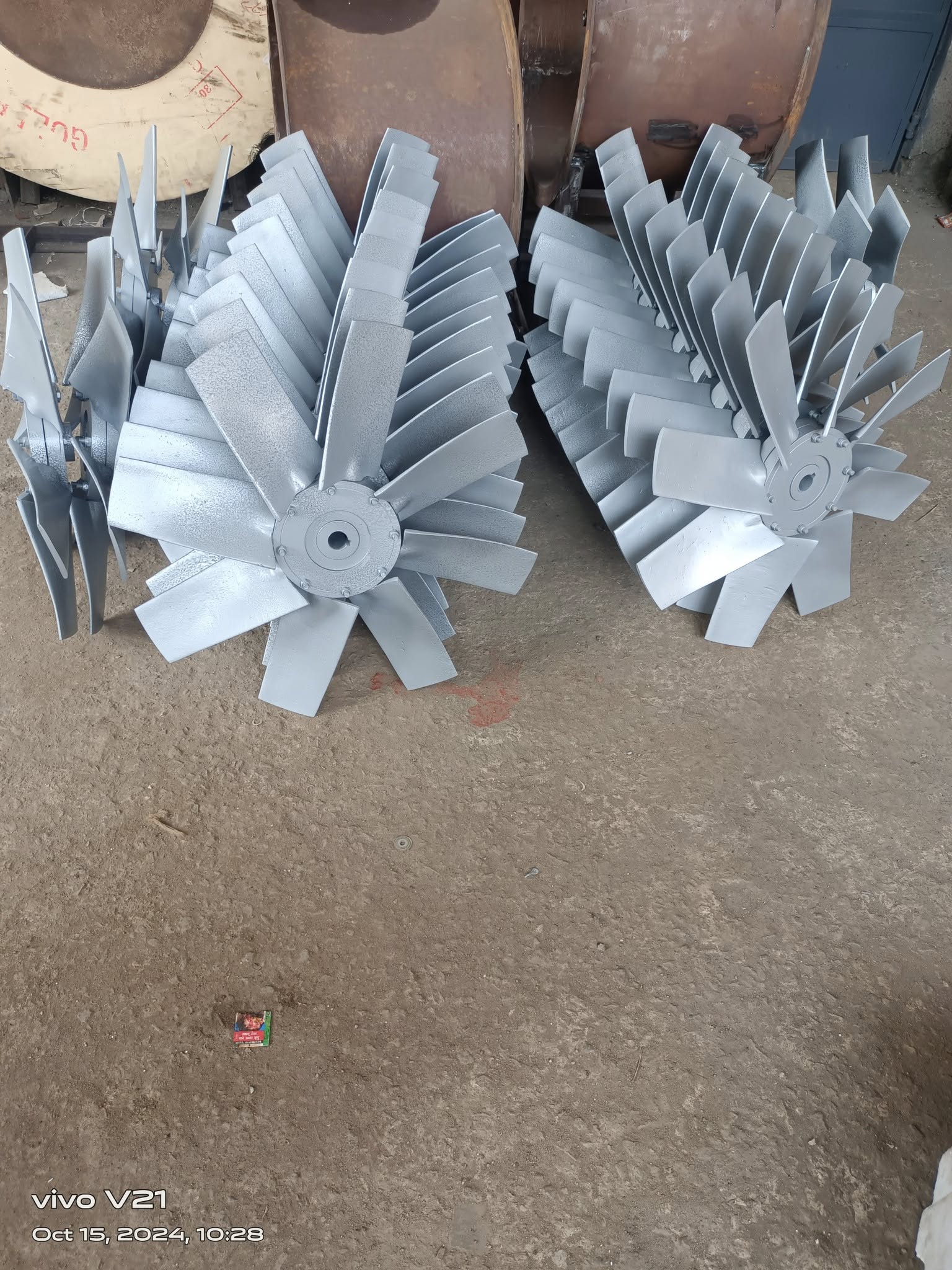
- Redundancy is Key: N+1 pump and fan design is standard. The failure of the auxiliary cooling system can force a full plant shutdown within minutes due to overheating bearings and other equipment.
- Water Treatment: The closed-loop chemistry is meticulously managed. Even minor leaks requiring make-up water must be of high purity (demineralized).
- Freeze Protection: Since the plant may operate year-round, towers in cold climates require basin heaters, variable speed fans, and sometimes glycol loops to prevent ice damage.
- Location: The auxiliary cooling tower is sited separately from the main condenser cooling towers to ensure independence and often to be closer to the auxiliary equipment it serves (like in the turbine building annex).
Analogy:
Think of a car:
- The Main Condenser & its Cooling Tower is like the radiator cooling the engine block.
- The Auxiliary Cooling Tower & CCCW system is like the oil cooler, transmission cooler, and intercooler—separate, dedicated loops cooling critical subsystems to keep the entire vehicle running smoothly and safely.