

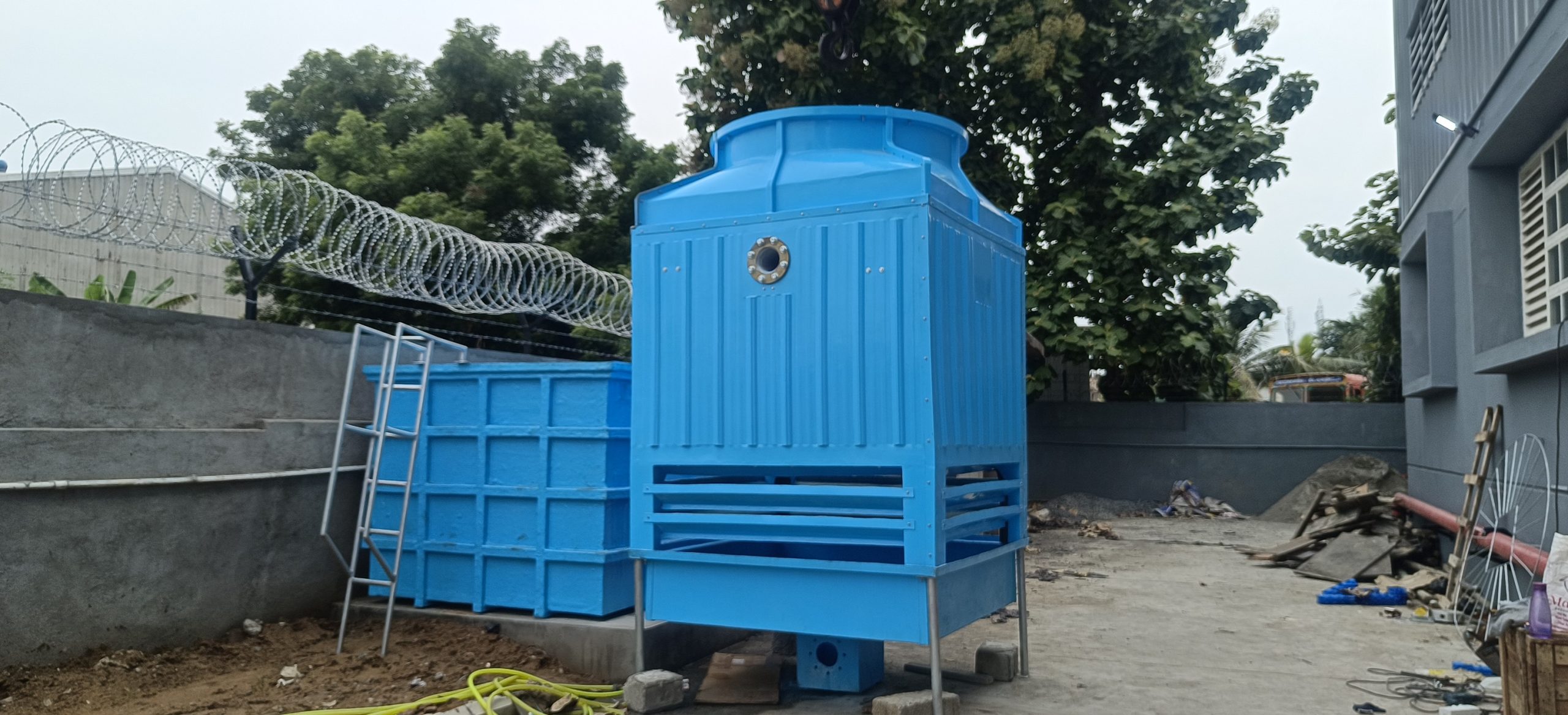
FACTORS AFFECTING COOLING TOWER PERFORMANCE
| Factor | Effect on Performance | Typical Symptoms |
| Fouled Fill | Increased approach, higher pressure drop | Reduced cooling, higher fan amps |
| Clogged Nozzles | Poor water distribution, dry spots in fill | Uneven cooling, higher approach |
| Worn/Clogged Drift Eliminators | High static pressure, reduced airflow | Reduced capacity, higher fan amps |
| Fan Issues (loose belts, worn bearings, blade angle) | Reduced airflow | Higher approach, abnormal noise/vibration |
| Air Inlet Blockage (debris, ice) | Reduced/uneven airflow | Reduced capacity, ice formation |
| Poor Water Quality (high TDS, scaling) | Reduced heat transfer, increased corrosion | High approach, visible scale, corrosion damage |
PERFORMANCE TESTING & EVALUATION
Acceptance Test (ASHRAE/CTI Standards)
- Conducted to verify the tower meets guaranteed performance.
- Measures: Water flow rates, inlet/outlet water temps, WBT, fan power, air flow.
- Corrects data to standard conditions for comparison.
Routine Performance Monitoring
- Approach trend over time (early indicator of problems).
- Range vs. design.
- Fan motor amps (indicator of air flow).
- Water consumption (make-up rate).
Calculating “Degradation from Design”
- Compare current approach at design conditions (extrapolated from curves) to the original design approach.
- >1.5–2°C increase typically indicates need for maintenance.
OPTIMIZING PERFORMANCE
- Load Matching: Use VFDs on fans/pumps to match part-load conditions.
- Water Treatment: Optimize COC and biocide programs to keep fill clean.
- Regular Maintenance:
- Inspect/clean fill annually.
- Clean distribution nozzles/basins.
- Check fan balance and alignment.
- Winter Operations: Use inversion controls (fan cycling, VFDs) to maintain temperature without overcooling/freezing.
- Upgrades: Replace old fill with high-efficiency film fill, install high-efficiency drift eliminators, upgrade to VFD fans.