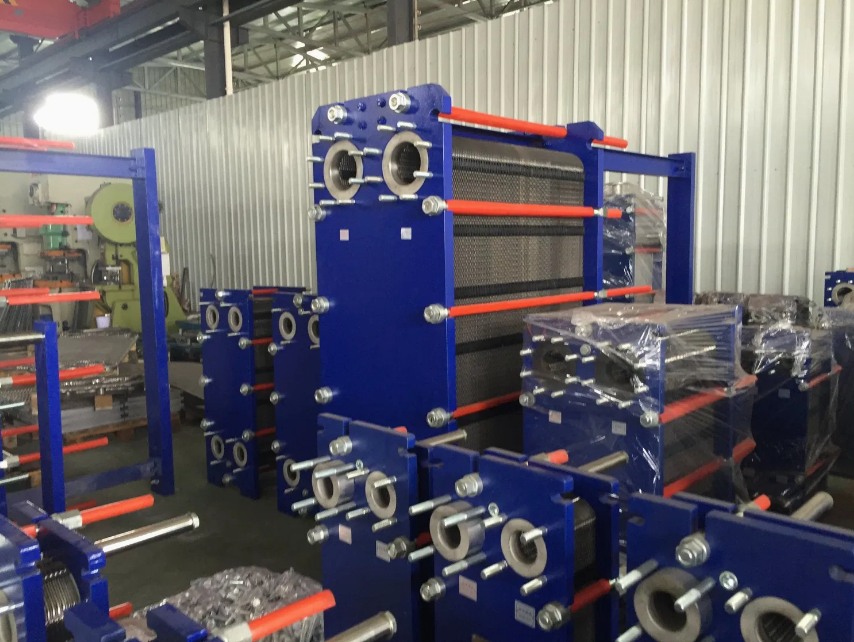
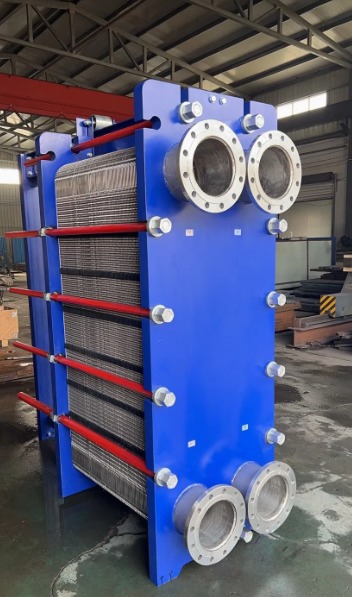
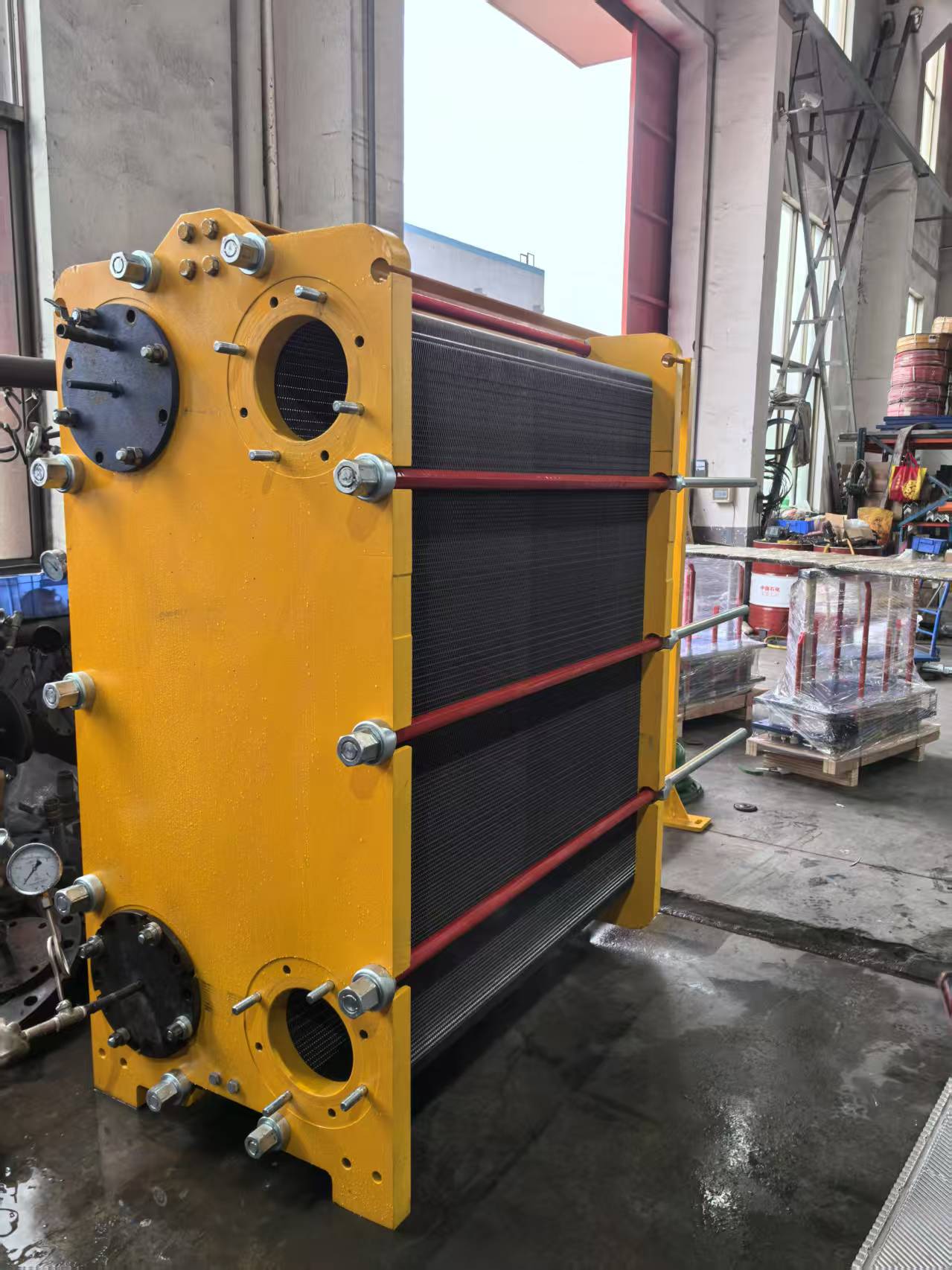
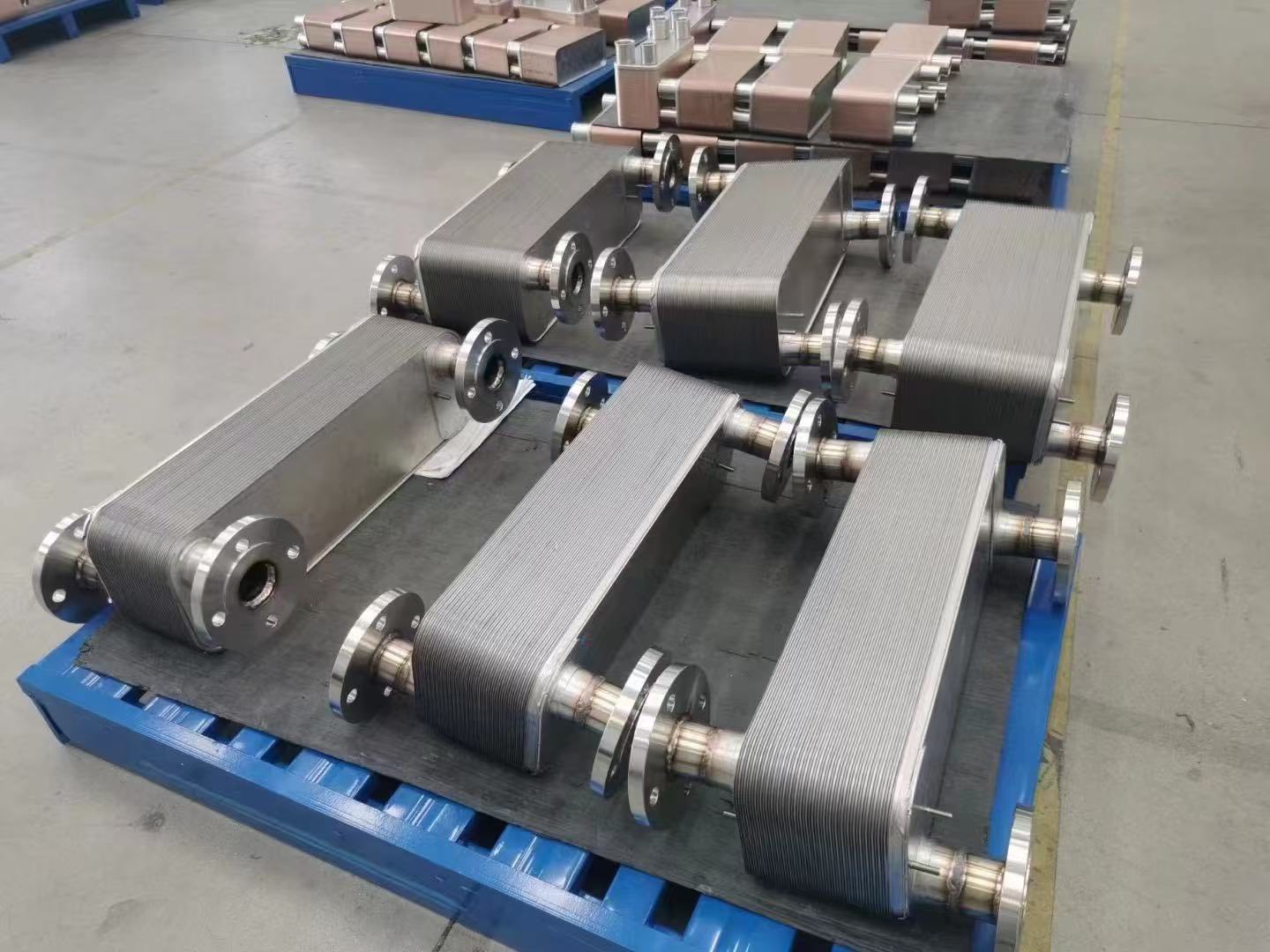
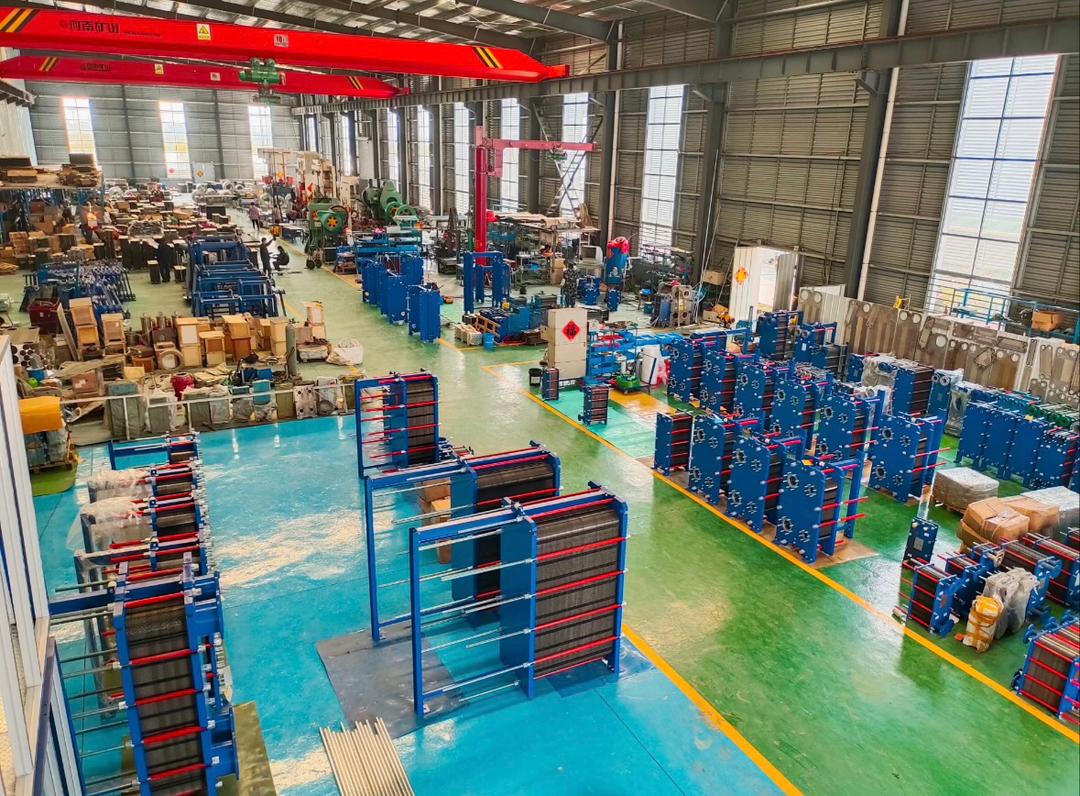
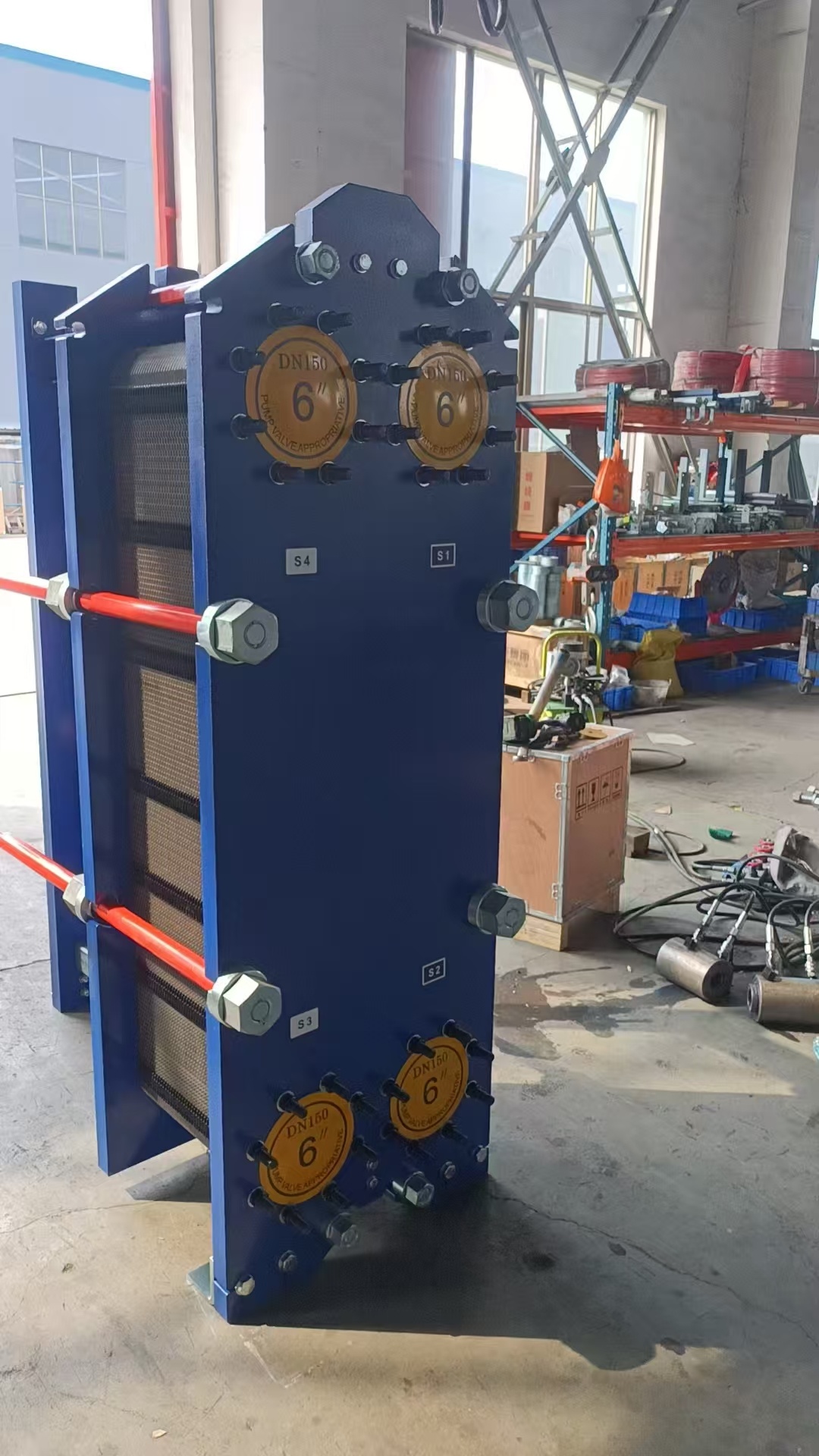
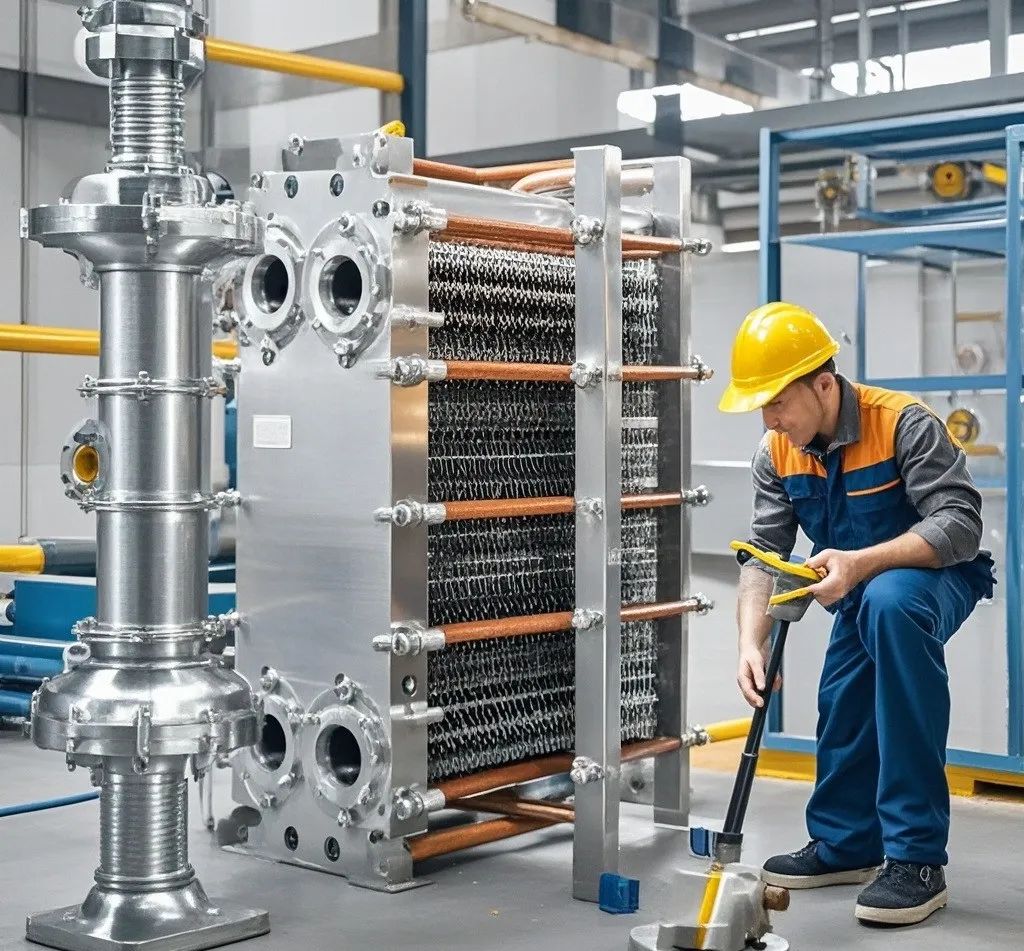
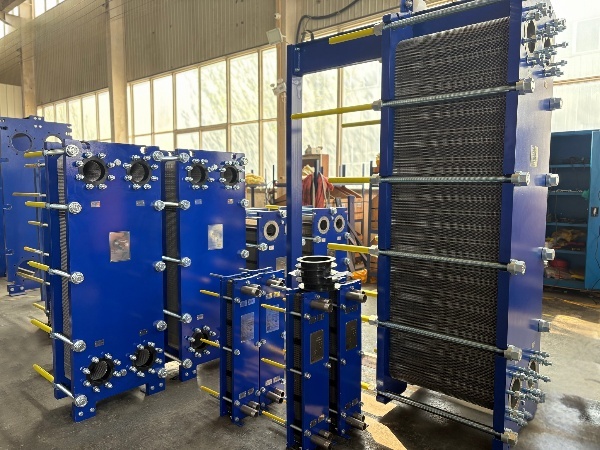
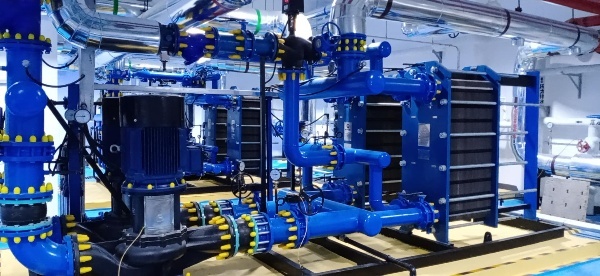
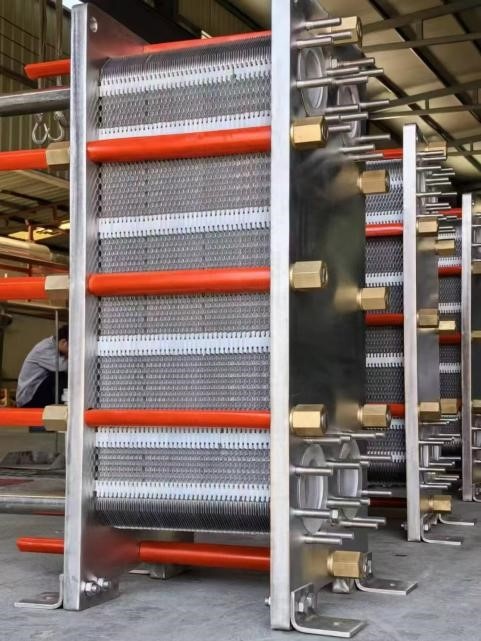
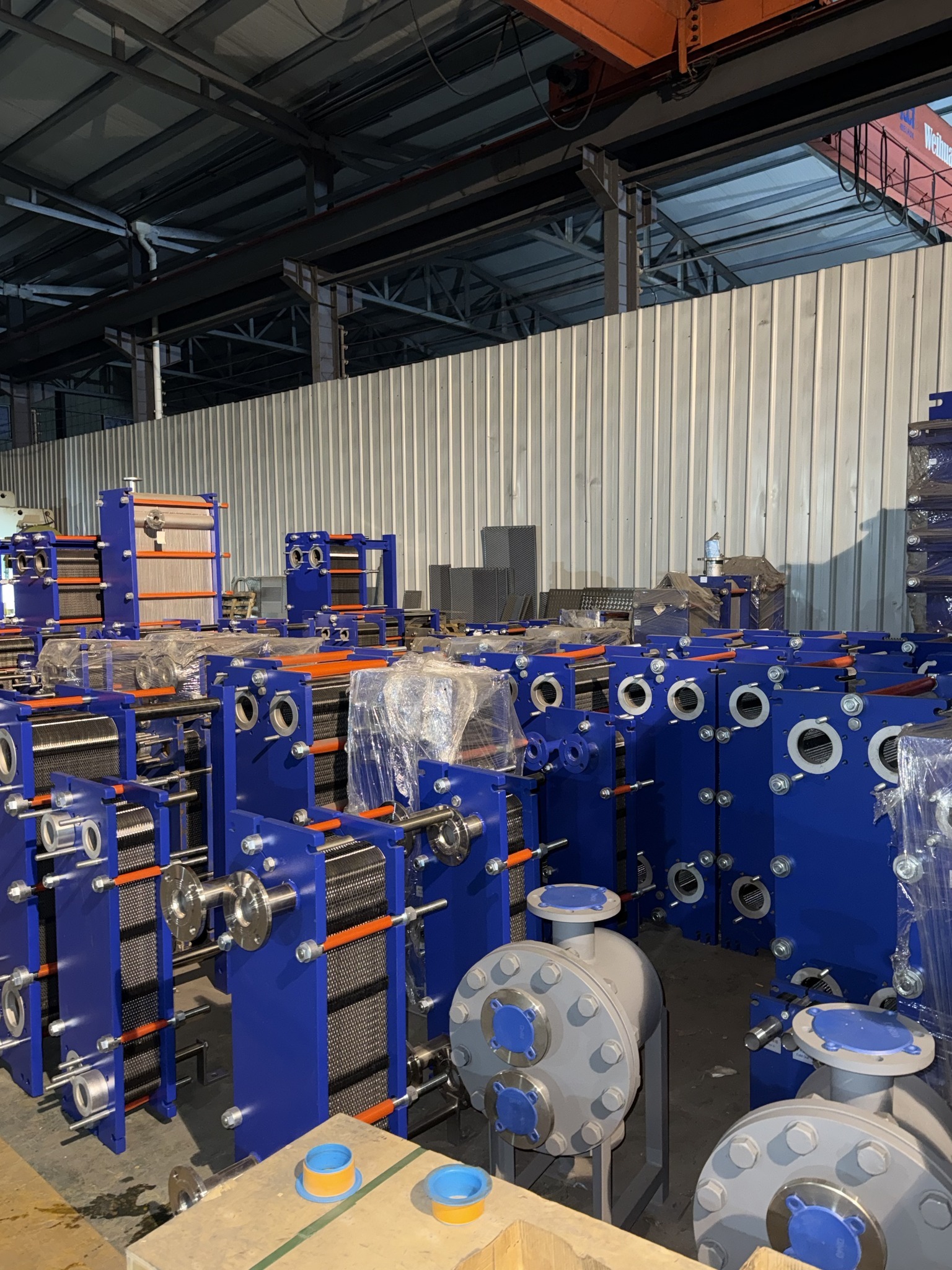
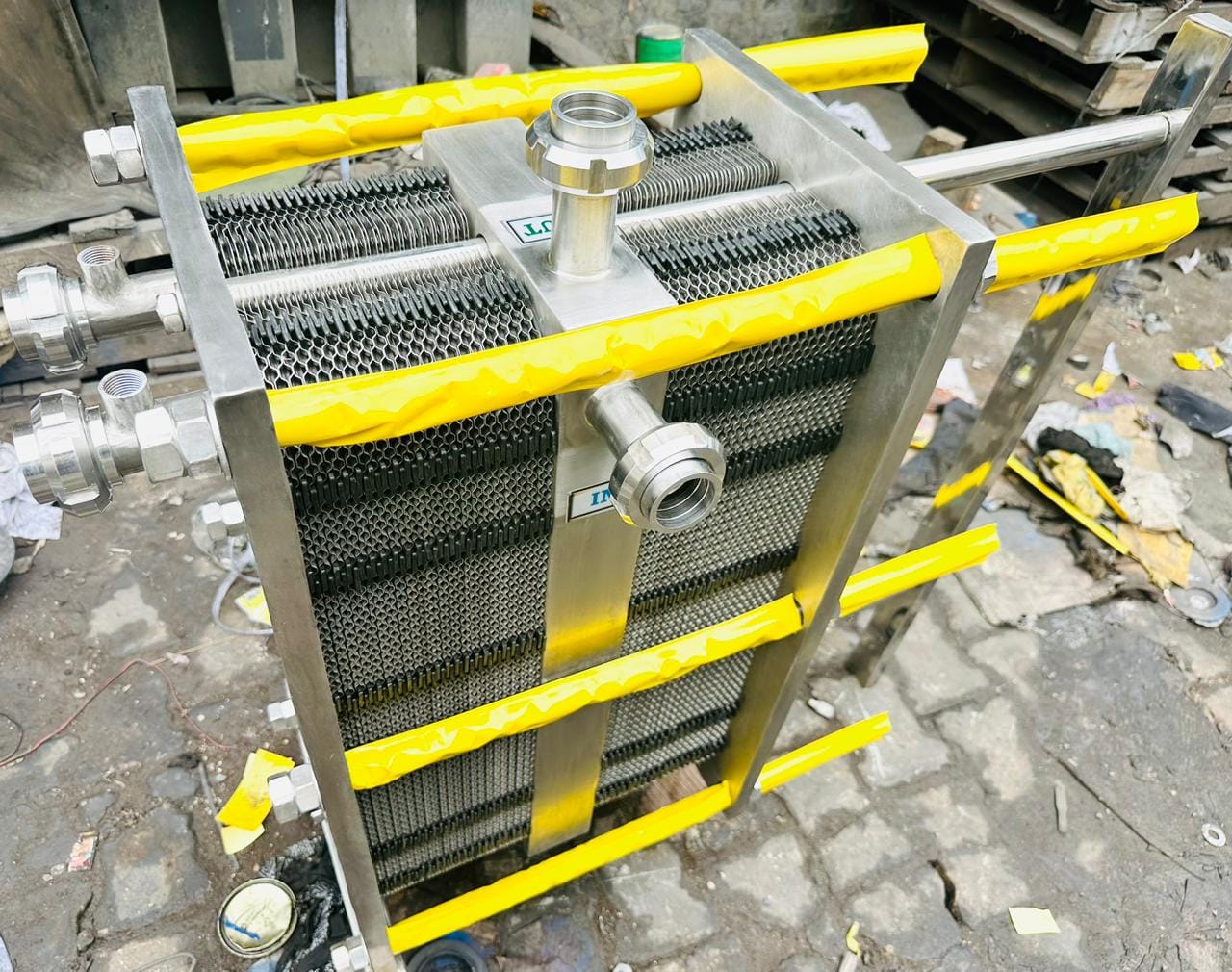
Thermal plates and gaskets The most important and most expensive part of a PHE is its thermal plates, which are made of metal, metal alloy, or even special graphite materials, depending on the application. Stainless steel, titanium, nickel, aluminum, Inconel Hastelloy, Monel, and tantalum are some examples commonly found in industrial applications....
How does a plate heat exchanger work? Heat transfer theory The law of physics always allows the driving energy in a system to flow until equilibrium. Heat dissipates when there is a temperature difference. A heat exchanger follows the equalisation principle. With a plate heat exchanger, heat cuts through the surface and separates the hot […]
The two fluid medium in the system follows a counter flow path with; one fluid getting in from top while leaving at bottom and another entering at bottom and leaving at top. The rate of flow is controlled in the system to avoid negative effects of turbulence flow such as erosion. The type and length […]
A single metal plate can have high or low tetra pattern which aids in efficient heat exchange between the liquids. These corrugated structure types create turbulence in the flow; creating much better heat exchange between the two media. The complete plate pack assembly is as such; that the hot medium flows on one side of […]
A plate type heat exchanger transfer heat from one medium to another with the help of identical thin plates; made of titanium or stainless steel. They are held together with the help a fine clearance maintained by the gasket material of rubber and asbestos fibre. They are much compact and have an added advantage of […]
Gasketed Plate Heat Exchangers The plate-and-frame or gasketed plate heat exchanger (PHE) consists of a number of thin rectangular metal plates sealed around the edges by gaskets and held together in a frame The frame usually has a fixed end cover (headpiece) fitted with connecting ports and a movable end cover (pressure plate, follower, or...
Plate-type heat exchangers are usually built of thin plates (all prime surface). The plates are either smooth or have some form of corrugation, and they are either flat or wound in an exchanger. Generally, these exchangers cannot accommodate very high pressures, temperatures, or pressure and temperature differences. Plate heat exchangers (PHEs){can...
CLASSIFICATION OF HEAT EXCHANGERS Heat exchangers may be classified according to the following main criteria: •Recuperators •Regenerators •Direct Contact apparatus RECUPERATORS • The conventional heat exchangers with heat transfer between two fluids. • Hot steam A recovers some of the heat from stream B. REGENERATORS •Storage type heat...
A heat exchanger can be defined as any device that transfers heat from one fluid to another or from or to a fluid and the environment. They are specifically designed for the efficient transfer of heat from one fluid to another fluid over a solid surface. WHAT ARE HEAT EXCHANGERS USED FOR? They have the […]
. Double-pipe heat exchanger When one fluid flows through the smaller pipe, the other flows through the annular gap between the two pipes. These flows may be parallel or counter-flows in a double pipe heat exchanger. (a) Parallel flow, where both hot and cold liquids enter the heat exchanger from the same side, flow in […]
By maximum operating temperature, heat exchangers can be divided into low-temperature and high-temperature ones. The former work up to 500–650°C depending on the industry and generally don’t require special design and material considerations. The latter work up to 1000 or even 1400°C.[4][5][6] Double pipe heat exchangers are the simplest...
heat exchangers are designed to maximize the surface area of the wall between the two fluids, while minimizing resistance to fluid flow through the exchanger. The exchanger’s performance can also be affected by the addition of fins or corrugations in one or both directions, which increase surface area and may channel fluid flow or...
There are three primary classifications of heat exchangers according to their flow arrangement. In parallel-flow heat exchangers, the two fluids enter the exchanger at the same end, and travel in parallel to one another to the other side. In counter-flow heat exchangers the fluids enter the exchanger from opposite ends. The counter current...
A heat exchanger is a system used to transfer heat between a source and a working fluid. Heat exchangers are used in both cooling and heating processes.[1] The fluids may be separated by a solid wall to prevent mixing or they may be in direct contact.[2] They are widely used in space heating, refrigeration, air conditioning, power...
A plate heat exchanger functions as a specialized device for transferring thermal energy between two fluid streams using a series of metal plates. One of its primary advantages over traditional heat exchangers lies in the substantial increase in surface area for heat exchange, achieved by spreading the fluids across these plates. This...
Plate heat exchanger is composed of several key parts, including plates, gaskets, a frame, and inlet/outlet ports. The plates are thin, corrugated metal sheets that facilitate heat transfer between two fluids. Gaskets seal the space between plates, preventing leaks and directing fluid flow. The Plates: These are the core components where heat...
Cooling System Design Requirements The primary purpose of the engine cooling system is to reject heat from the jacket water coolant and auxiliary circuit if equipped, at greatest engine load, highest ambient temperature, and altitude. This section will outline the proper methods to be used for cooling system sizing. Heat Rejection Before a cooling...
Compressor Oil Coolers A compressor oil cooler (or other external heat load) should be connected into the after cooler circuit after the water has left the after cooler. The return line back into the circuit should be placed before the thermostat. If full flow is not needed to the compressor oil cooler, a bypass line […]
Two-Stage After cooler Cooling Systems The two-stage after cooler, currently offered for some gas engines, is intended to provide high temperature heat recovery for Electric Power Generation (EPG) applications and Reduce overall radiator sizing for Gas Compression applications. There are two coolant stages on the two-stage after cooler; the first...
All internal combustion engines produce heat as a byproduct of combustion andfriction. This heat can reach temperatures up to 1925°C (3500°F) and can havecatastrophic effects on engine components. Pistons, valves and cylinder headsmust be cooled to reduce the risk of detonation. Cylinder temperatures need to becontrolled so lubricating oil can...
Working Principles of Heat Exchanger Heat exchanger functions by transferring heat from higher to lower temperatures. Heat can thus be transferred from the hot fluid to the cold fluid if a hot fluid and a cold fluid are separated by a heat-conducting surface. The operation of a heat exchanger is governed by thermodynamics. Heat can […]
Common materials used in heat exchangers Selecting the materials used in a heat exchanger is a pivotal part of the design. They need to be heat conductive whilst withstanding any corrosive properties of the mediums involved. Some materials will wear or get dirty faster than others, so upkeep and durability is another consideration. Conductive...
Plate heat exchangers separate the fluids exchanging heat by the means of plates. These normally have enhanced surfaces such as fins or embossing and are either bolted together, brazed or welded. Plate heat exchangers are mainly found in the cryogenic and food processing industries. However, because of their high surface area to volume ratio,...
Other types of tubular exchanger include: Air Cooled Heat Exchangers consist of bundle of tubes, a fan system and supporting structure. The tubes can have various type of fins in order to provide additional surface area on the air side. Air is either sucked up through the tubes by a fan mounted above the bundle (induced […]
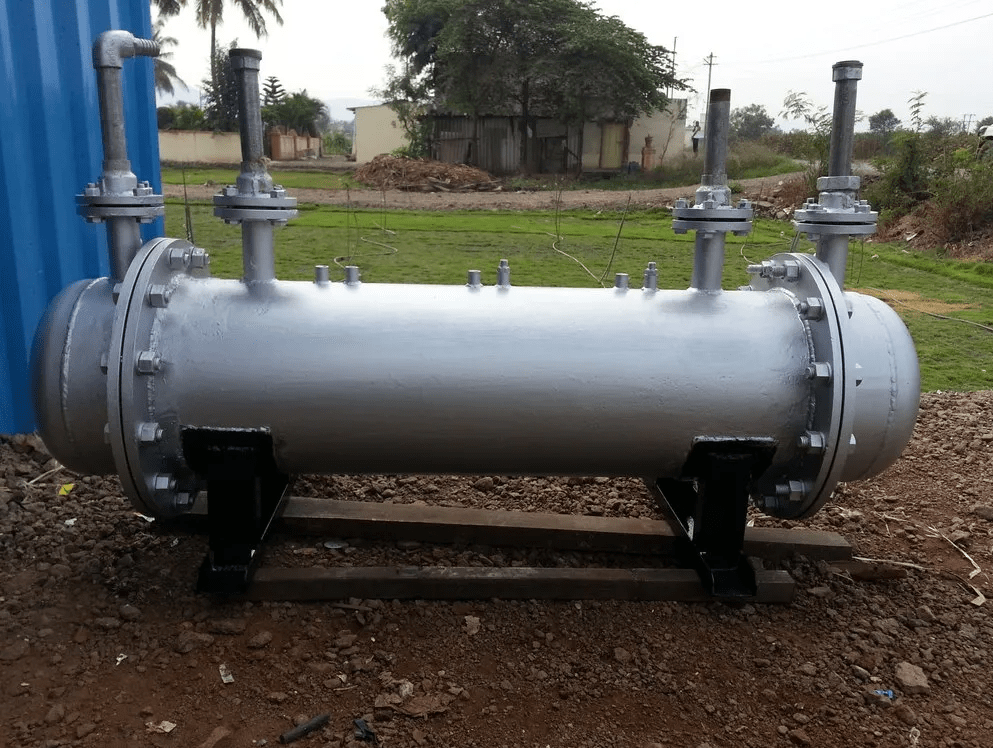
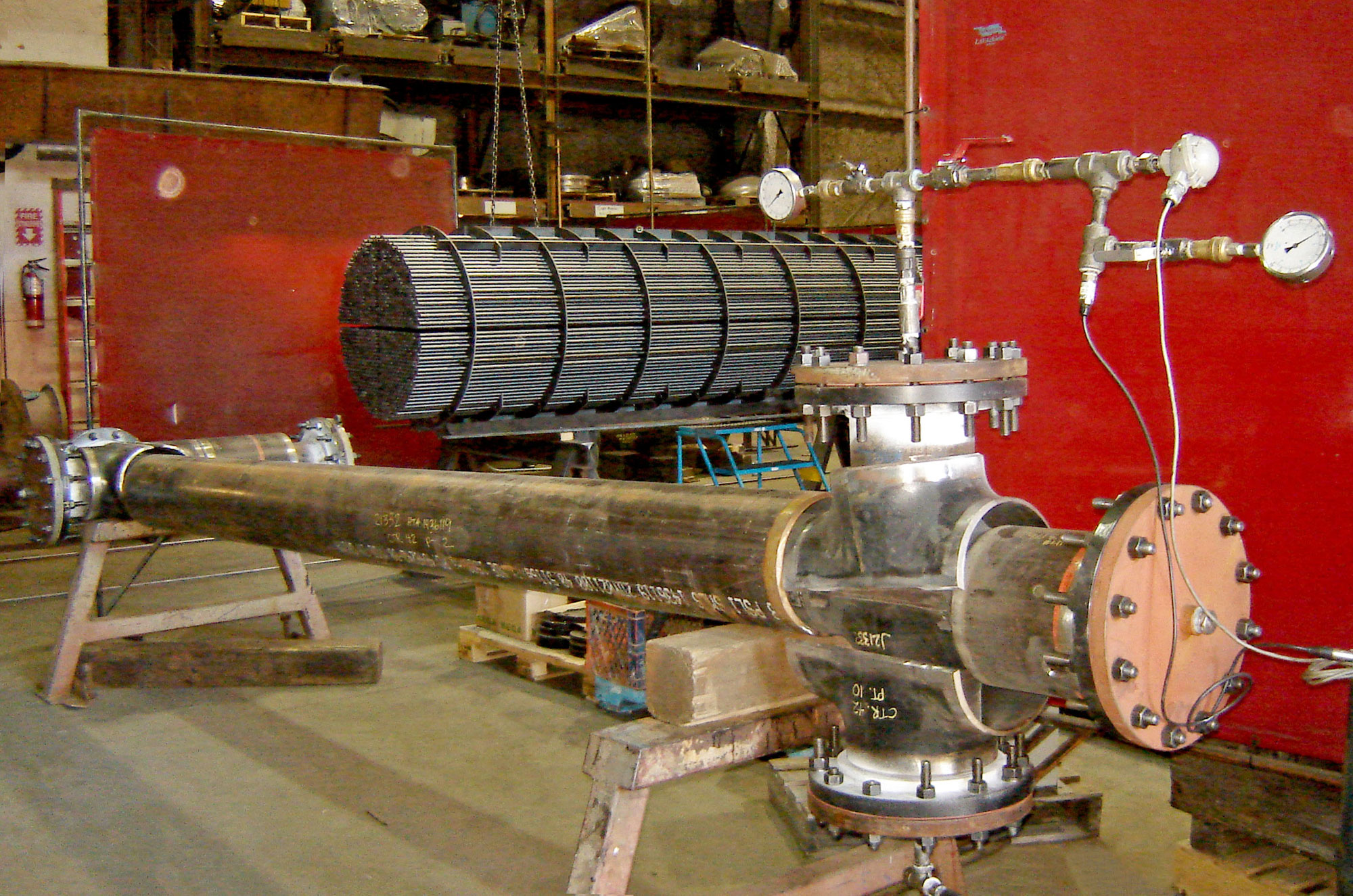
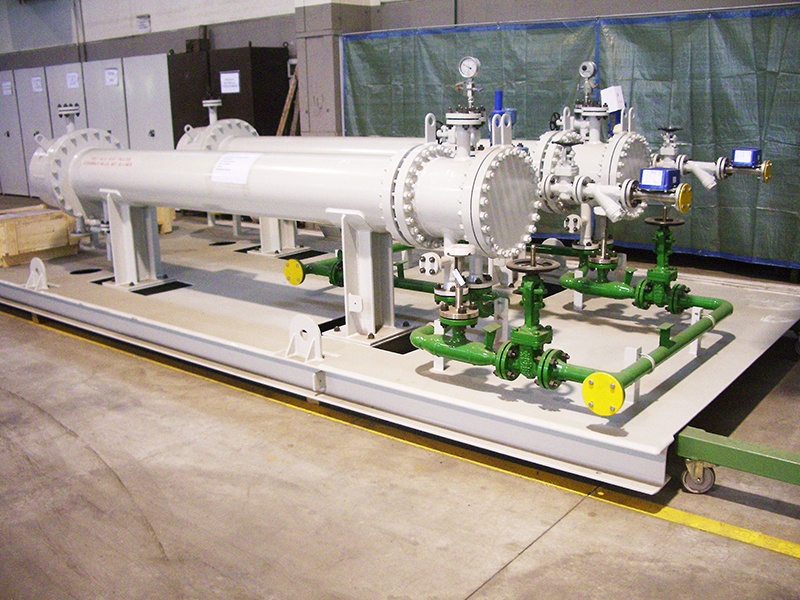
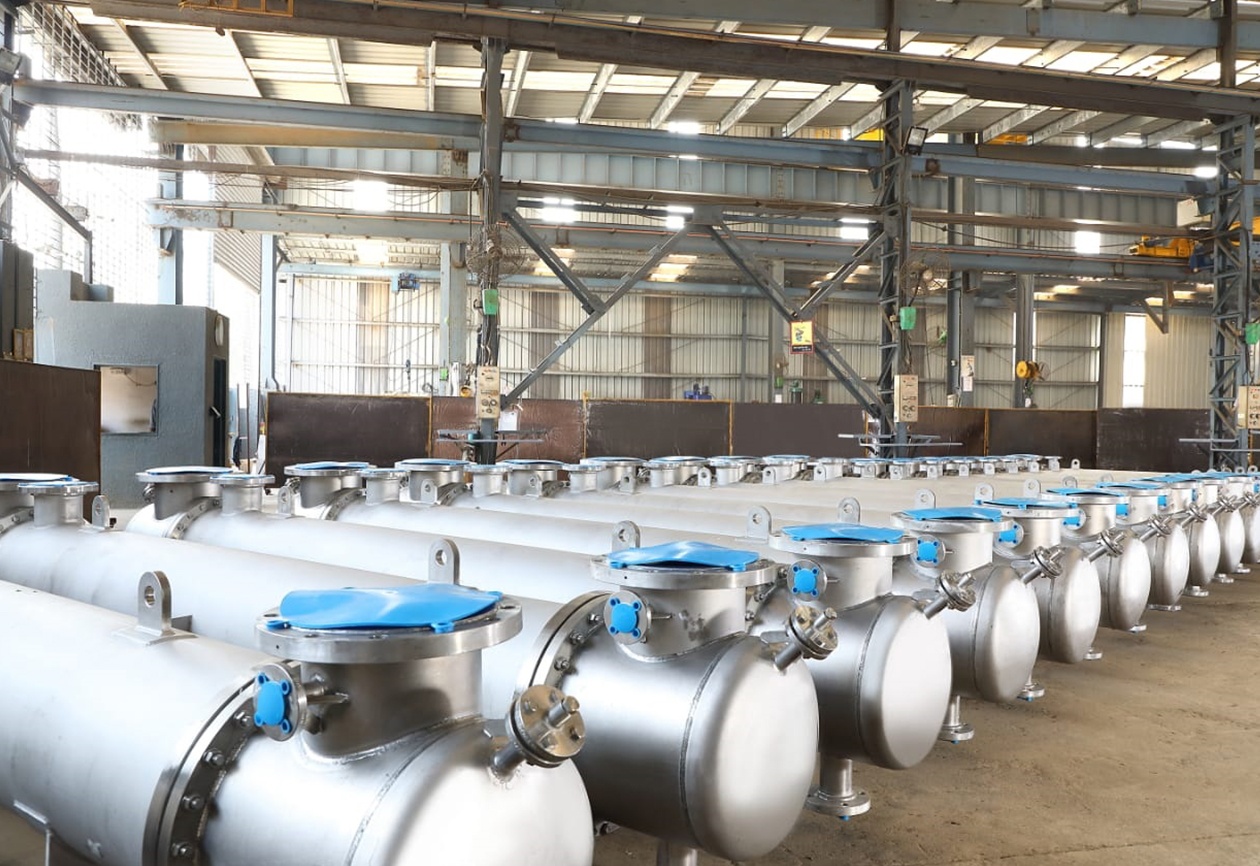
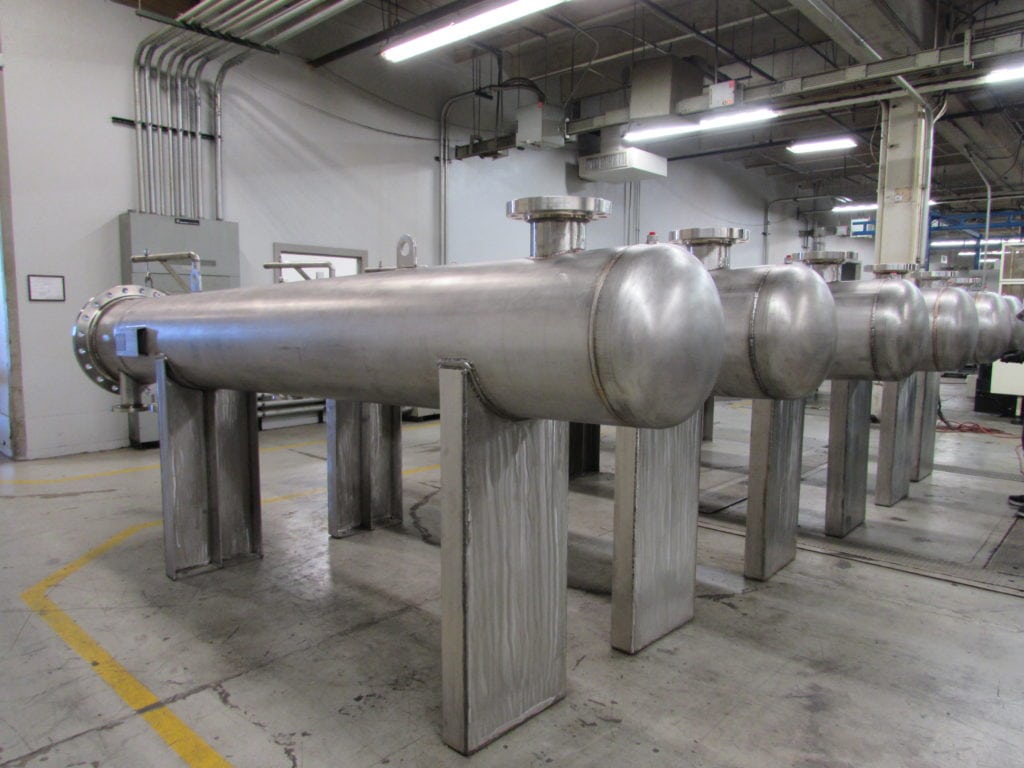
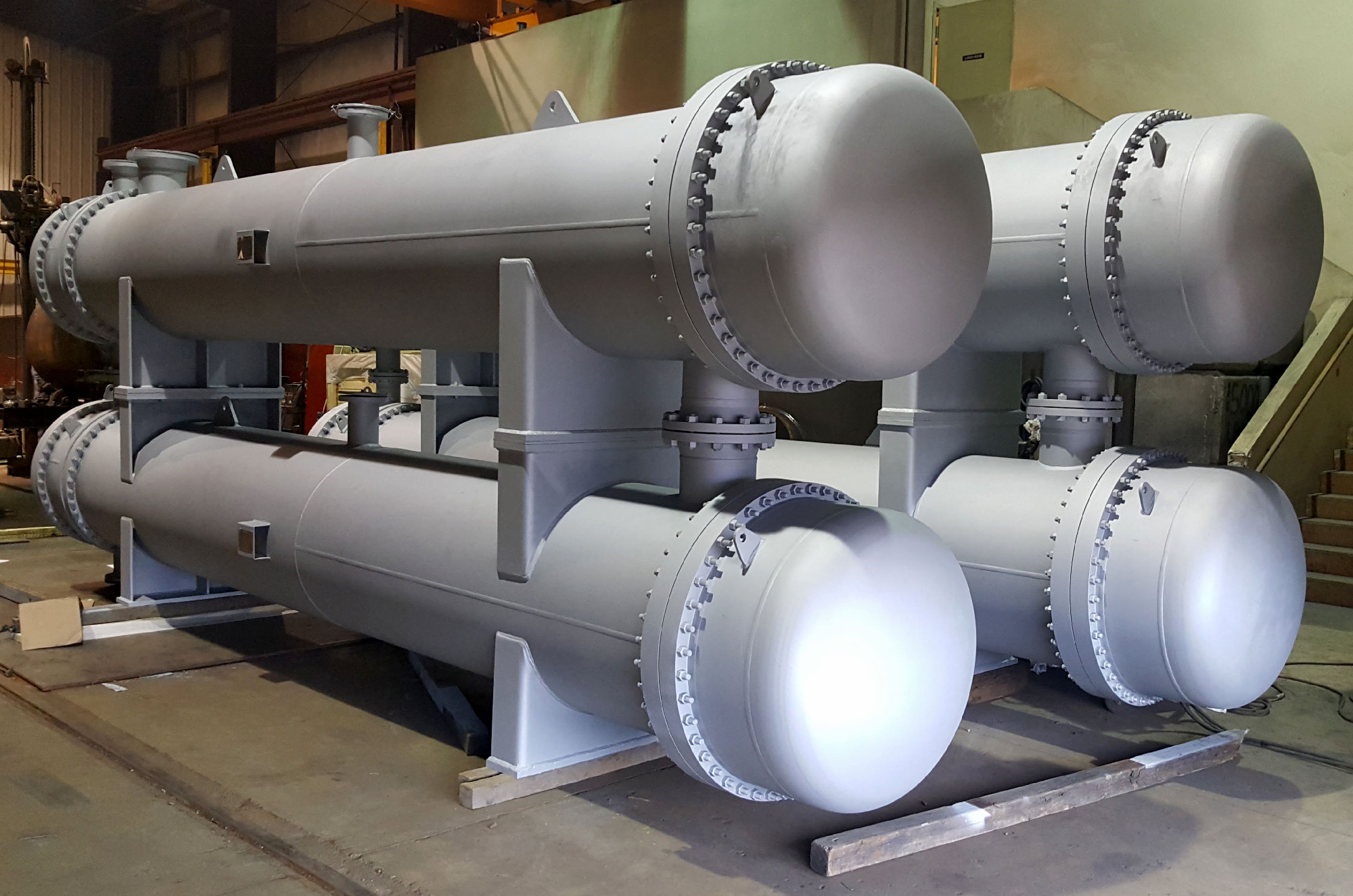
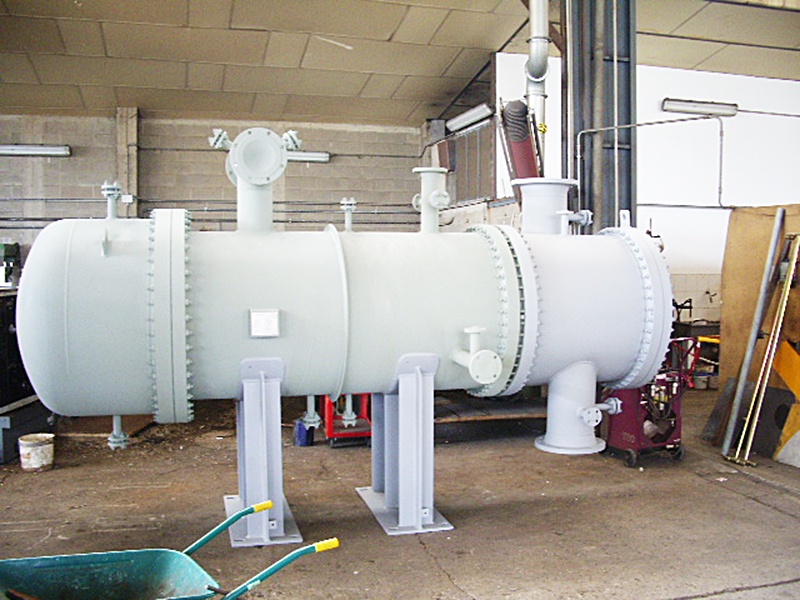
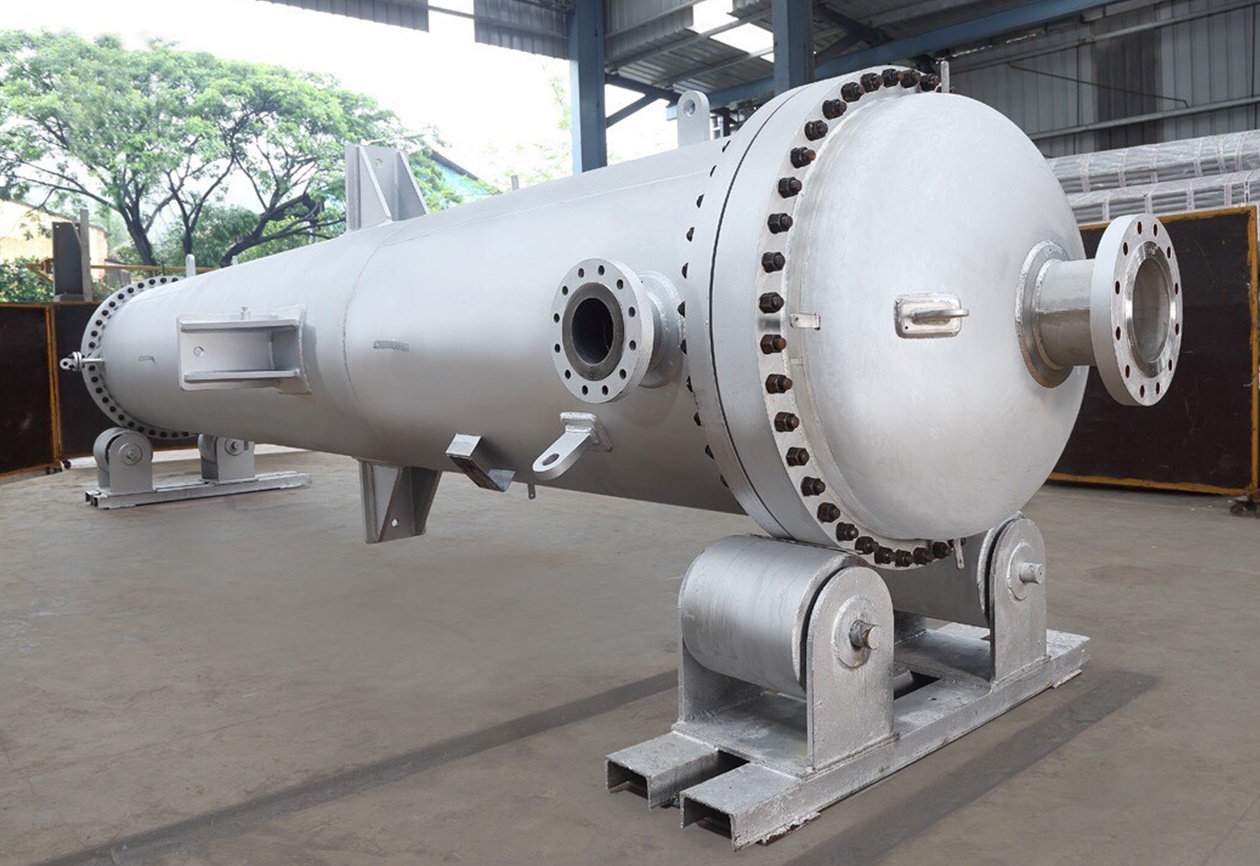
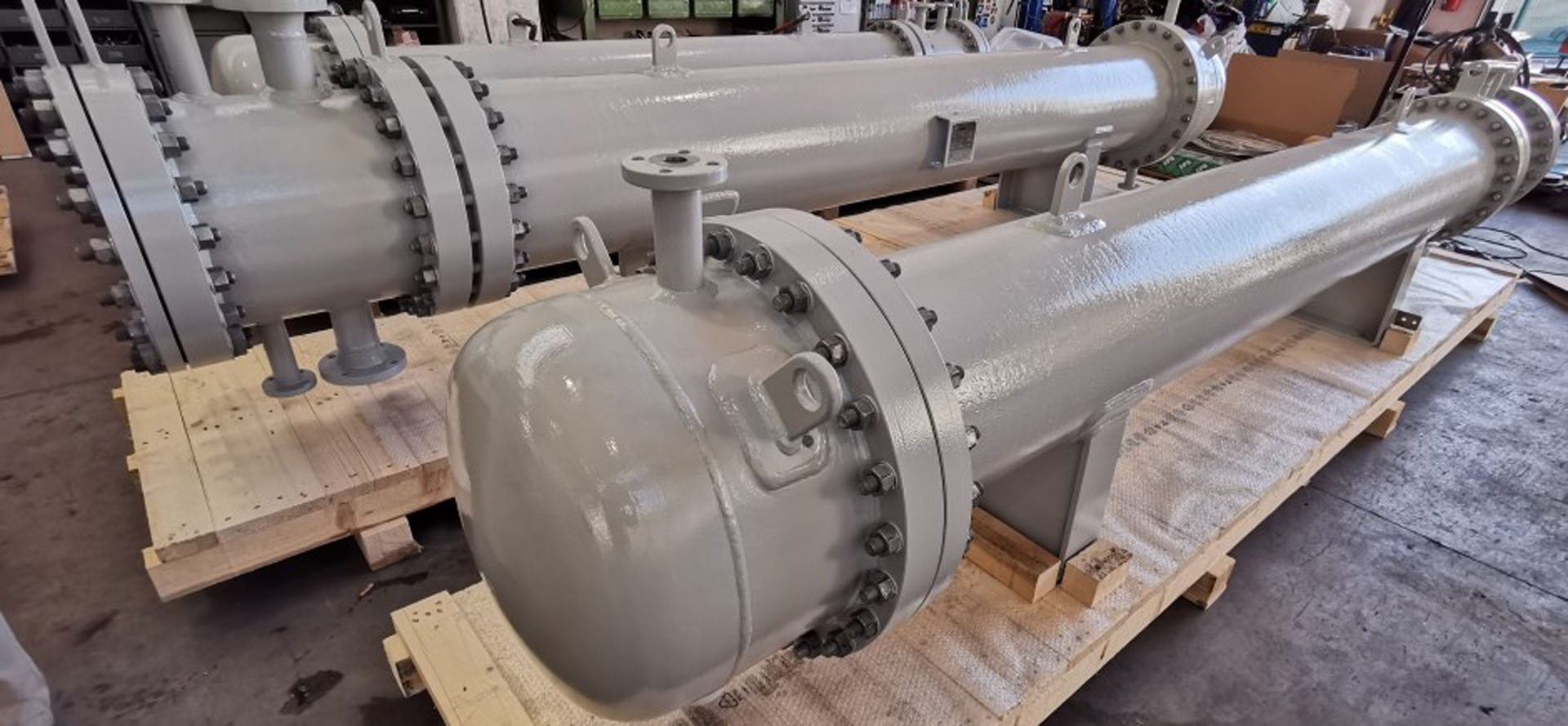
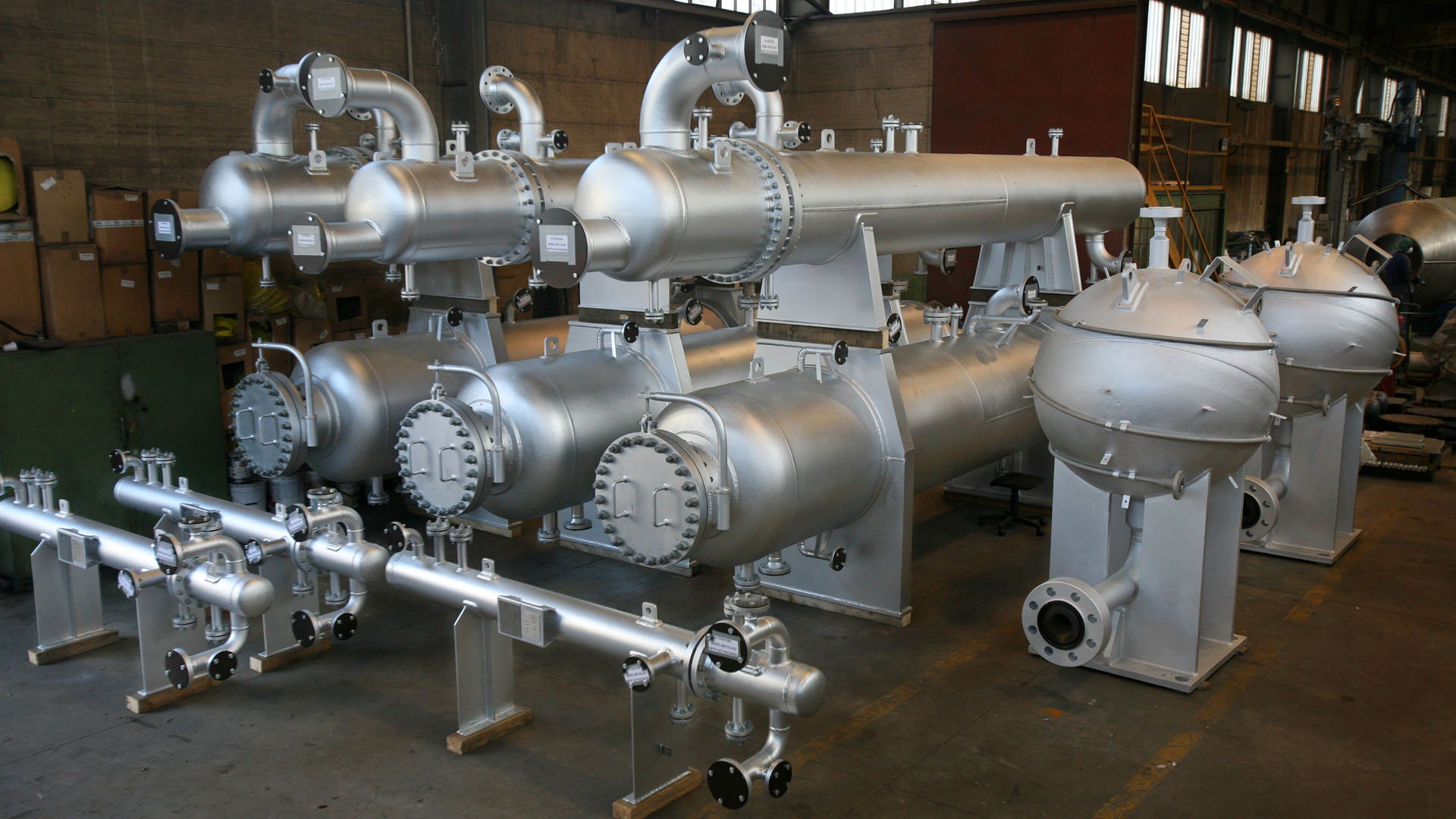
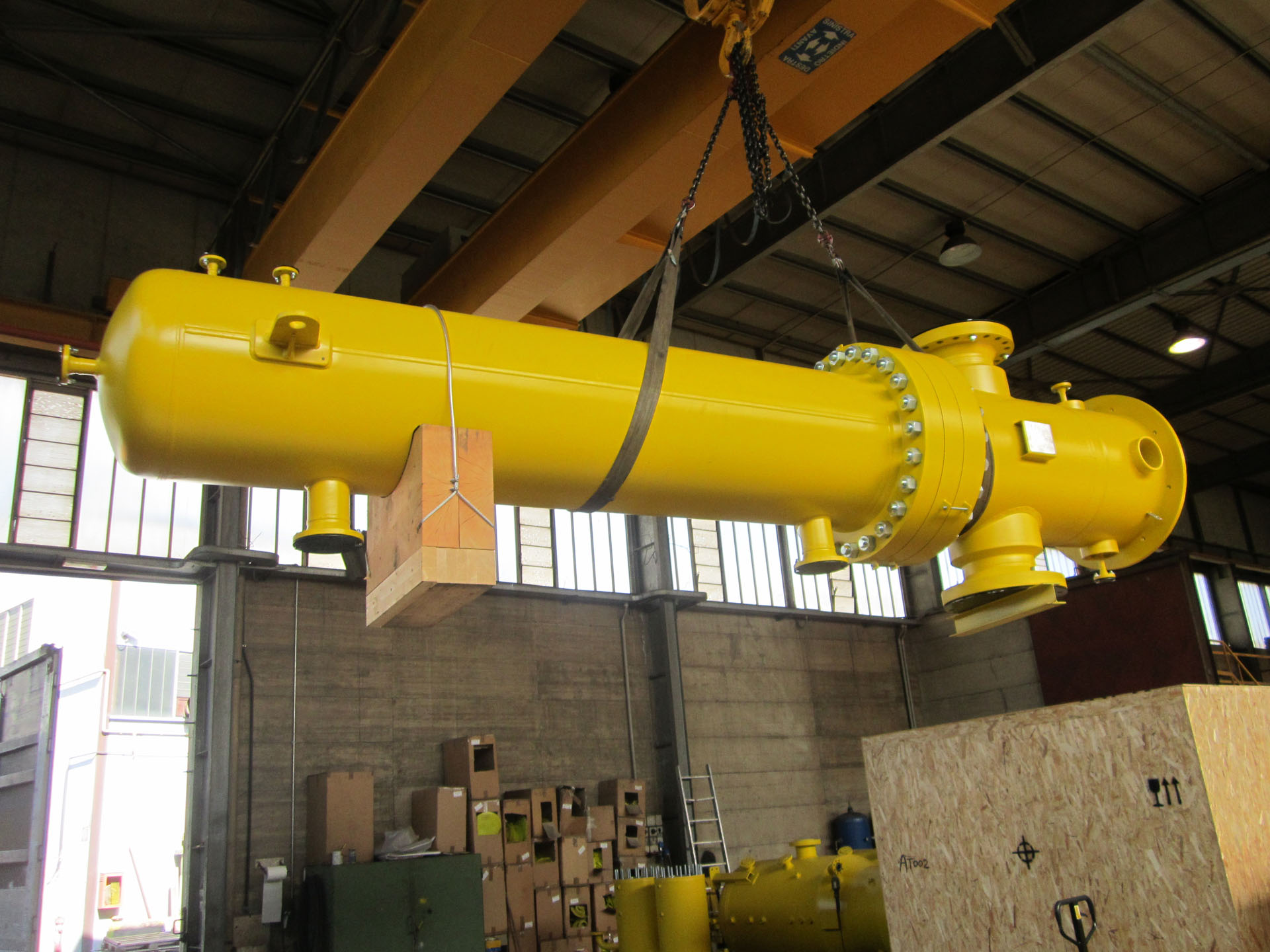
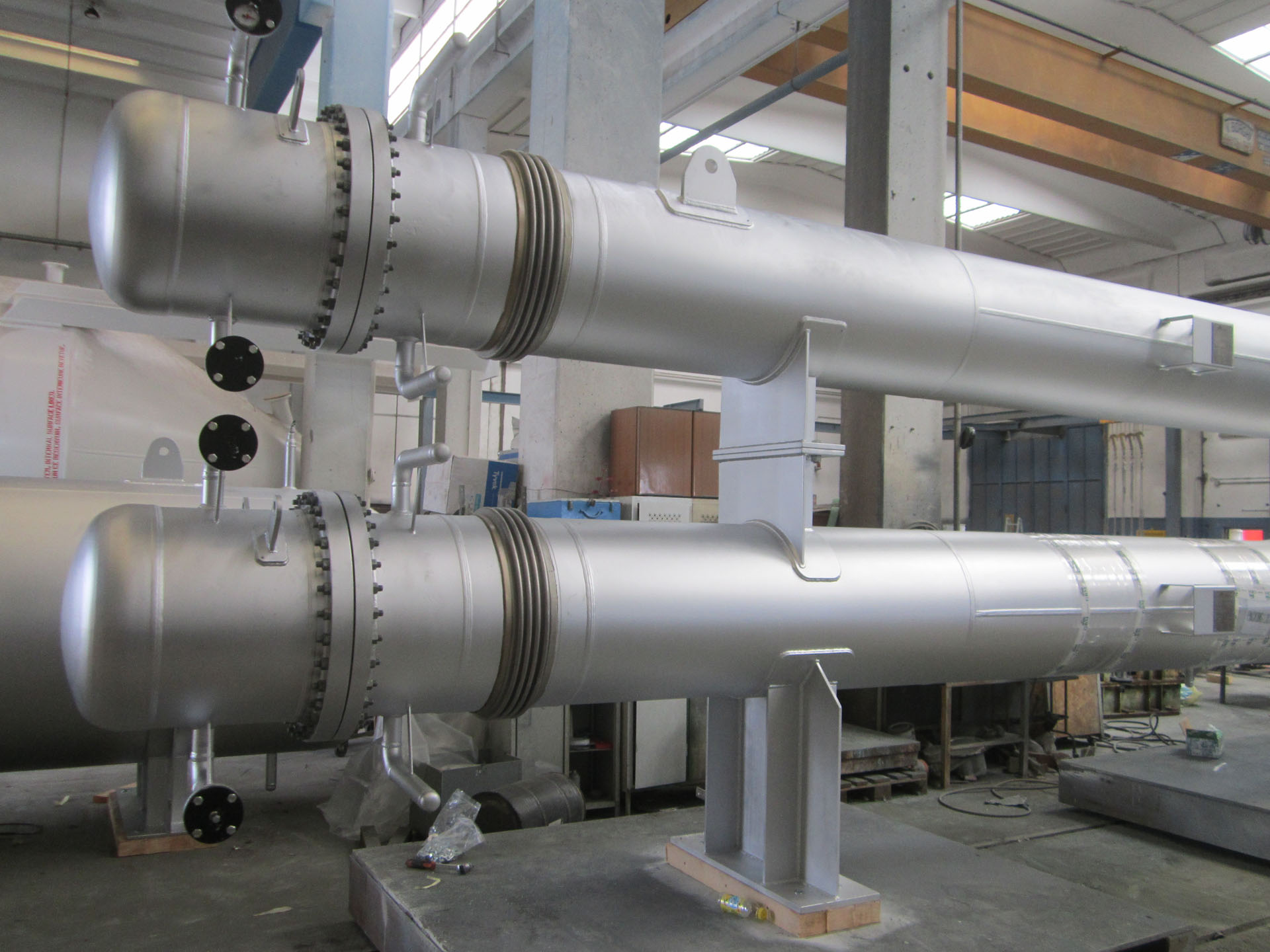
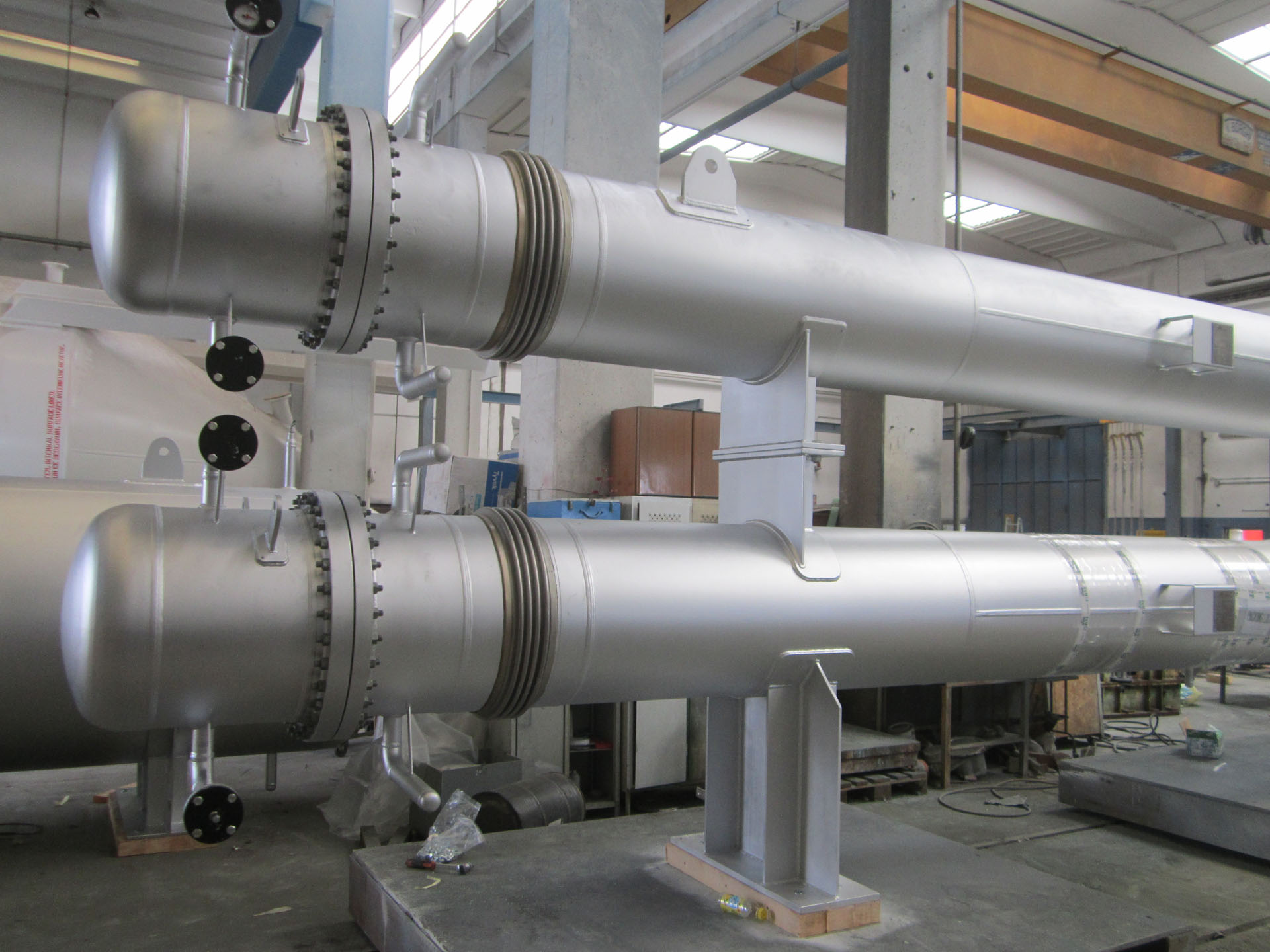
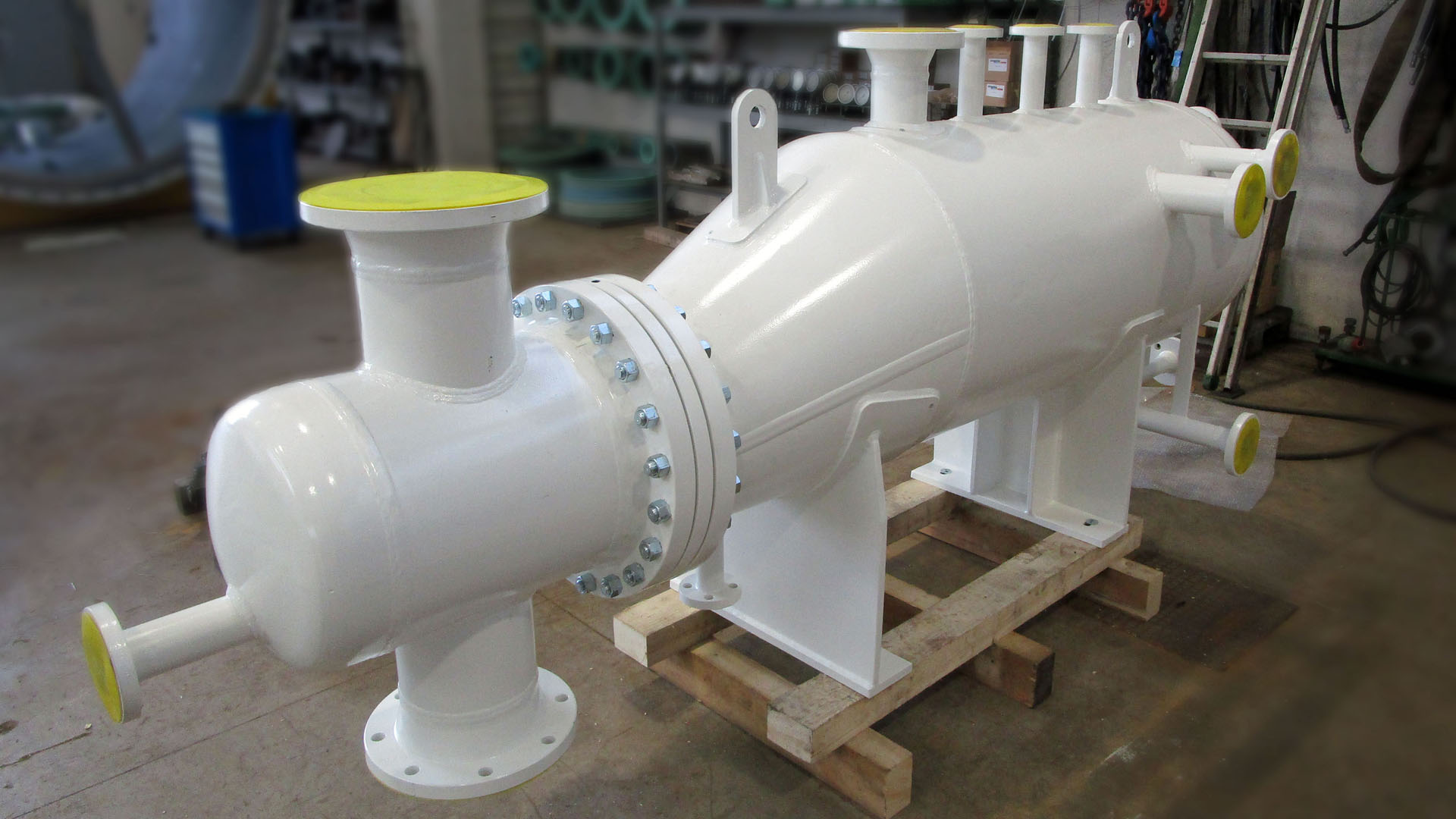
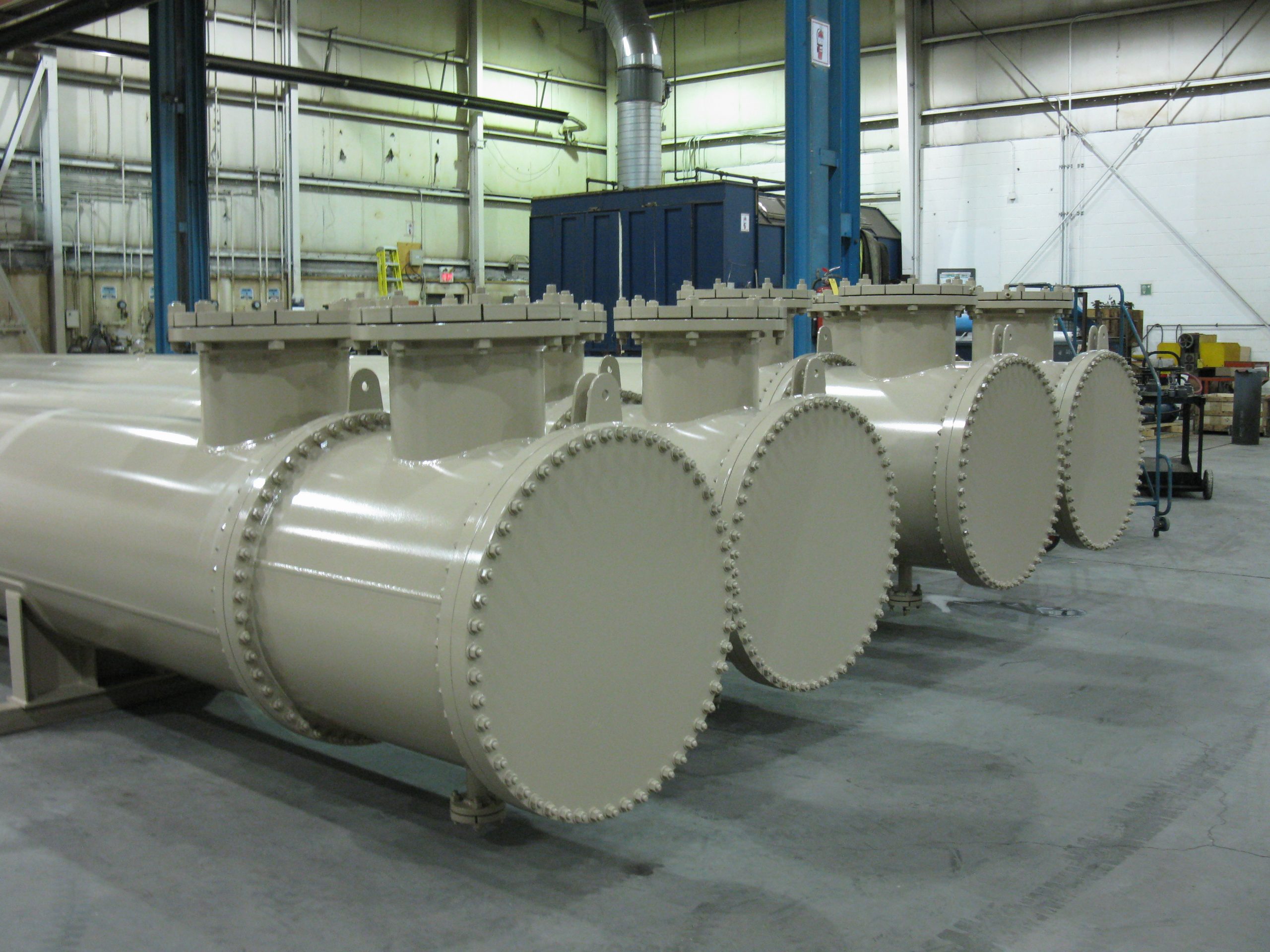
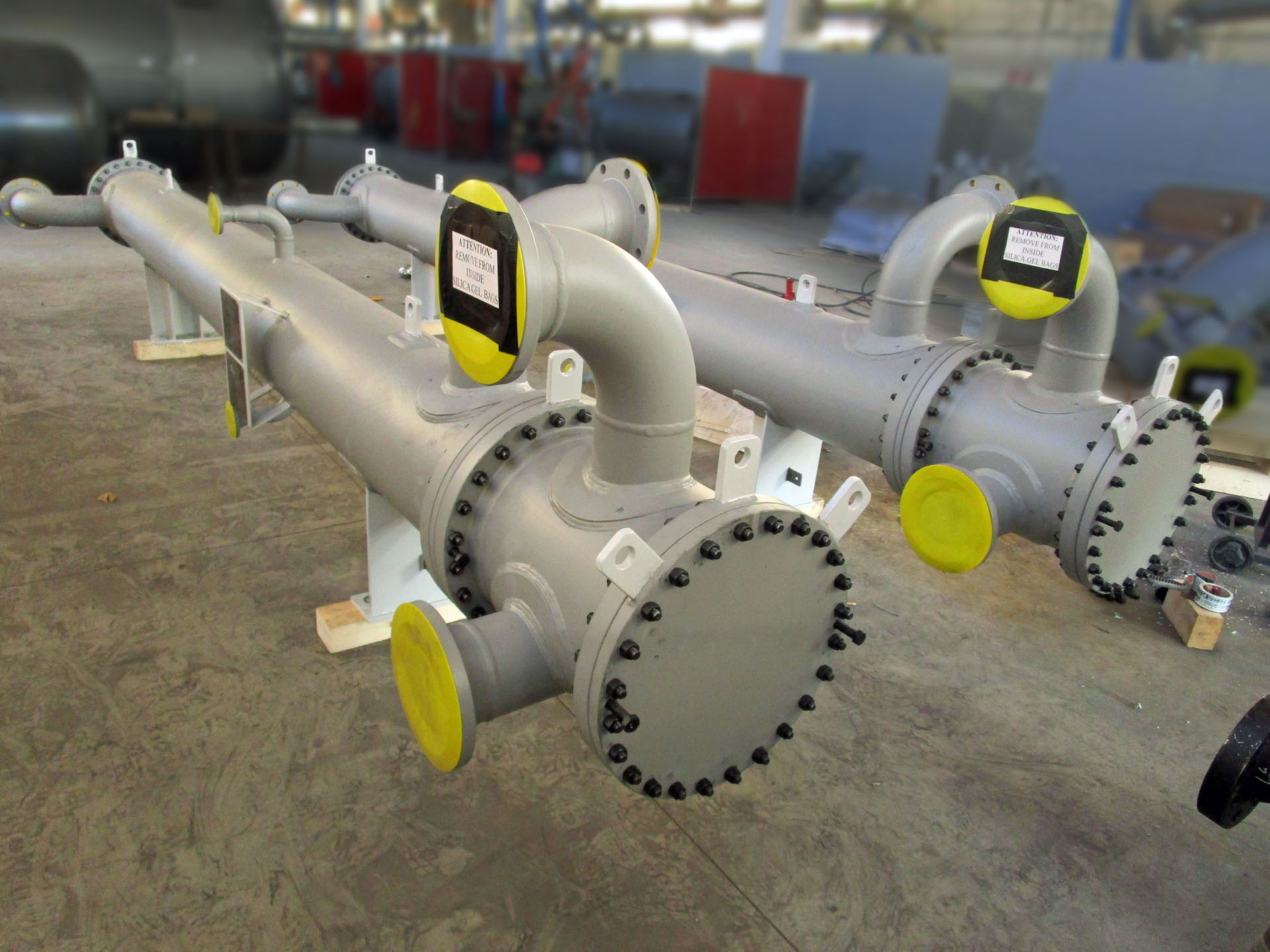
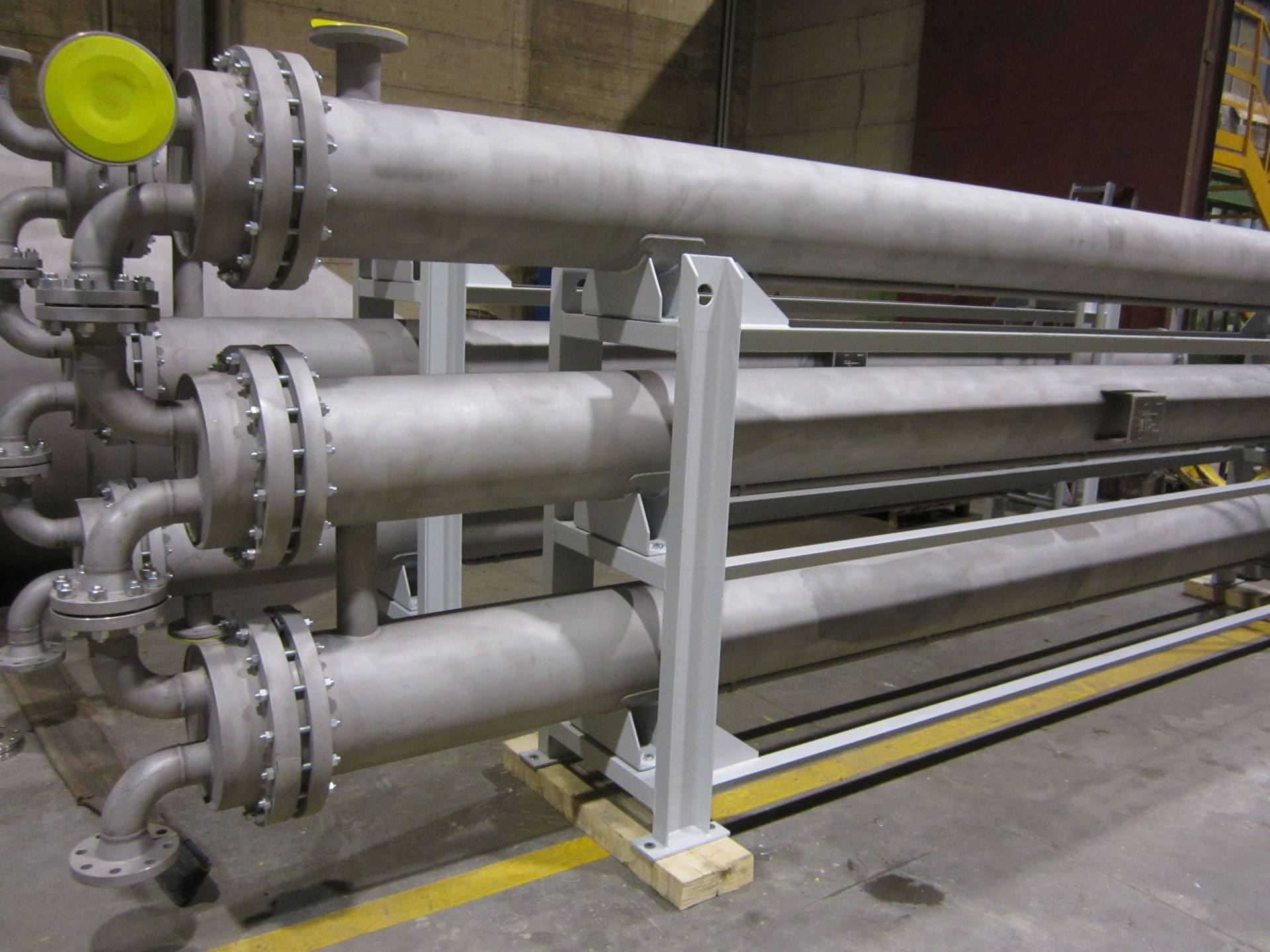
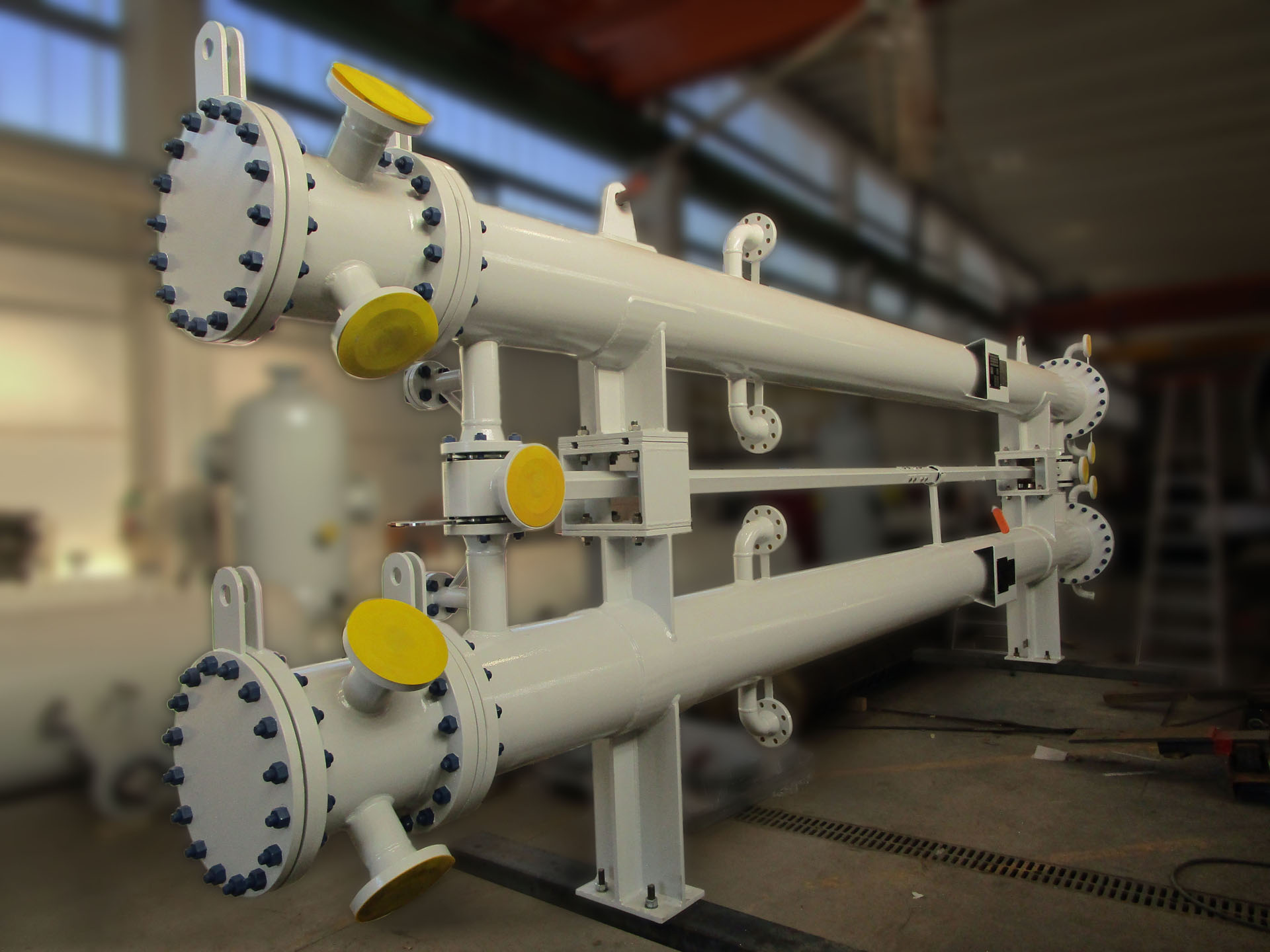
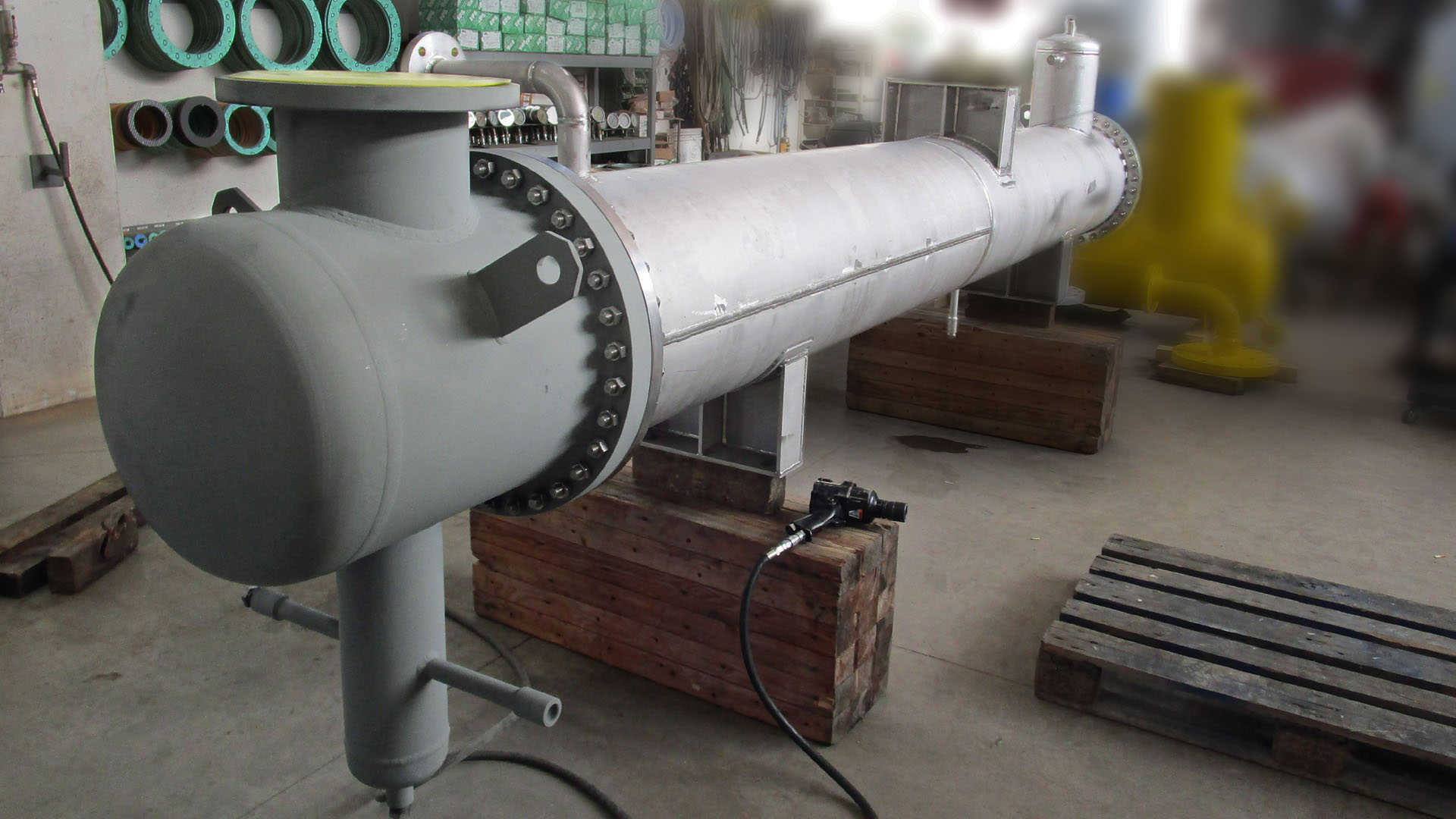
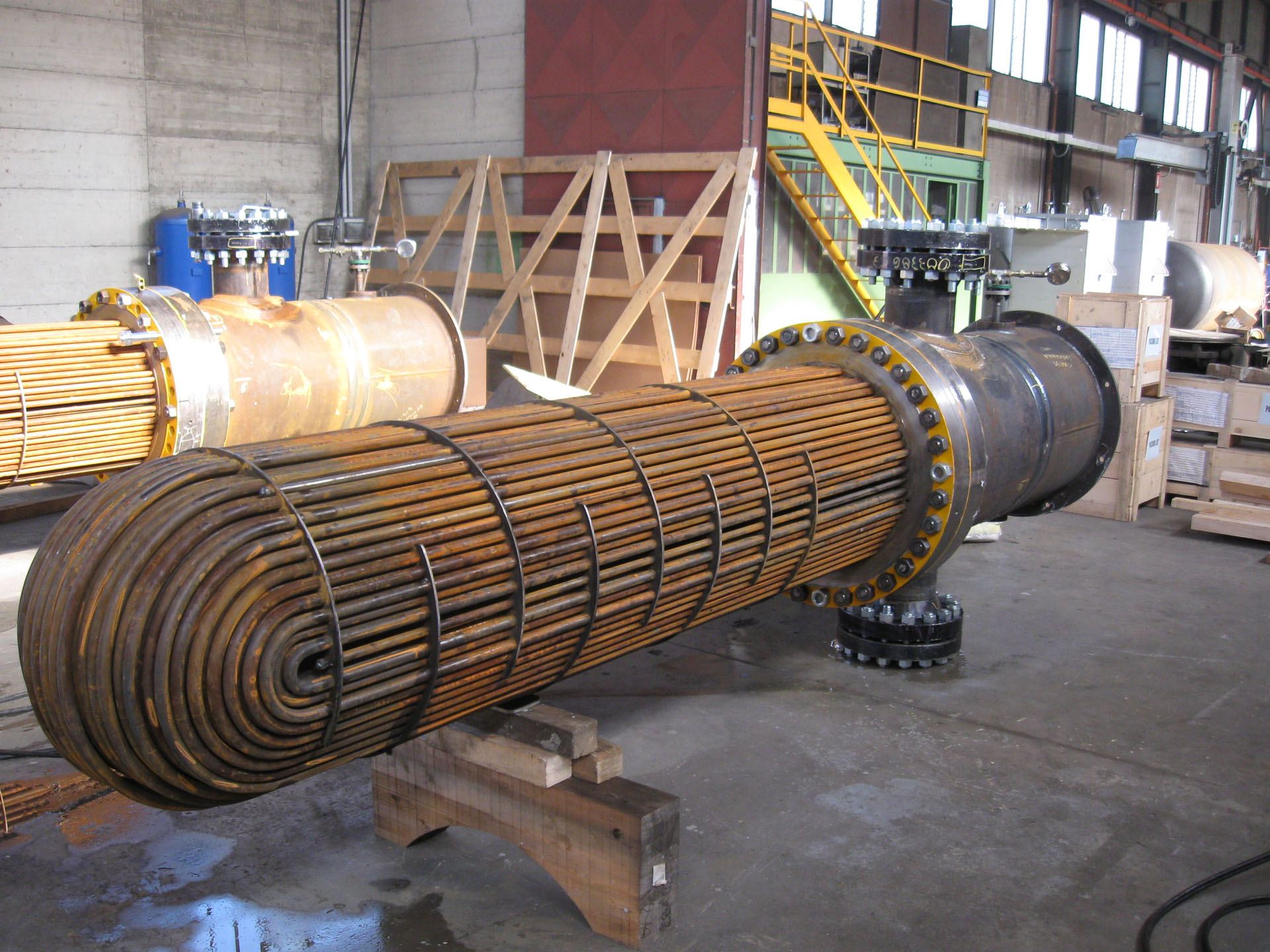
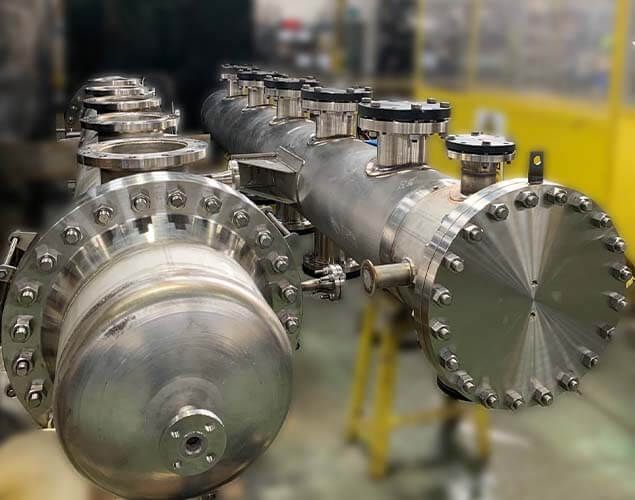
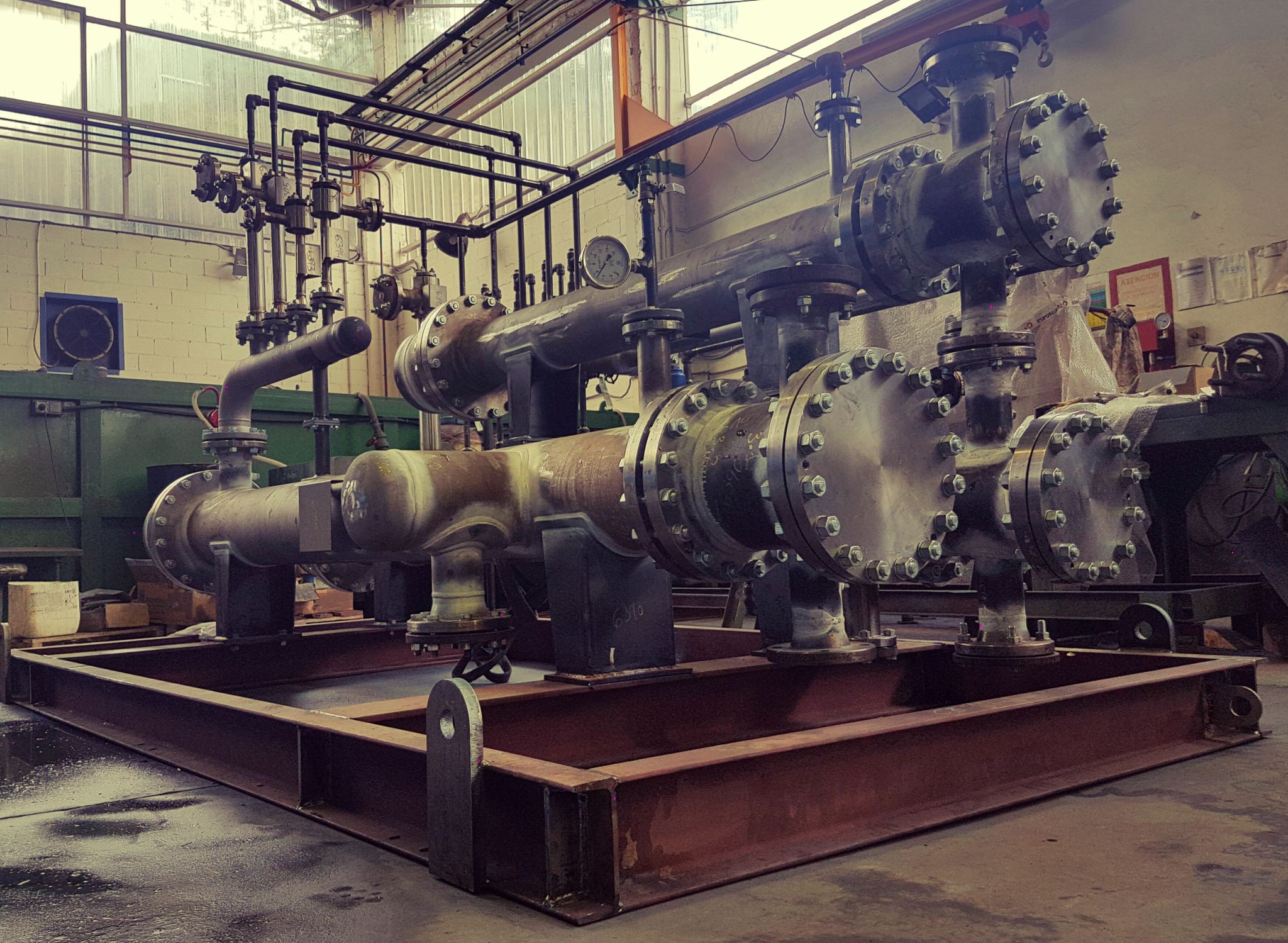
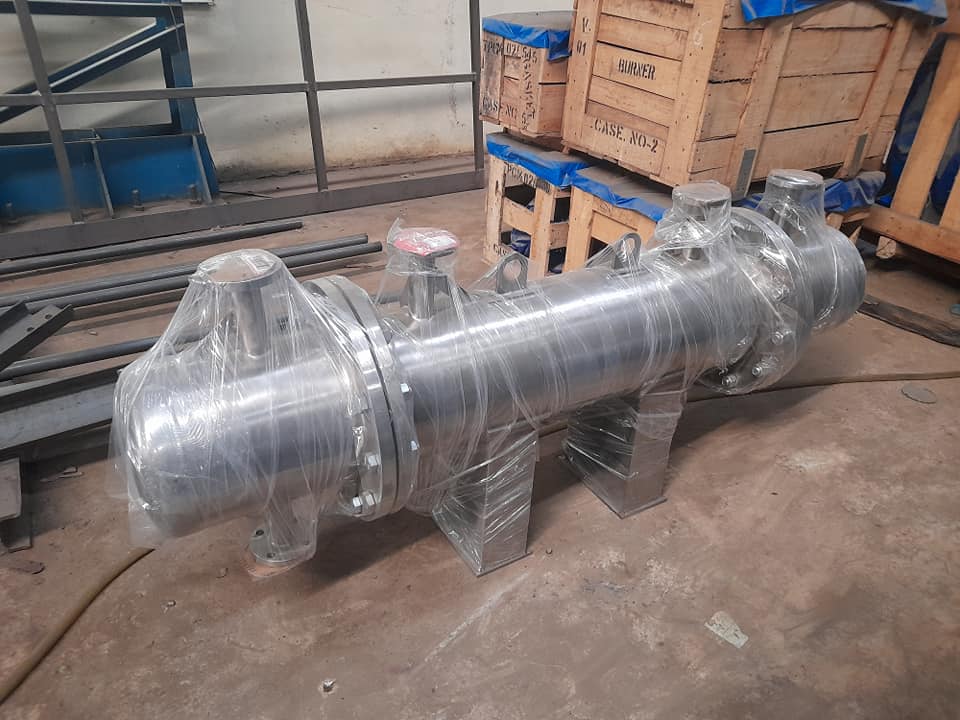
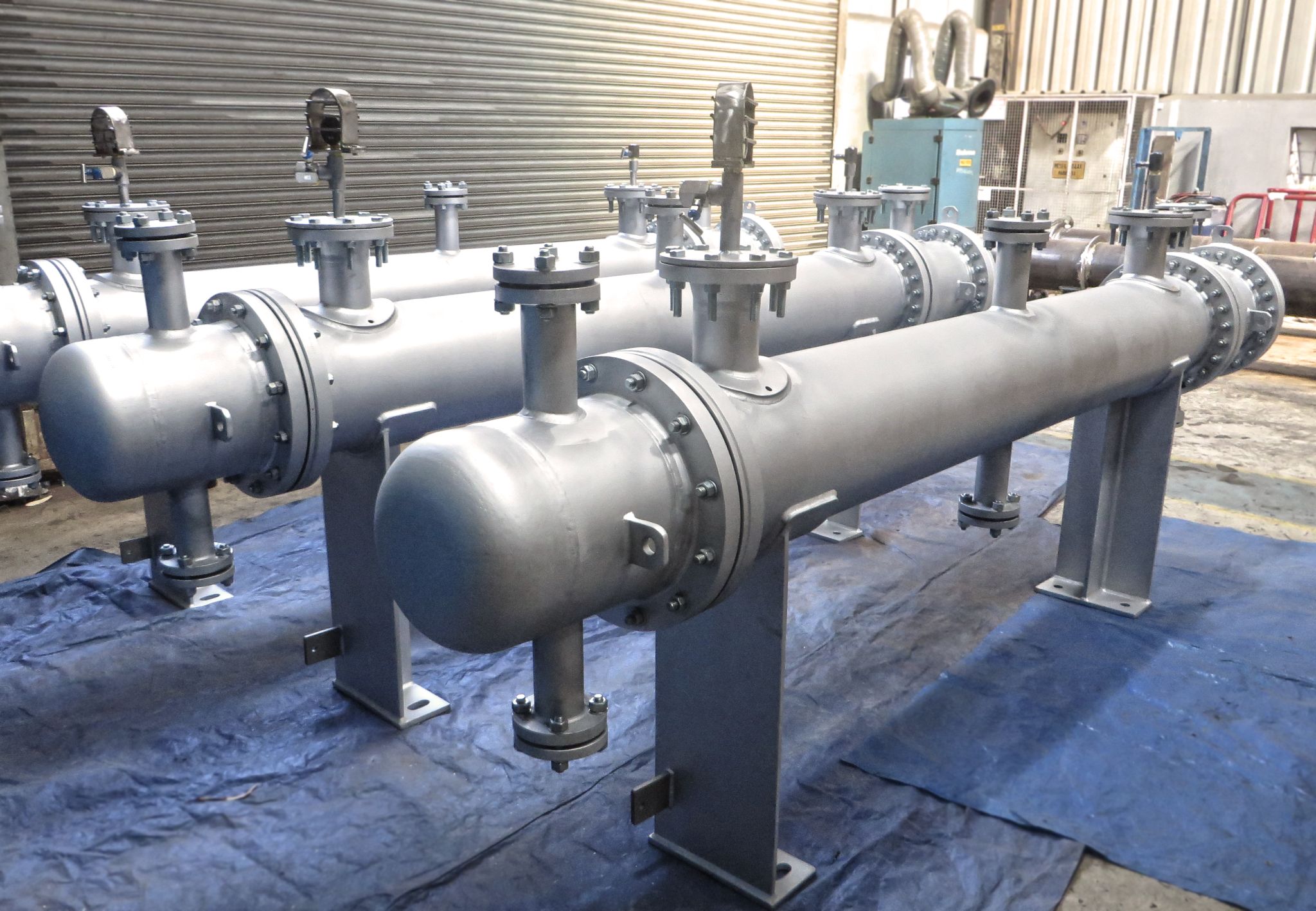
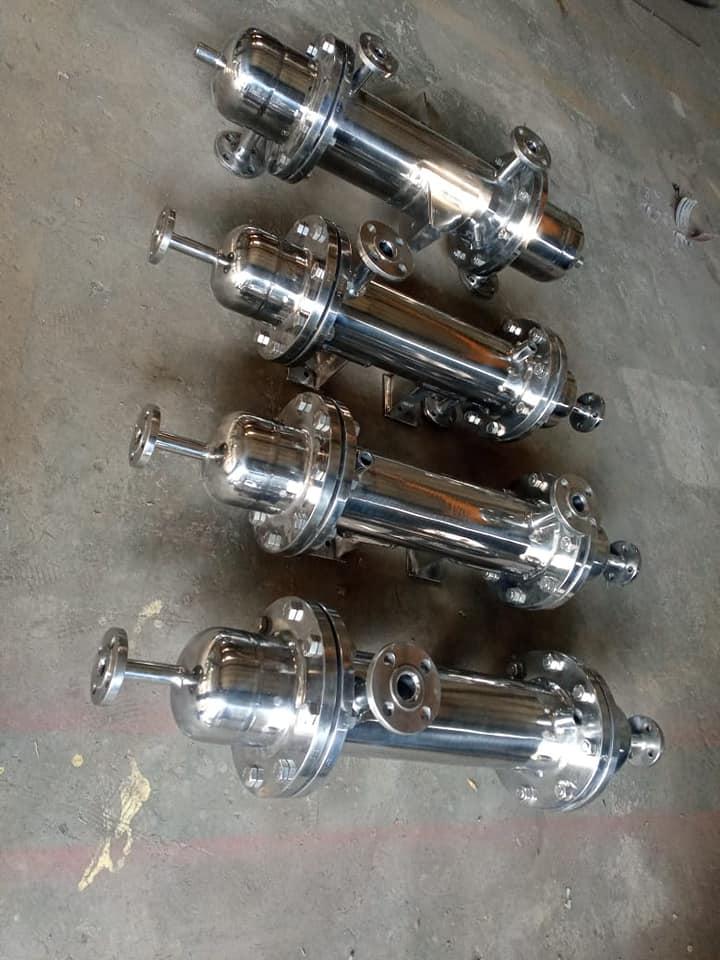
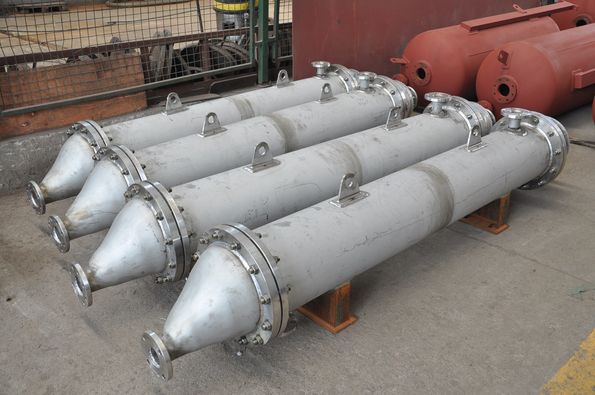
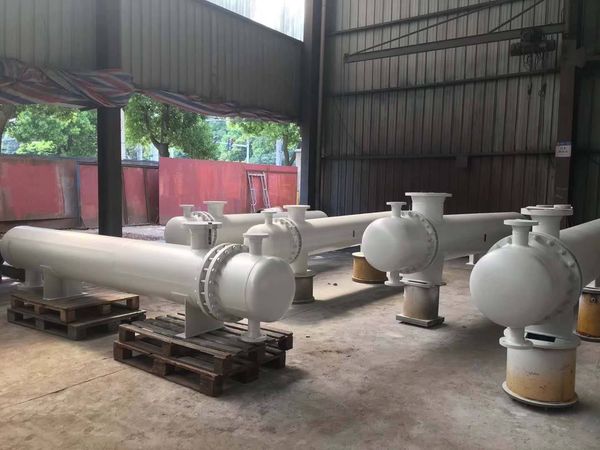
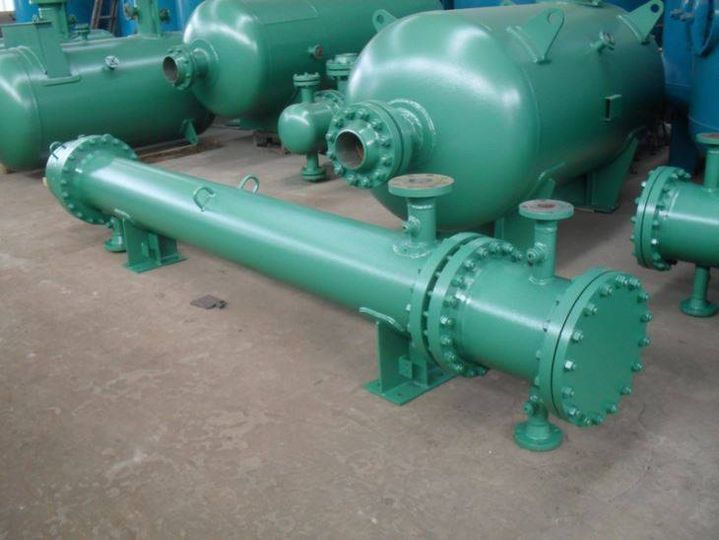
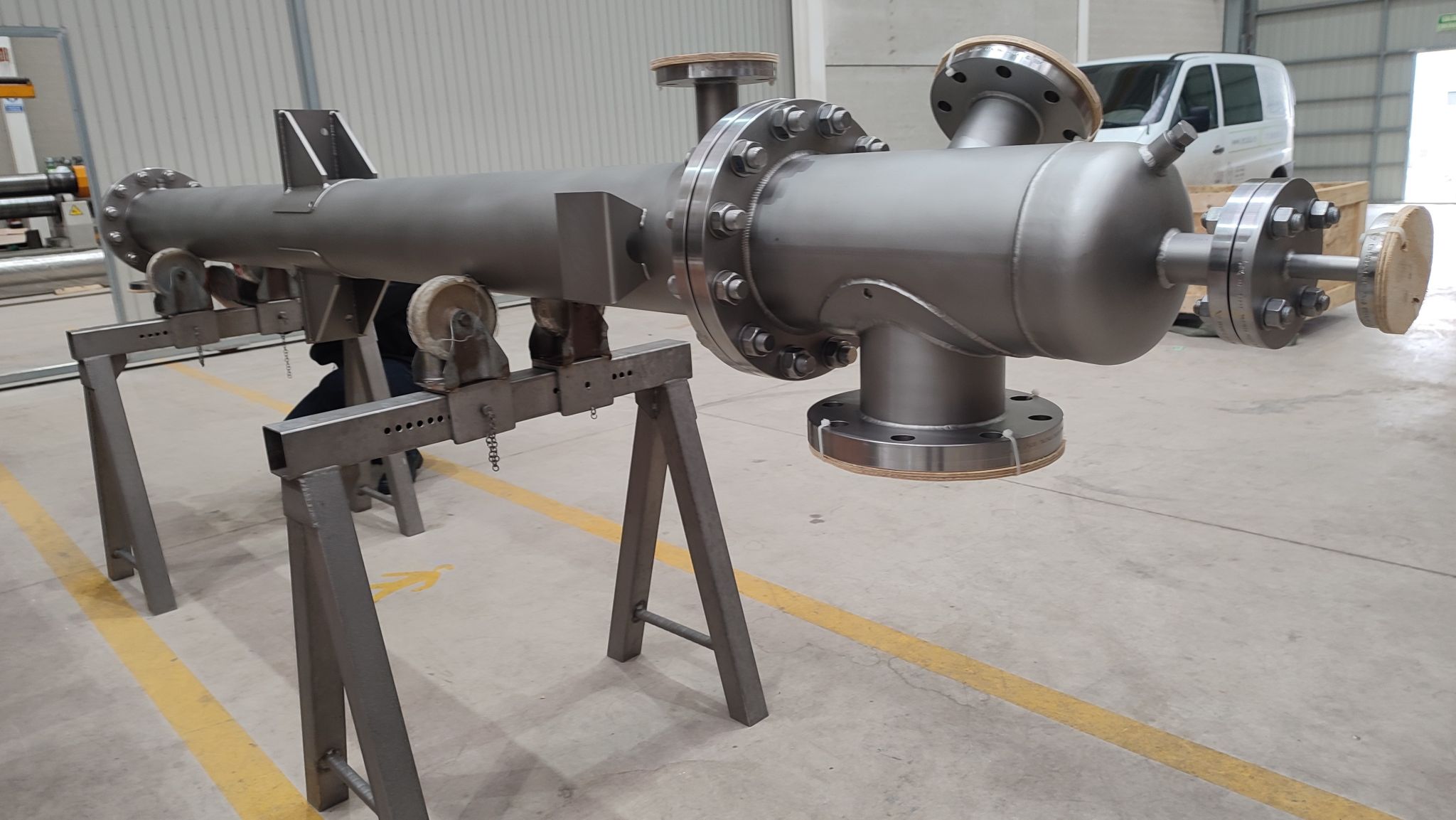
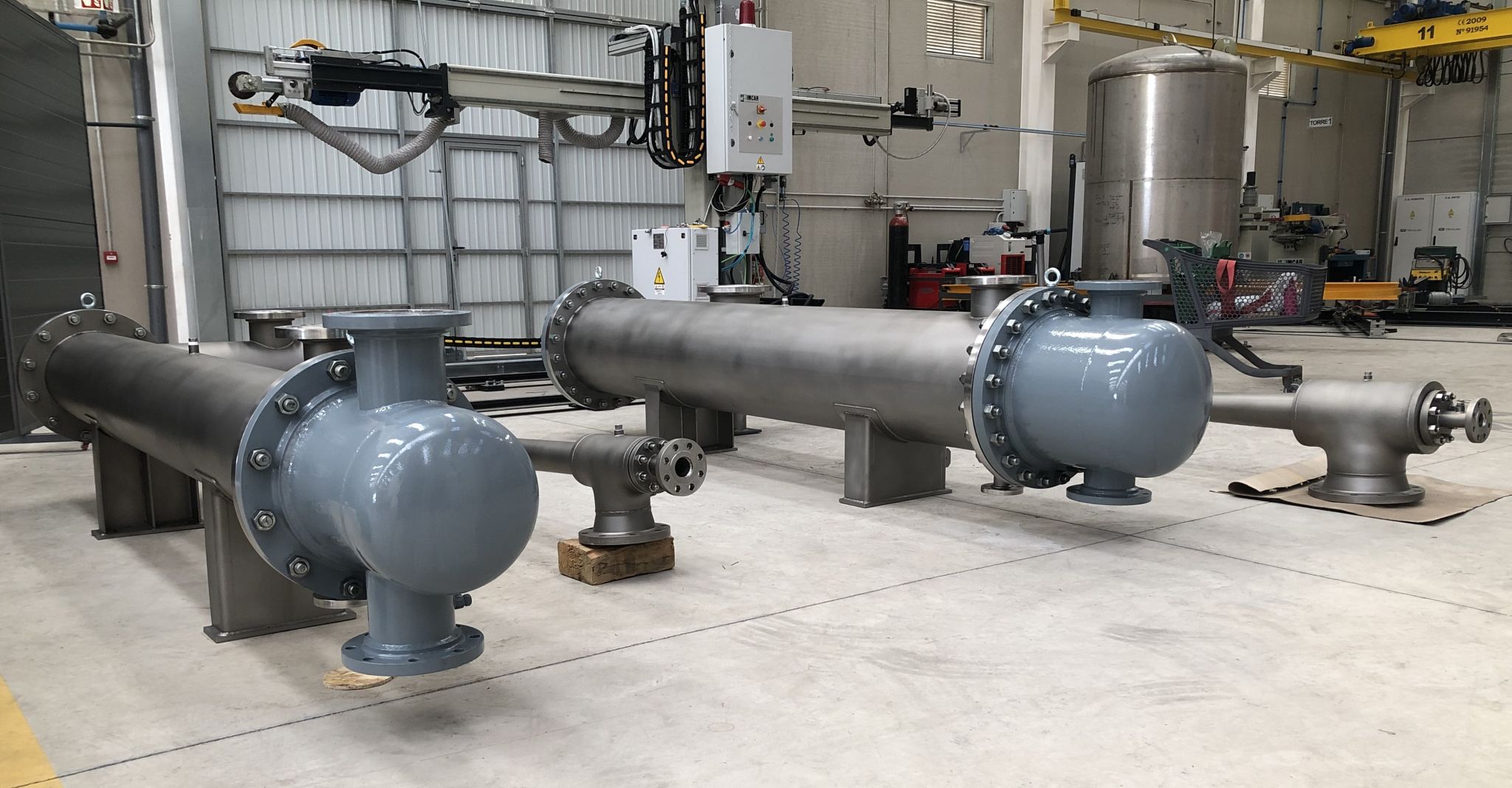
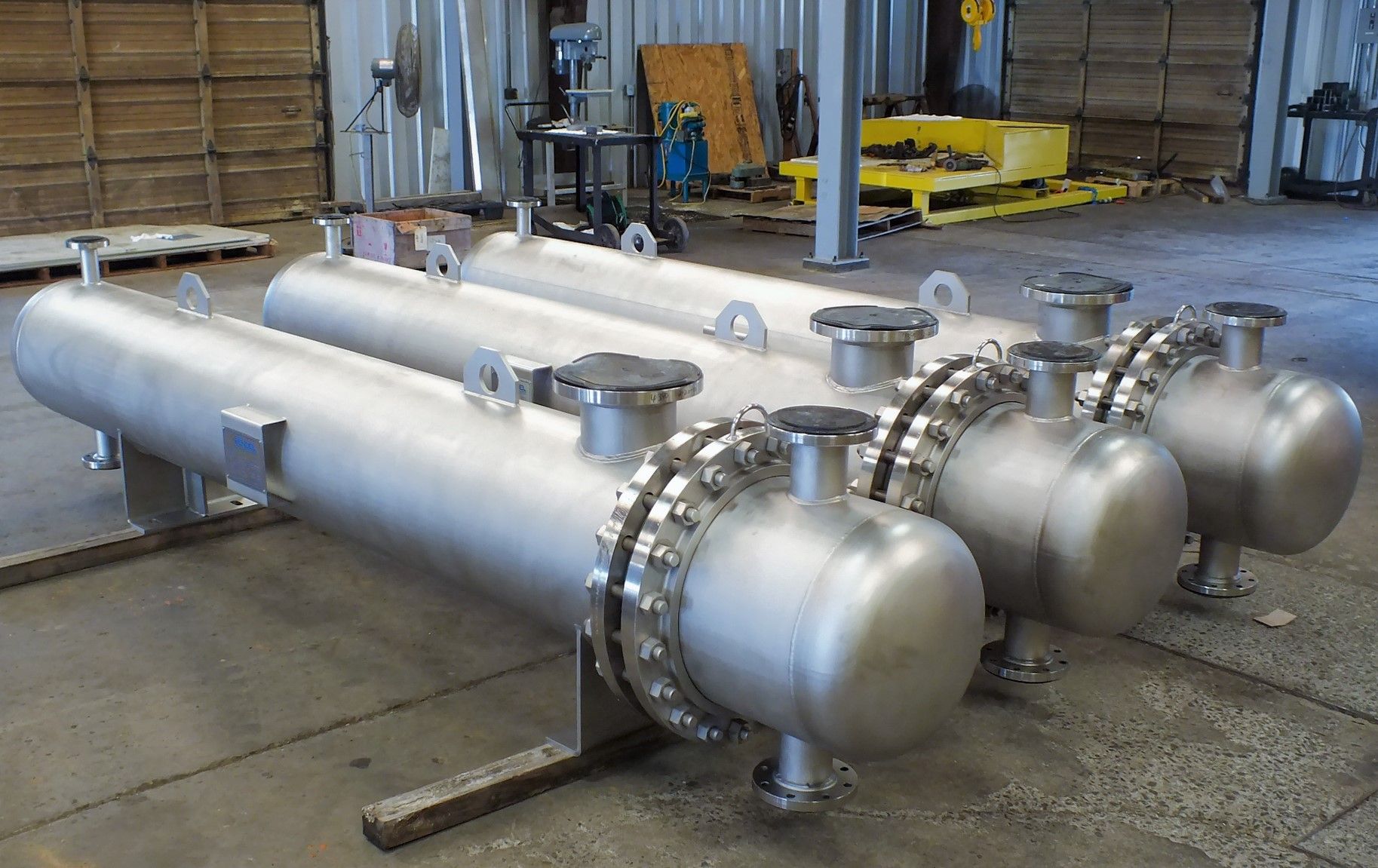
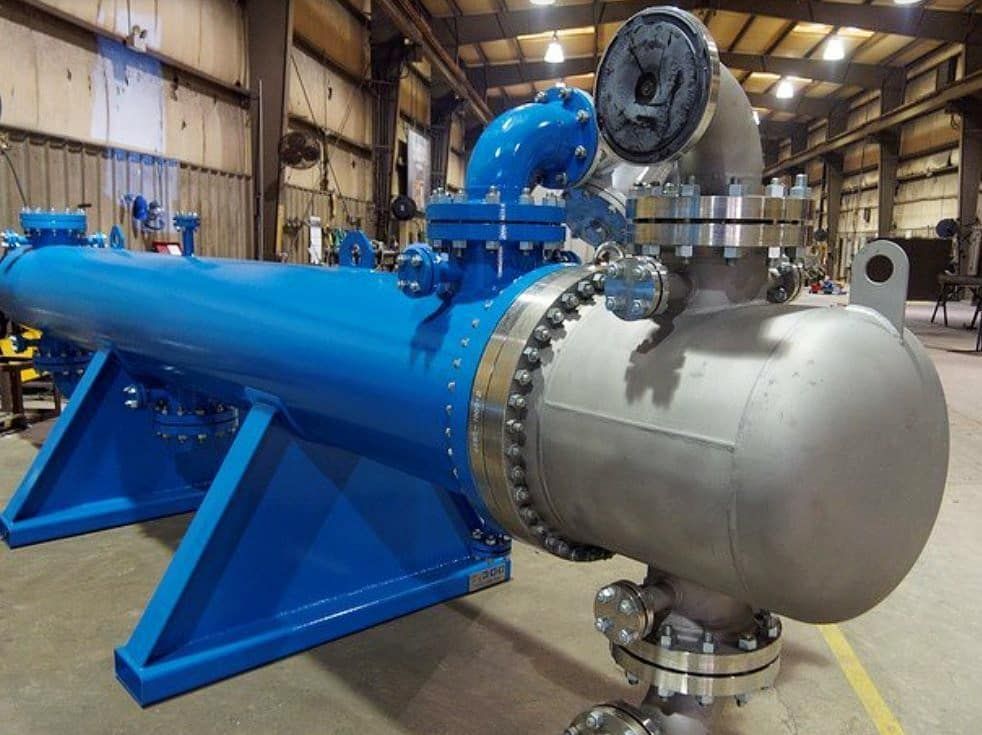
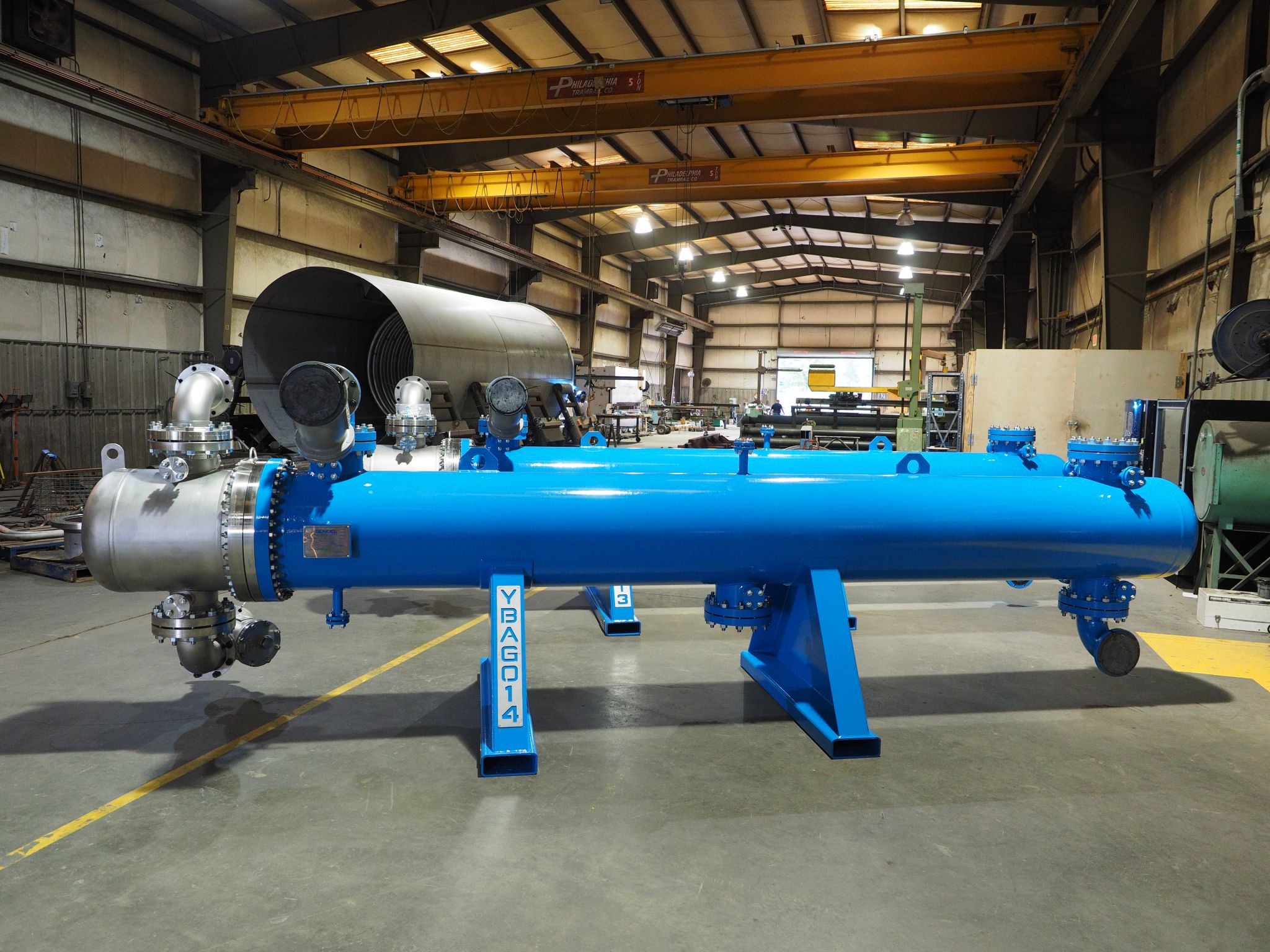
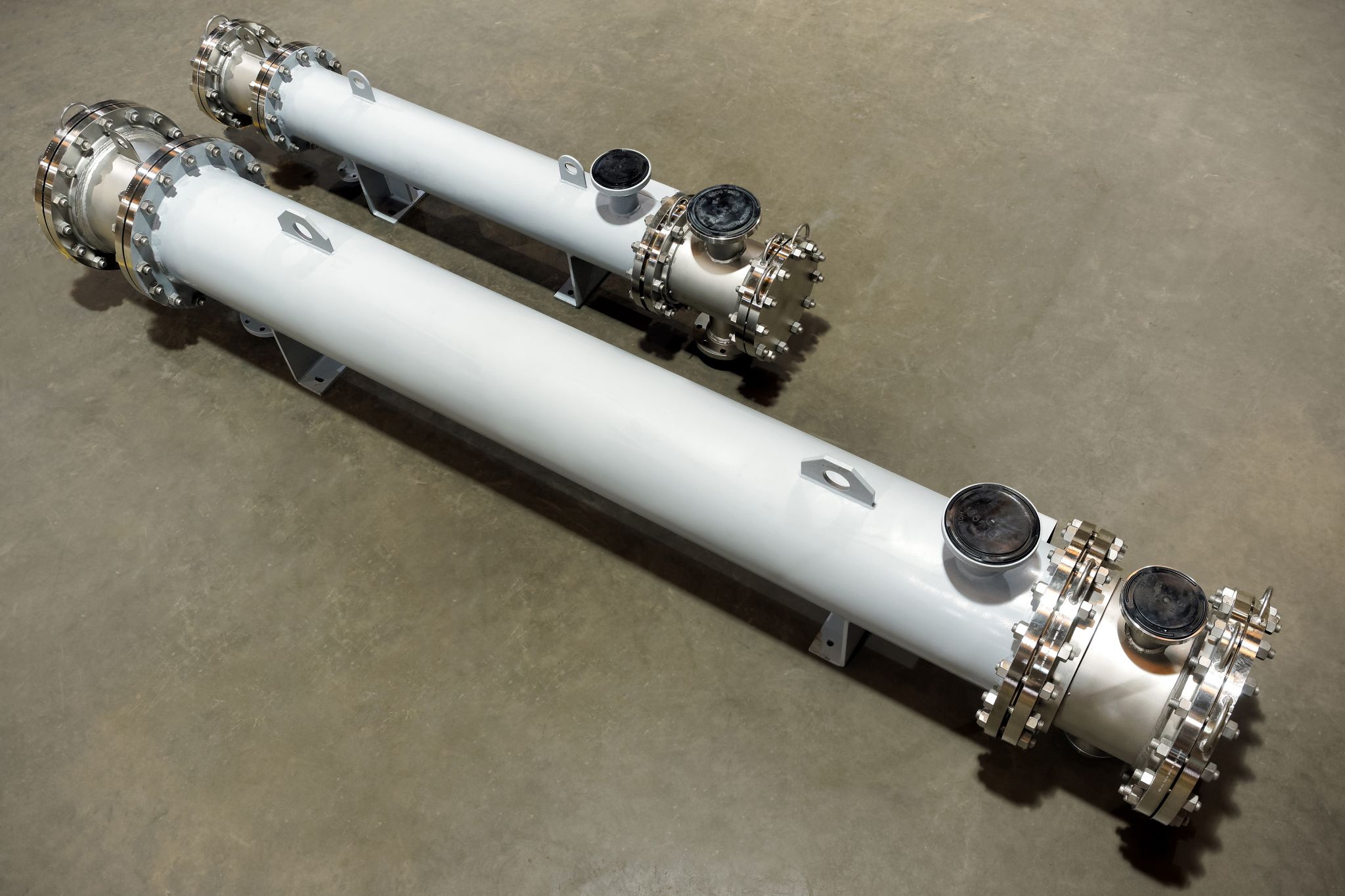
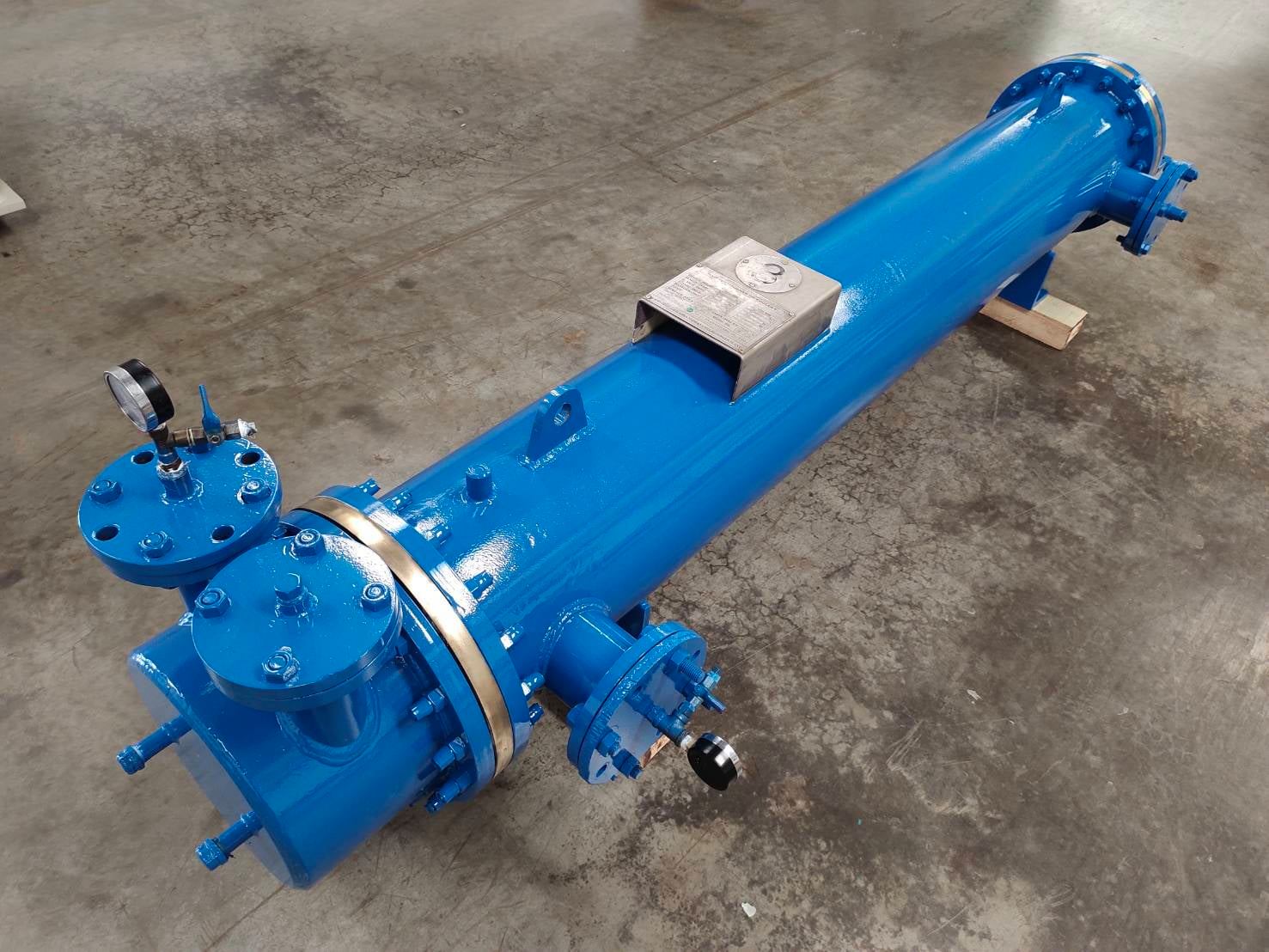
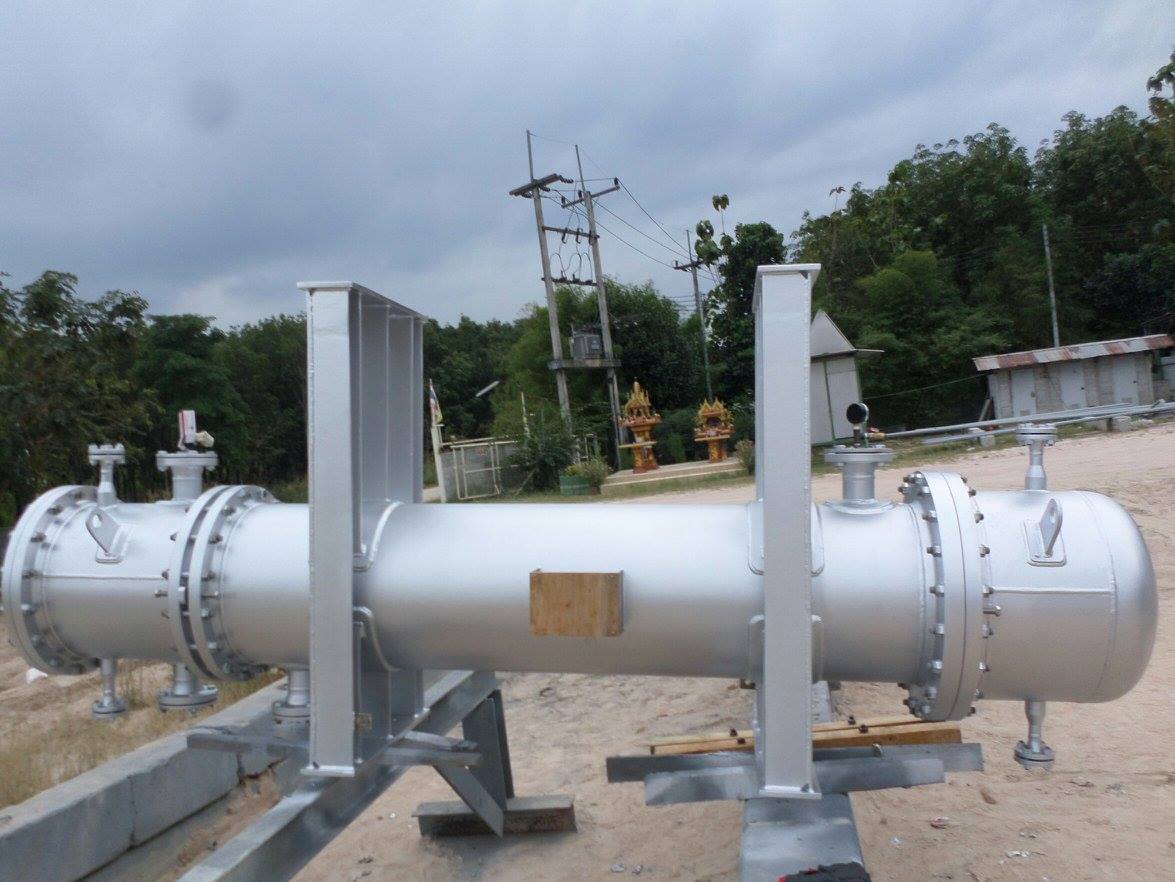
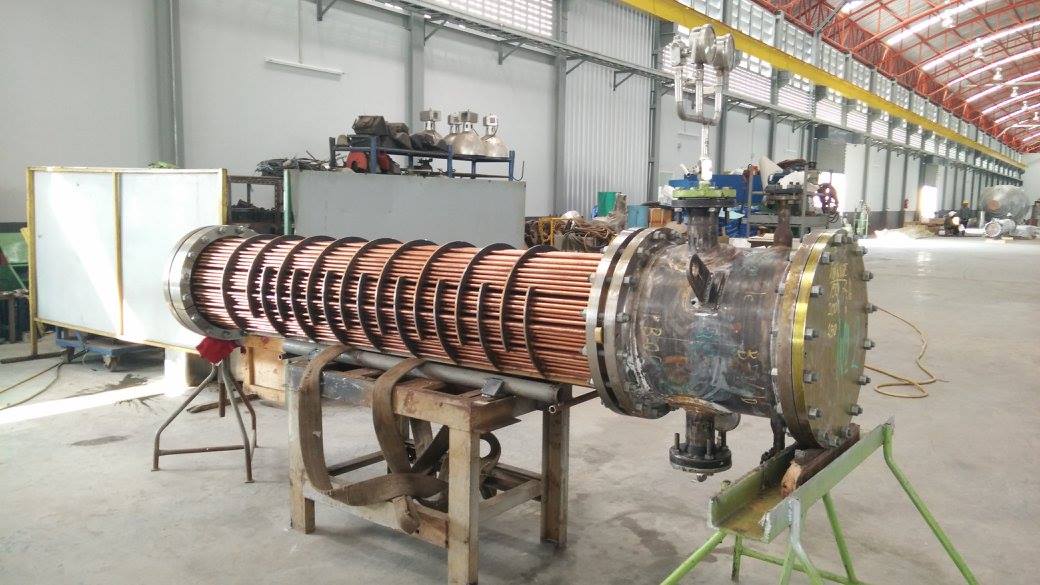
A Shell and Tube Exchanger consists of a number of tubes mounted inside acylindrical shell. typical unit that may be found in a petrochemicalplant. Two fluids can exchange heat, one fluid flows over the outside of thetubes while the second fluid flows through the tubes. The fluids can be singleor two phase and can flow in […]
Heat Exchanger Types This section briefly describes some of the more common types of heat exchanger and is arranged according to the classification Indirect heat exchangers In this type, the steams are separated by a wall, usually metal. Examples of these are tubular exchangers, plate exchangers, Tubular heat exchangers are very...
Recuperative heat exchangers There are many types of recuperative exchangers, which can broadly be grouped into indirect contact, direct contact and specials. Indirect contact heat exchangers keep the fluids exchanging heat separate by the use of tubes or plates etc. Direct contact exchangers do not separate the fluids exchanging heat and in...
Regenerative heat exchangers In a regenerative heat exchanger, the flow path normally consists of a matrix, which is heated when the hot fluid passes through it (this is known as the “hot blow”). This heat is then released to the cold fluid when this flows through the matrix (the “cold blow”). Regenerative Heat Exchangers...
Classification of Heat Exchangers by Construction heat exchangers are classified mainly by their construction, The first level of classification is to divide heat exchanger types into recuperative or regenerative. A Recuperative Heat Exchanger has separate flow paths for each fluid and fluids flow simultaneously through the exchanger...
Cross flow heat exchangers are intermediate in efficiency between counter current flow and parallel flow exchangers. In these units, the streams flow at right angles to each other
In co current flow heat exchangers, the streams flow parallel to each other and in the same direction This is less efficient than counter current flow but does provide more uniform wall temperatures. Process 1. Process fluid assignments to shell side or tube side. 2. Selection of stream temperature specifications. 3. Setting shell side and...
Counter flow exchanger in which the two fluids flow parallel to each other but in opposite directions. This type of flow arrangement allows the largest change in temperature of both fluids and is therefore most efficient (where efficiency is the amount of actual heat transferred compared with the theoretical maximum amount of heat that can...
A heat exchanger is a device used to transfer heat between two or more fluids. The fluids can be single or two phase and, depending on the exchanger type, may be separated or in direct contact. Devices involving energy sources such as nuclear fuel pins or fired heaters are not normally regarded as heat exchangers […]
Shell and tube heat exchangers are used extensively throughout the process industry and as such a basic understanding of their design, construction and performance is important to the practicing engineer. The objective of this paper is to provide a concise review of the key issues involved in their thermal design without having to refer to...
Tube metal is usually: Low carbon steel Low alloy steel Stainless steel Copper Admiralty Cupronickel Inconel Aluminum (in the form of alloys), or titanium. Tube diameters (8–15 mm) are preferred for greater area/volume density but are limited, for purposes of in-tube cleaning larger tube diameters are often required for condensers and boilers....
The most common type of heat exchanger in industrial applications is shell-and-tube heat exchangers. The exchangers exhibit more than 65% of the market share with a variety of design experiences of about 100 years. Shell-and tube heat exchangers provide typically the surface area density ranging from 50 to 500 m2/m3 and are easily cleaned. The...
TEMA DESIGNATIONS BEM: Bonnet (Integral Cover), One Pass Shell, Fixed Tube sheet Bonnet Fixed tube sheet heat exchanger. Is a version with one shell pass and two tube passes and a very popular version as the heads can be removed to clean the inside of the tubes. The front head piping must be unbolted to […]
TYPES OF SHELL CONSTRUCTIONS TEMA-E: This shell is the most common shell type, as it is most suitable for most industrial process cooling applications. TEMA-F: This shell design provides for a longitudinal flow plate to be installed inside the tube bundle assembly. This plate causes the shell fluid to travel down one half of the […]
In intercoolers, boilers, pre-heaters and condensers inside power plants as well as other engineering processes, heat exchangers are utilized for controlling heat energy. Heat exchangers are devices that regulate efficient heat transfer from one fluid to another. There are two main types of heat exchangers. The first type of a heat exchanger is...
Shell and Tube Heat Exchangers Tube size: Length is standard, commonly 8, 12 or 16 ft. Diameter: most common 3/4 or 1 in OD Tube pitch and clearance: Pitch is the shortest center-to-center distance between adjacent tubes. Commonly 1.25 to 1.5 times the tube diameter. Clearance is the distance between tubes. It should be larger […]
Shell and Tube Heat Exchangers is the Most commonly used heat exchangers. Advantages • Large surface area in a small volume. • Good mechanical layout. • Uses well established fabrication methods. • Can be constructed from a wide variety of materials. • Easily cleaned and maintained. • Well established design procedures
Heat Exchangers – Typical Old Fashion design 1) Define duty: heat transfer rate, flows, temperatures. 2) Collect required physical properties (ρ, μ, k). 3) Decide on the type of exchanger. 4) Select a trial value for U. 5) Calculate the mean temperature difference, ΔTm 6) Calculate area required. 7) Decide on the exchanger layout. 8)...
Heat exchangers are typically classified according to flow arrangement and type of construction. In the first classification, flow can be countercurrent or co current (also called parallel). Heat exchangers can also be classified based on their configuration as tubular, plate and shell & tube heat exchangers. The tubular heat exchanger,...
Radiation Thermal radiation describes the electromagnetic radiation that is emitted at the surface of a body which has been thermally excited. This electromagnetic radiation is emitted in all directions; and when it strikes another body, part may be reflected, part may be transmitted, and part may be absorbed. Thus, heat may pass from one body...
Convection Heat transfer by convection occurs in a fluid by the mixing of one portion of the fluid with another portion due to gross movements of the mass of fluid. The actual process of energy transfer from one fluid particle or molecule to another is still one of conduction, but the energy may be transported […]