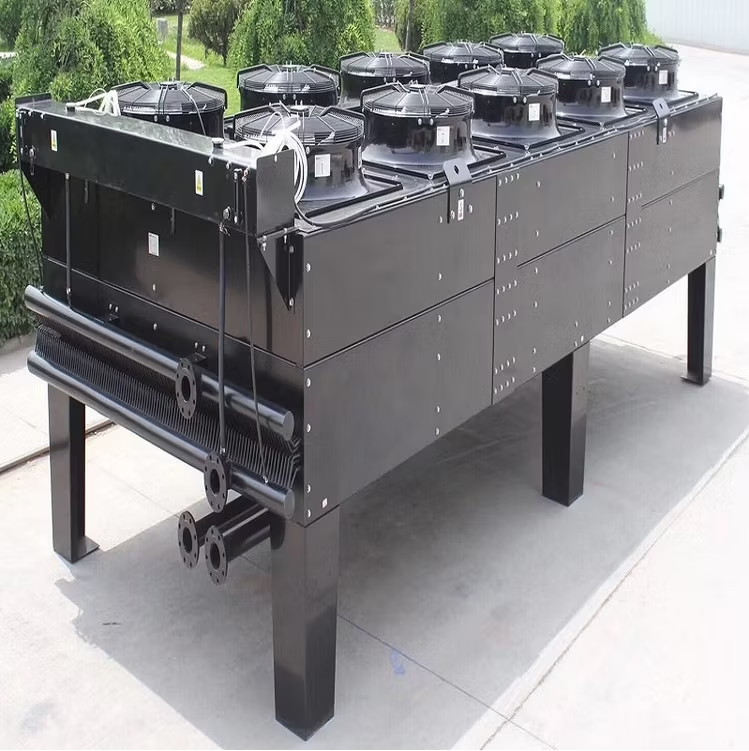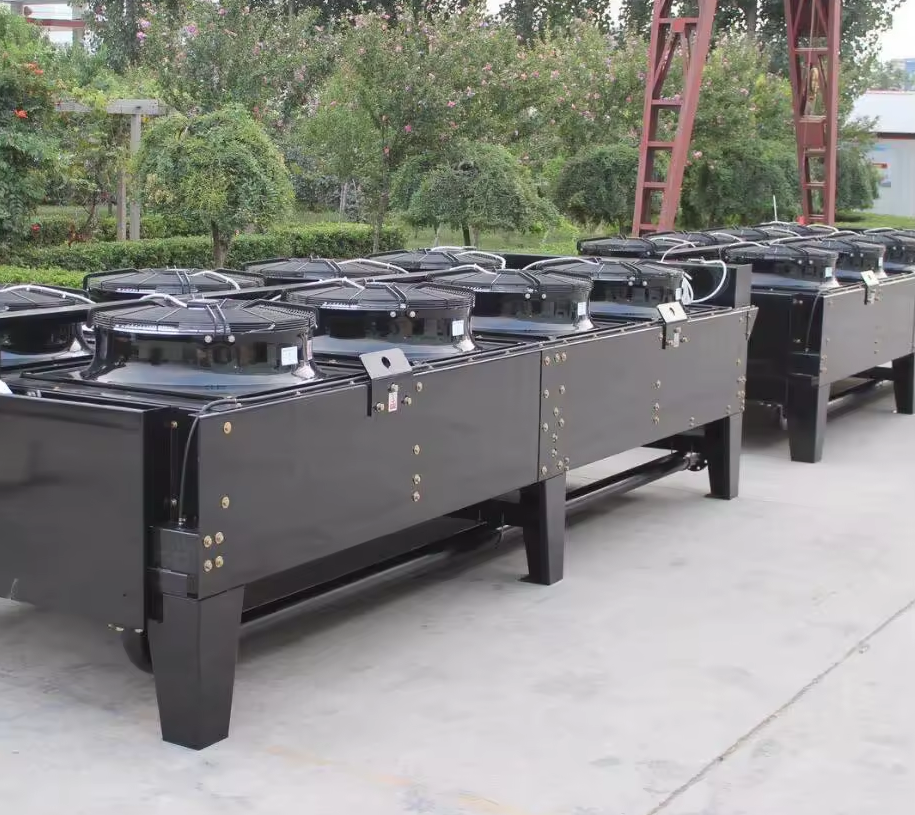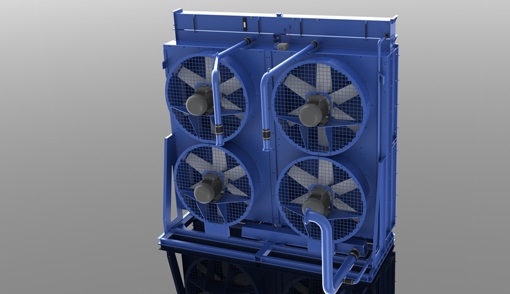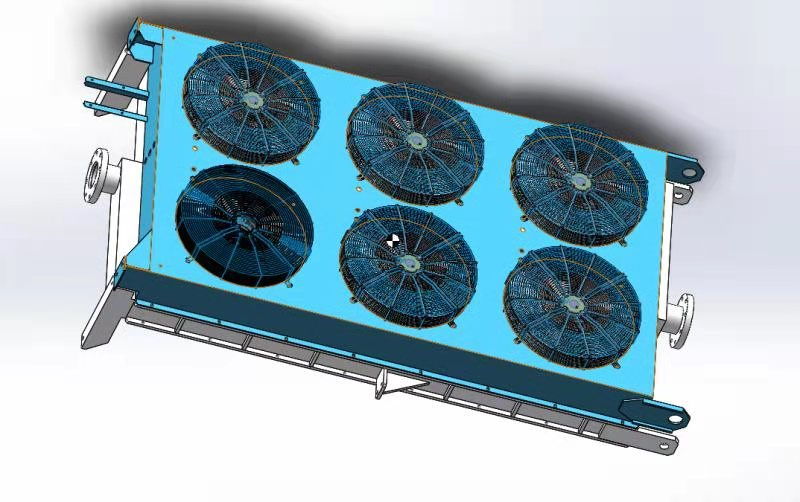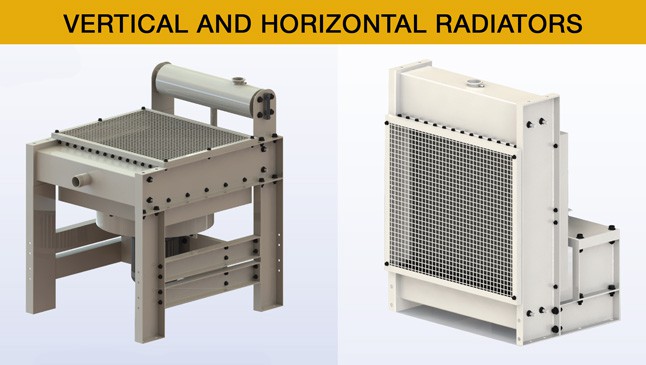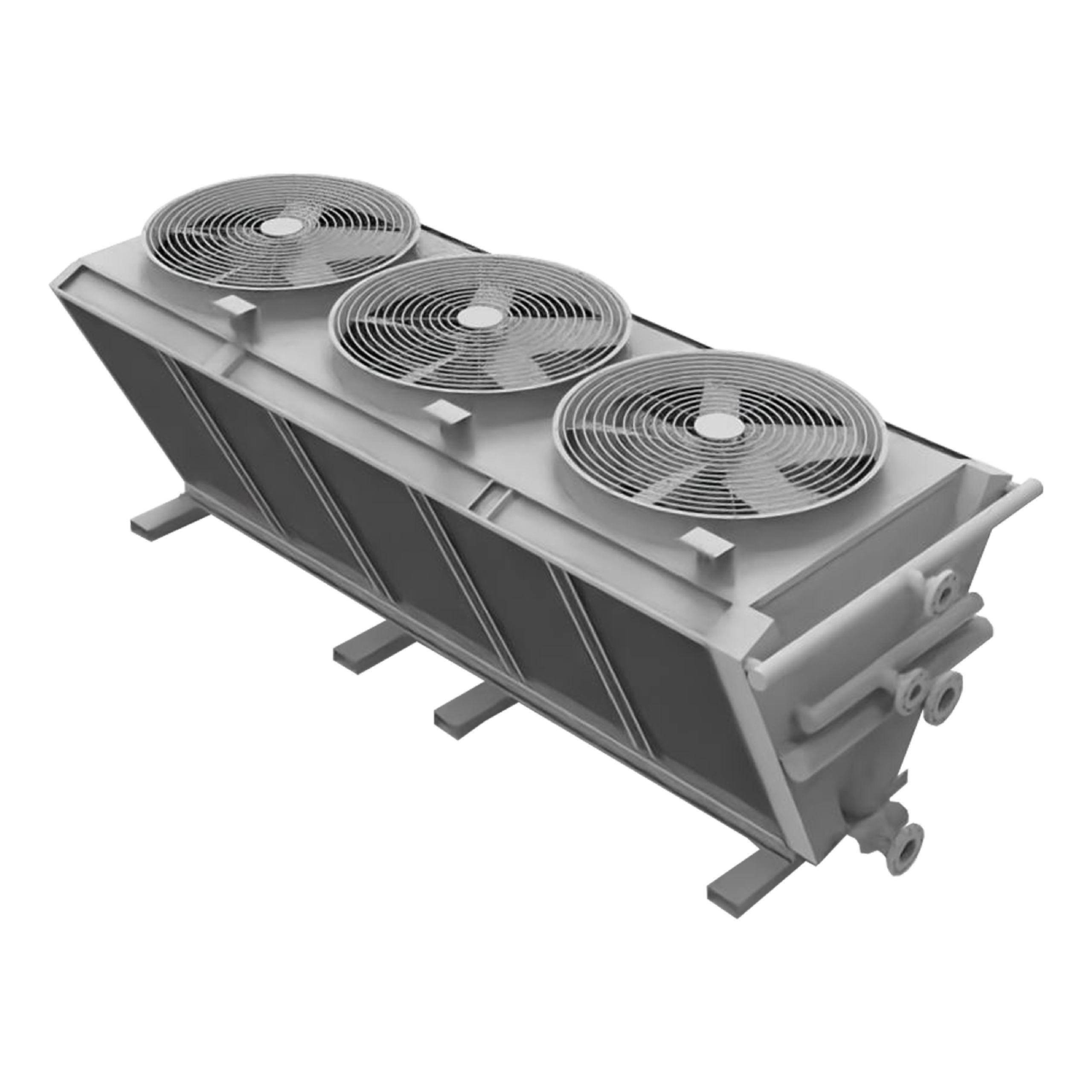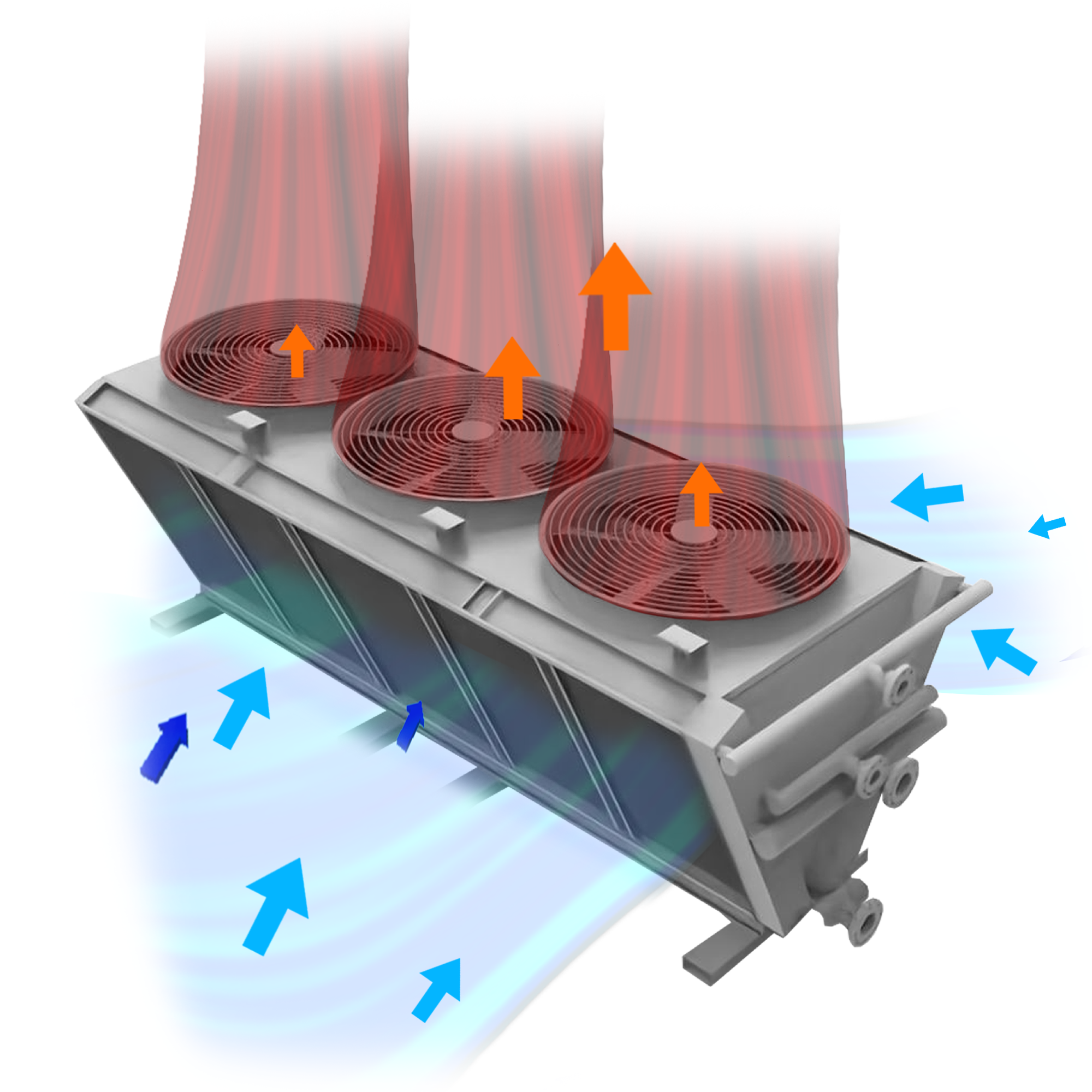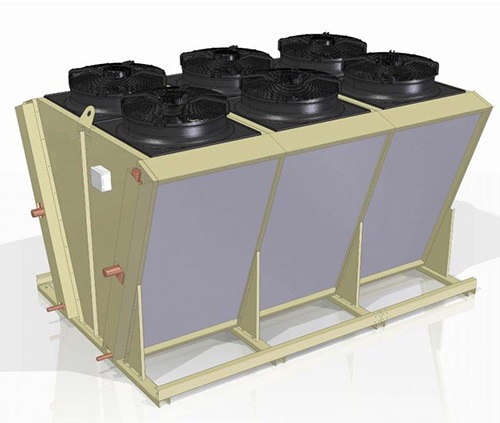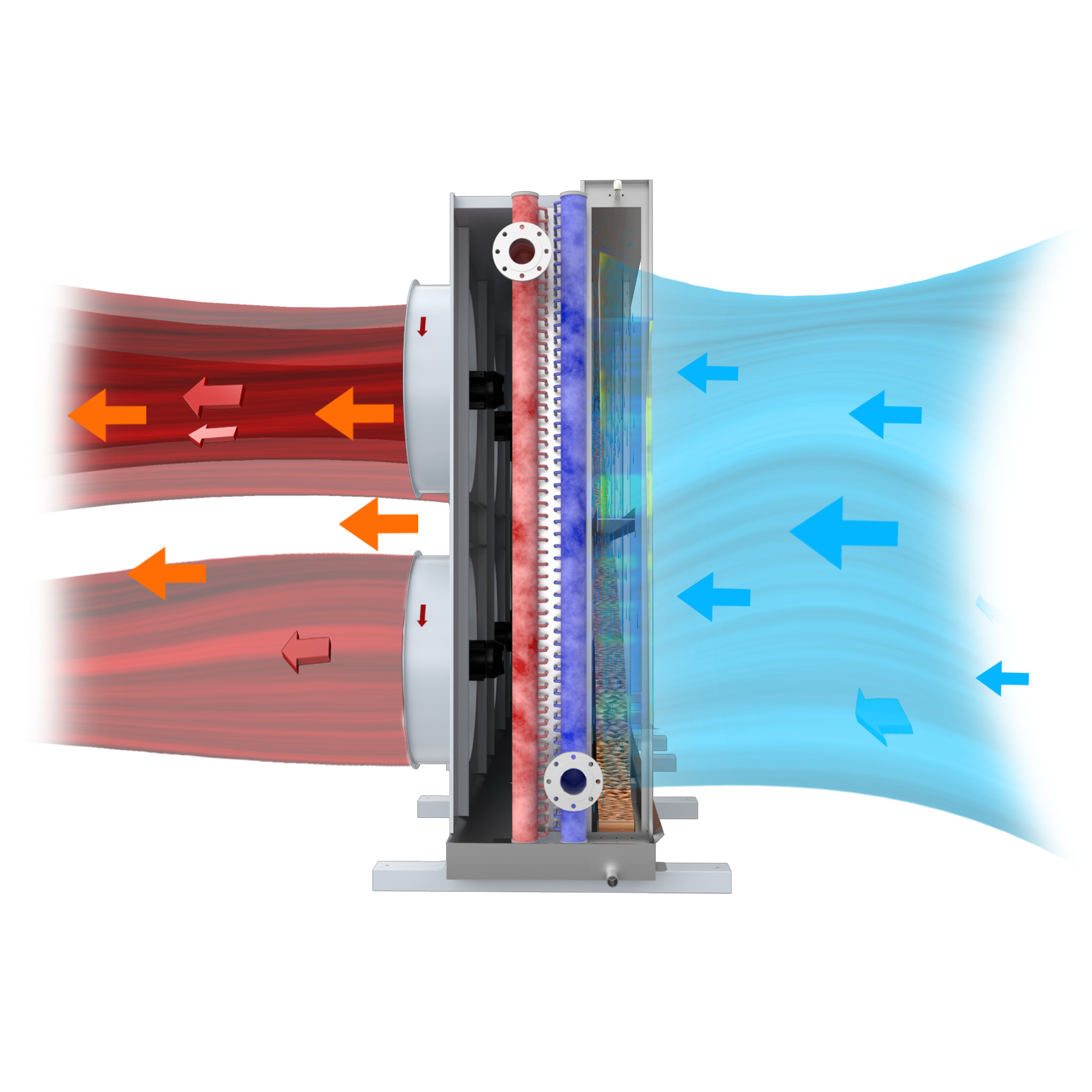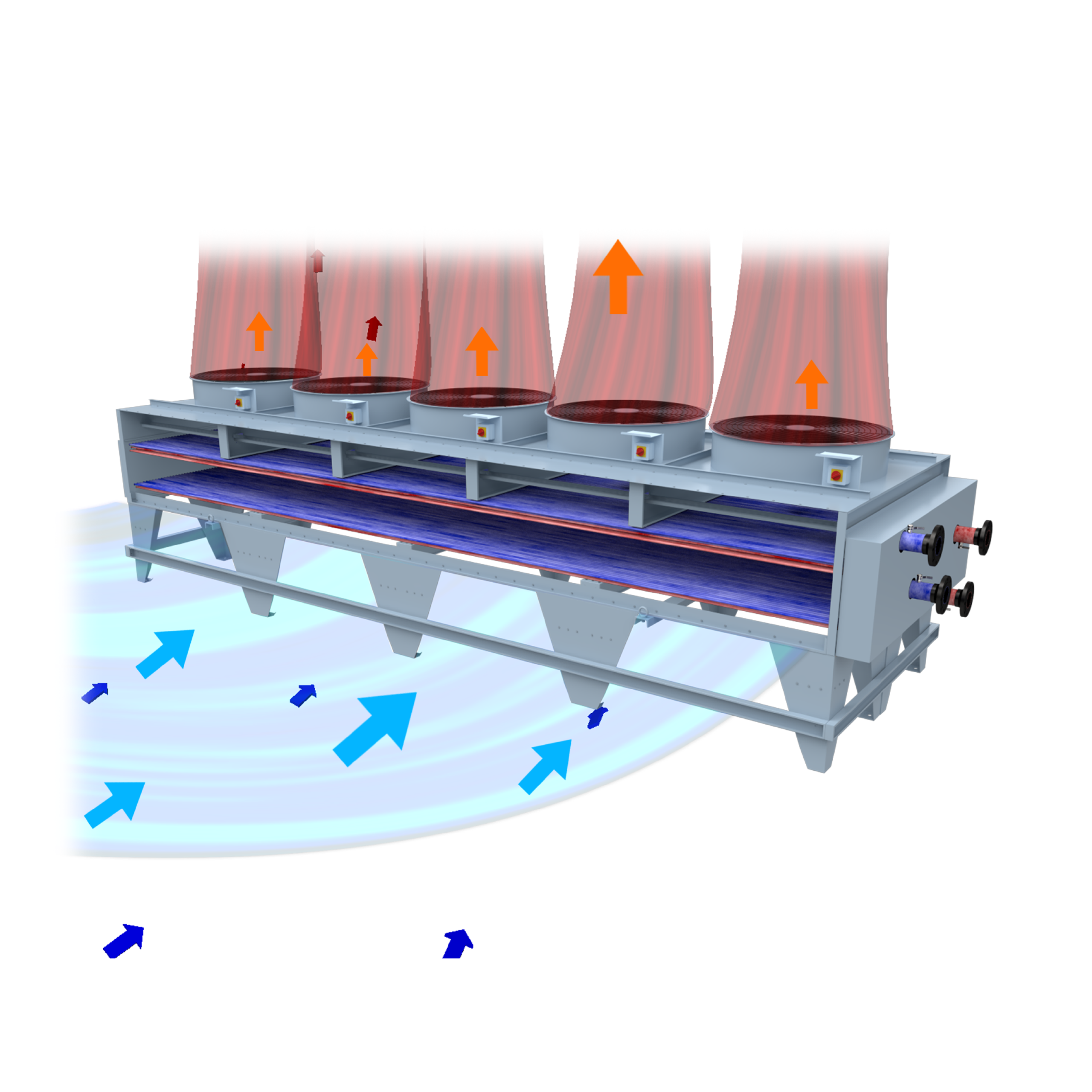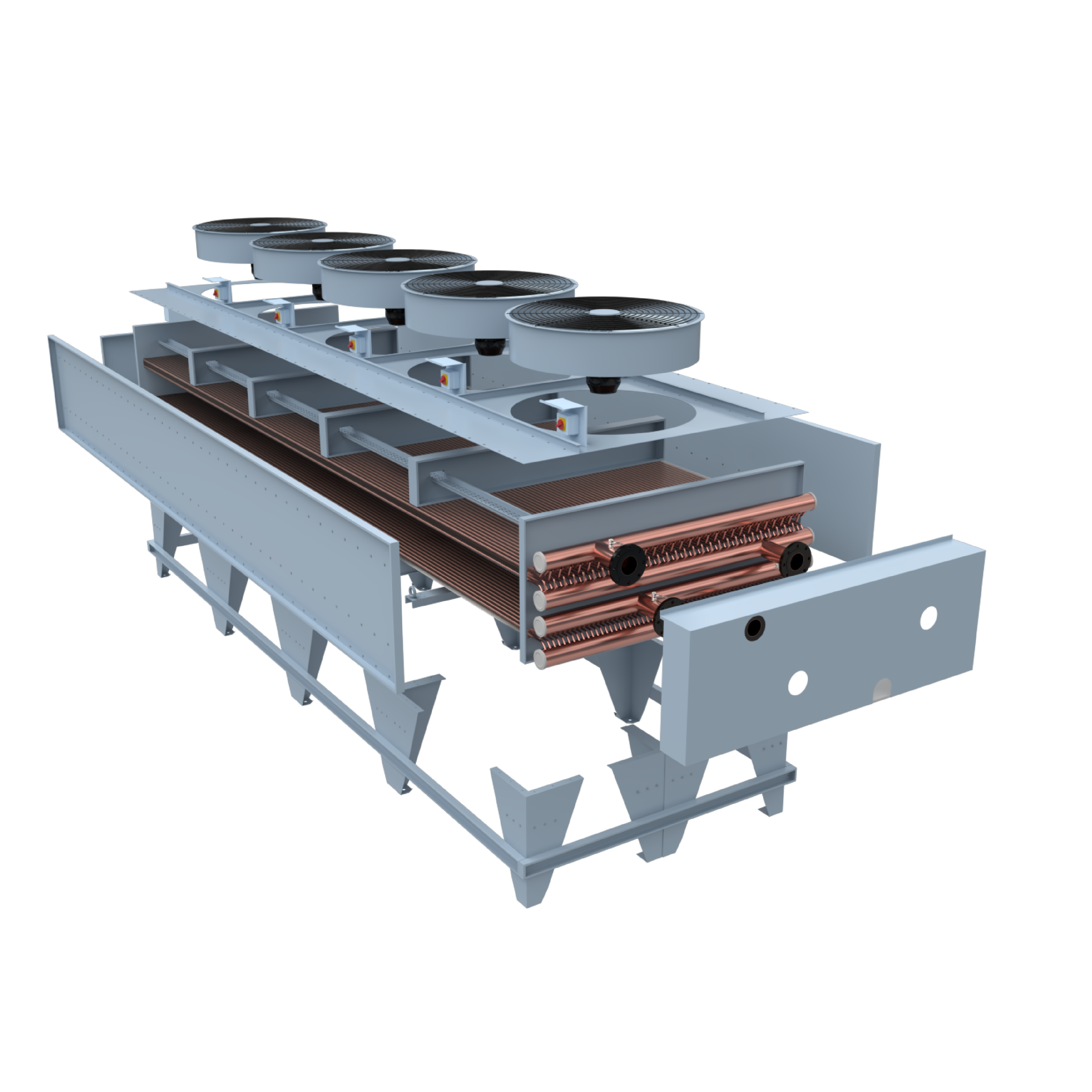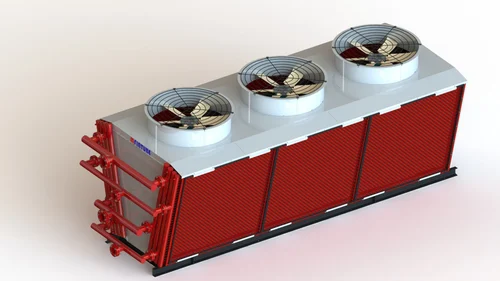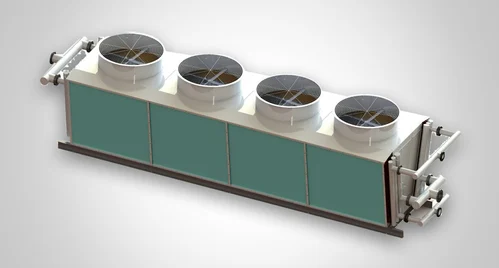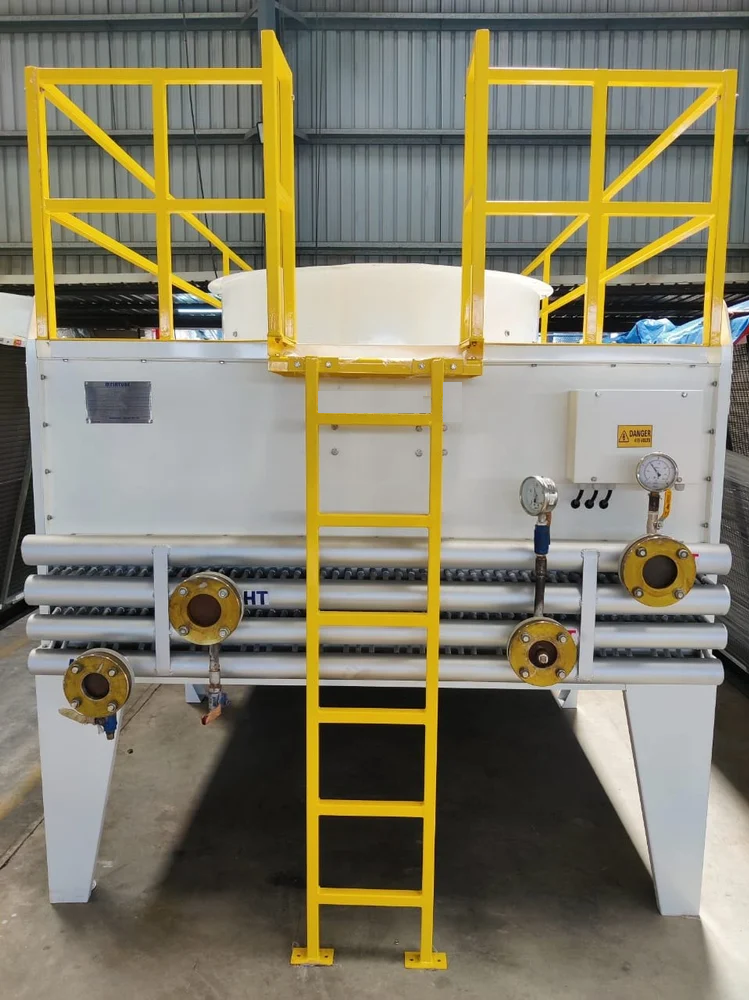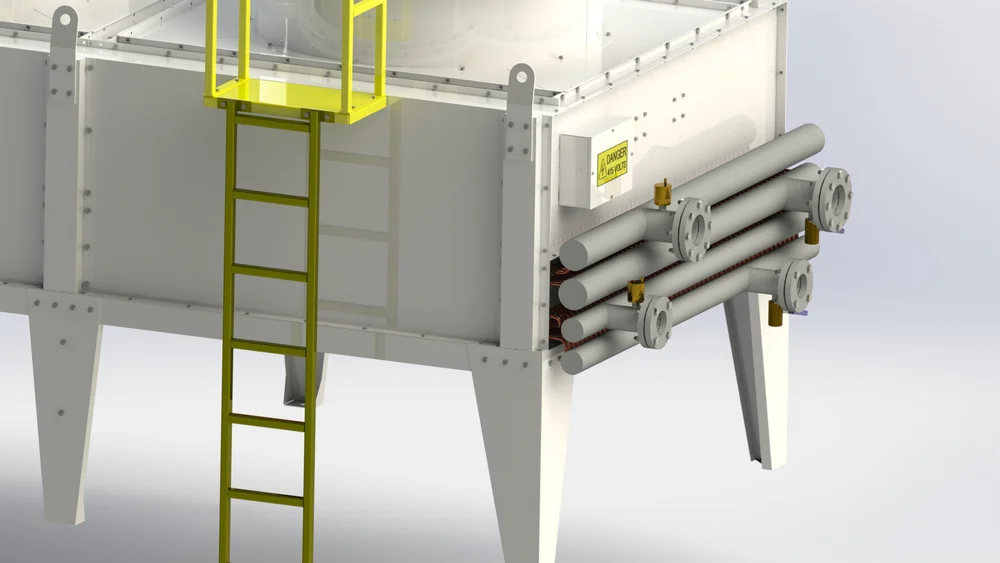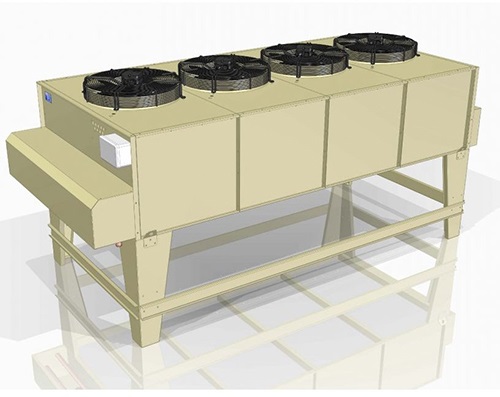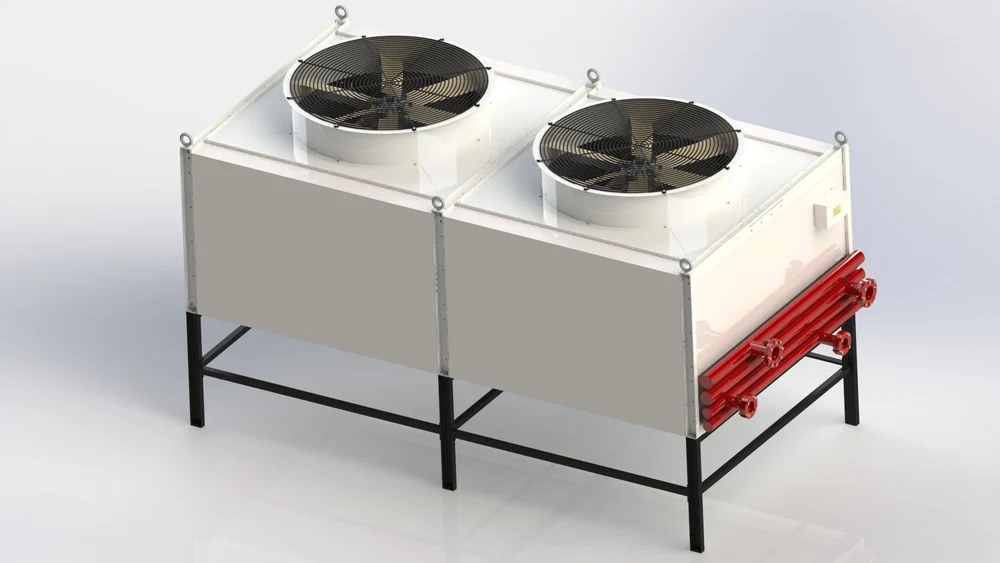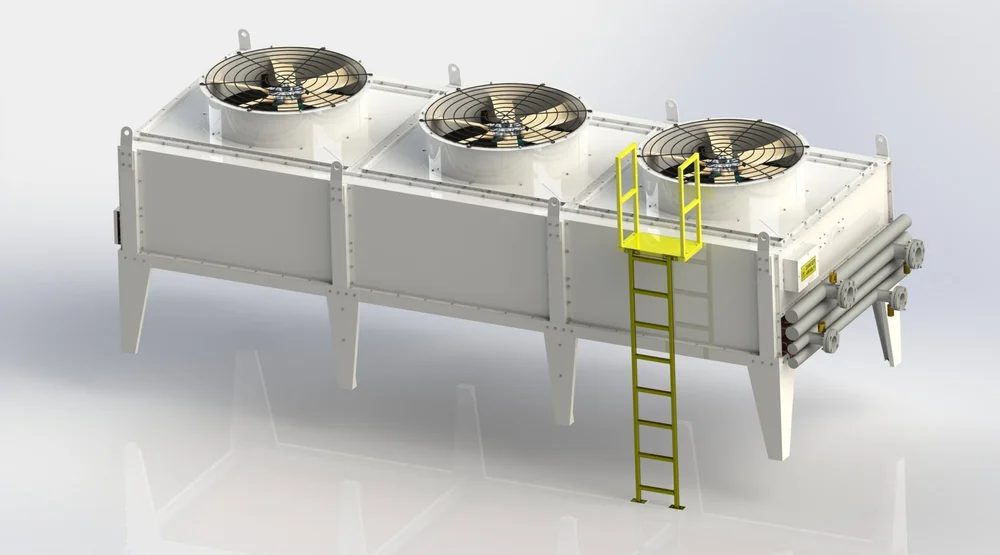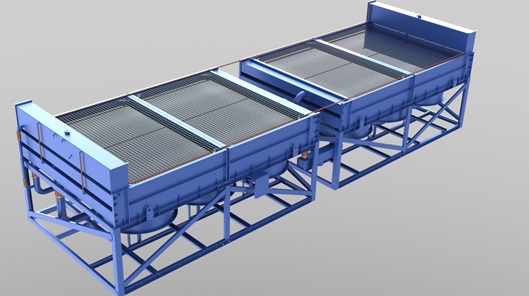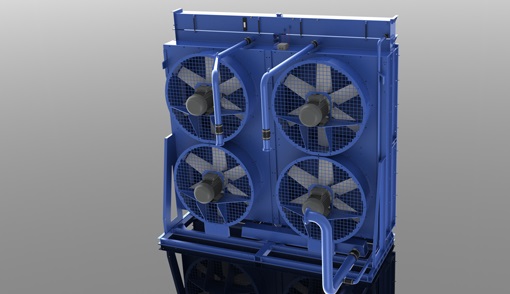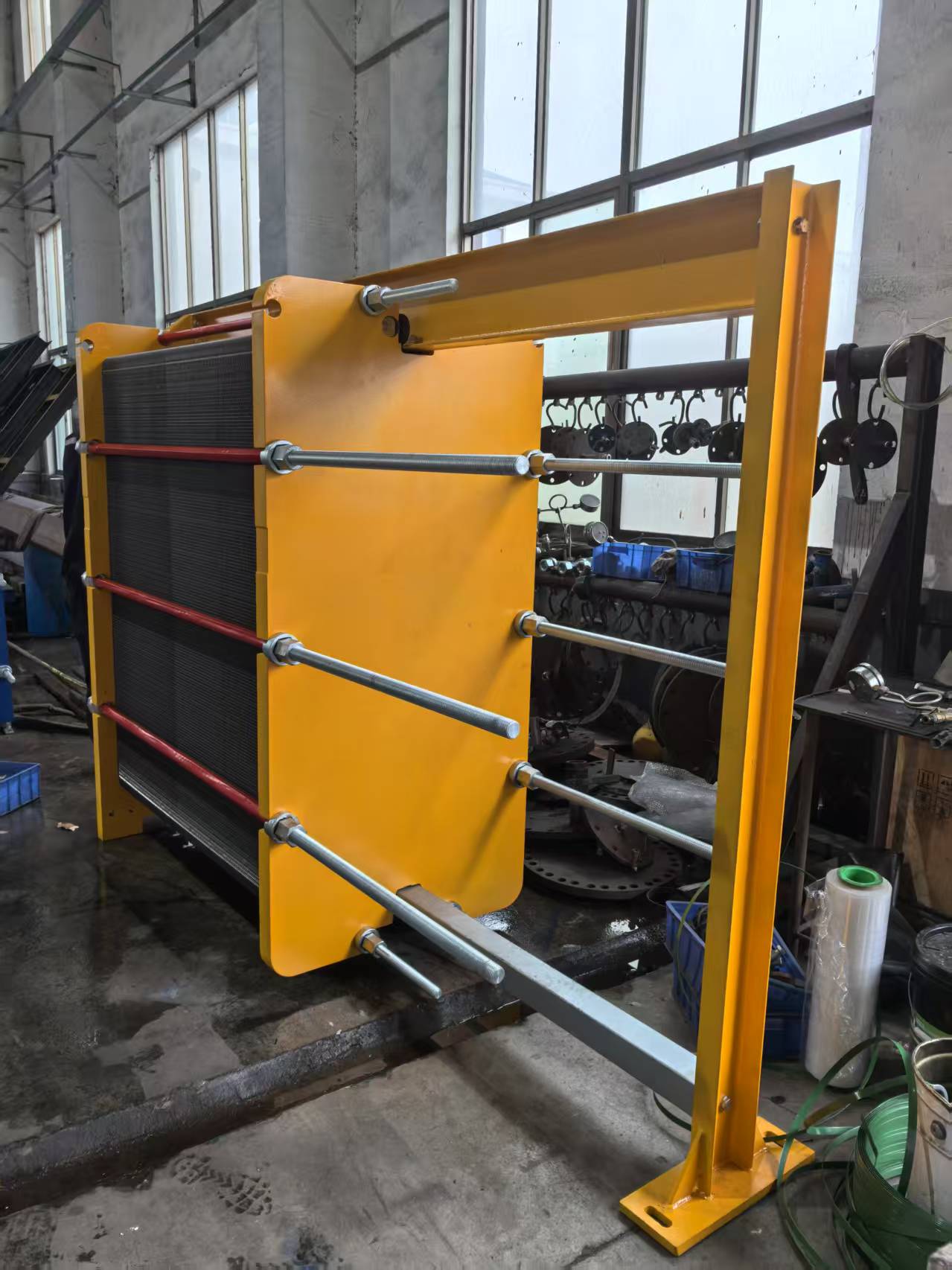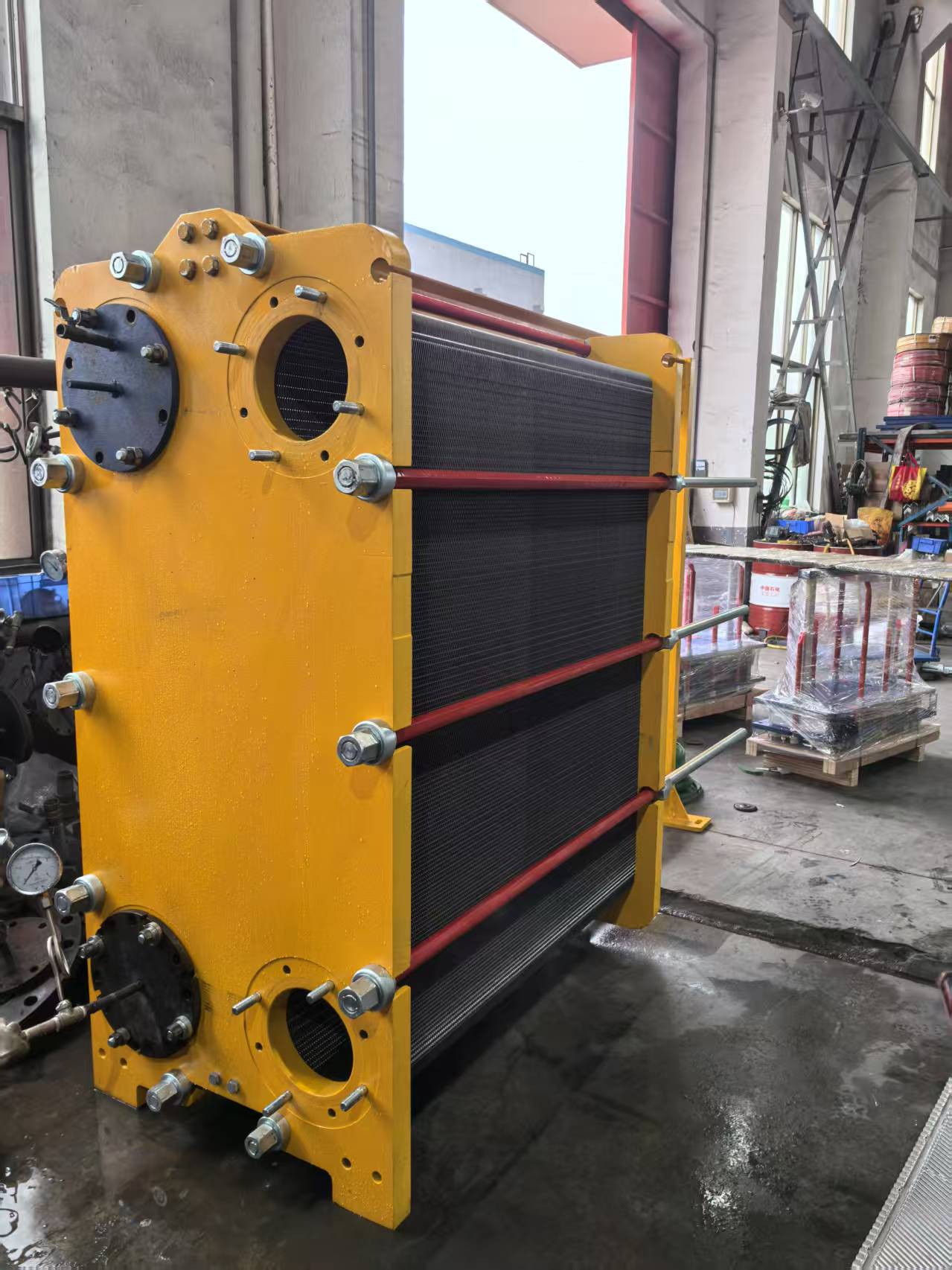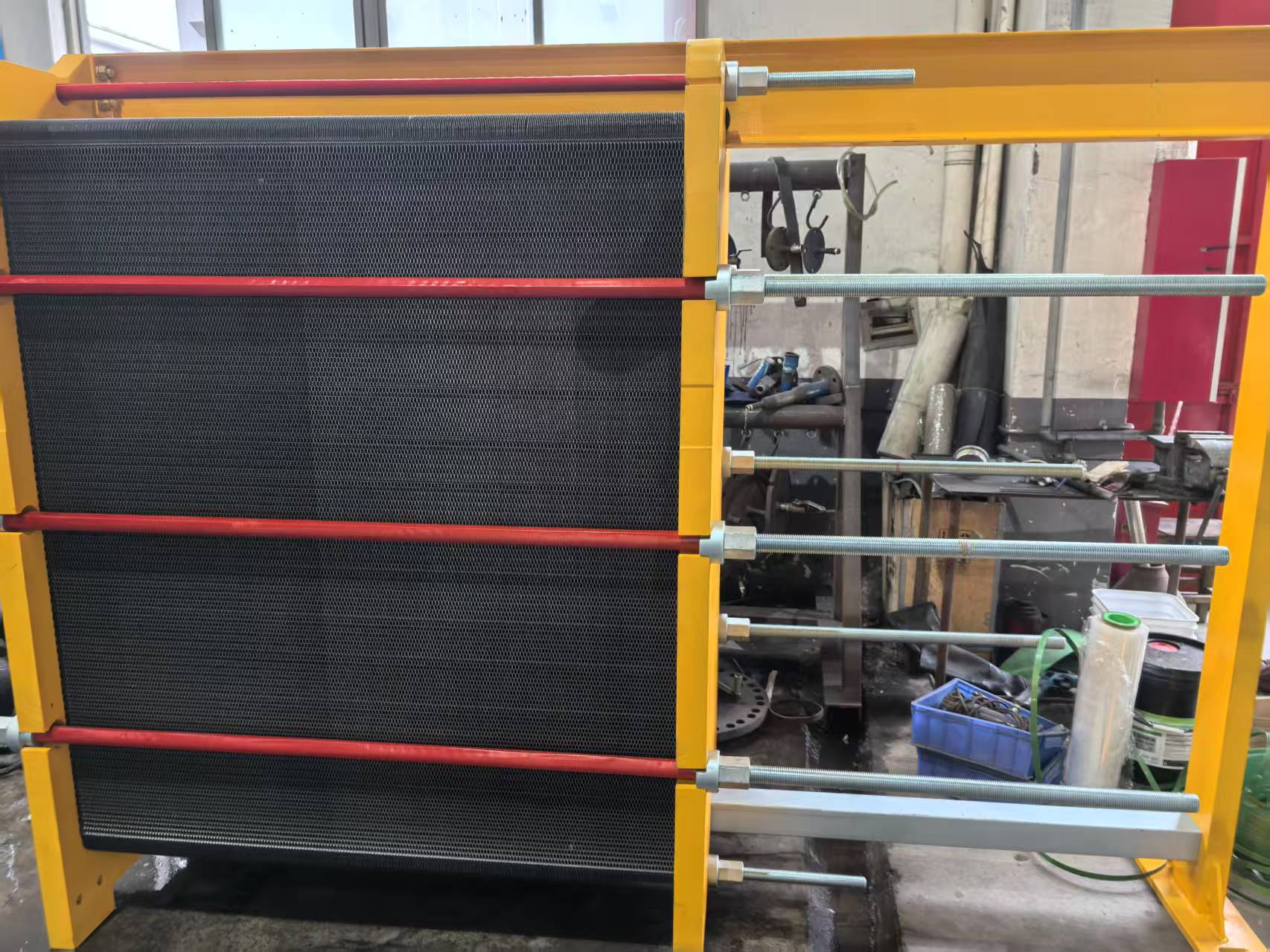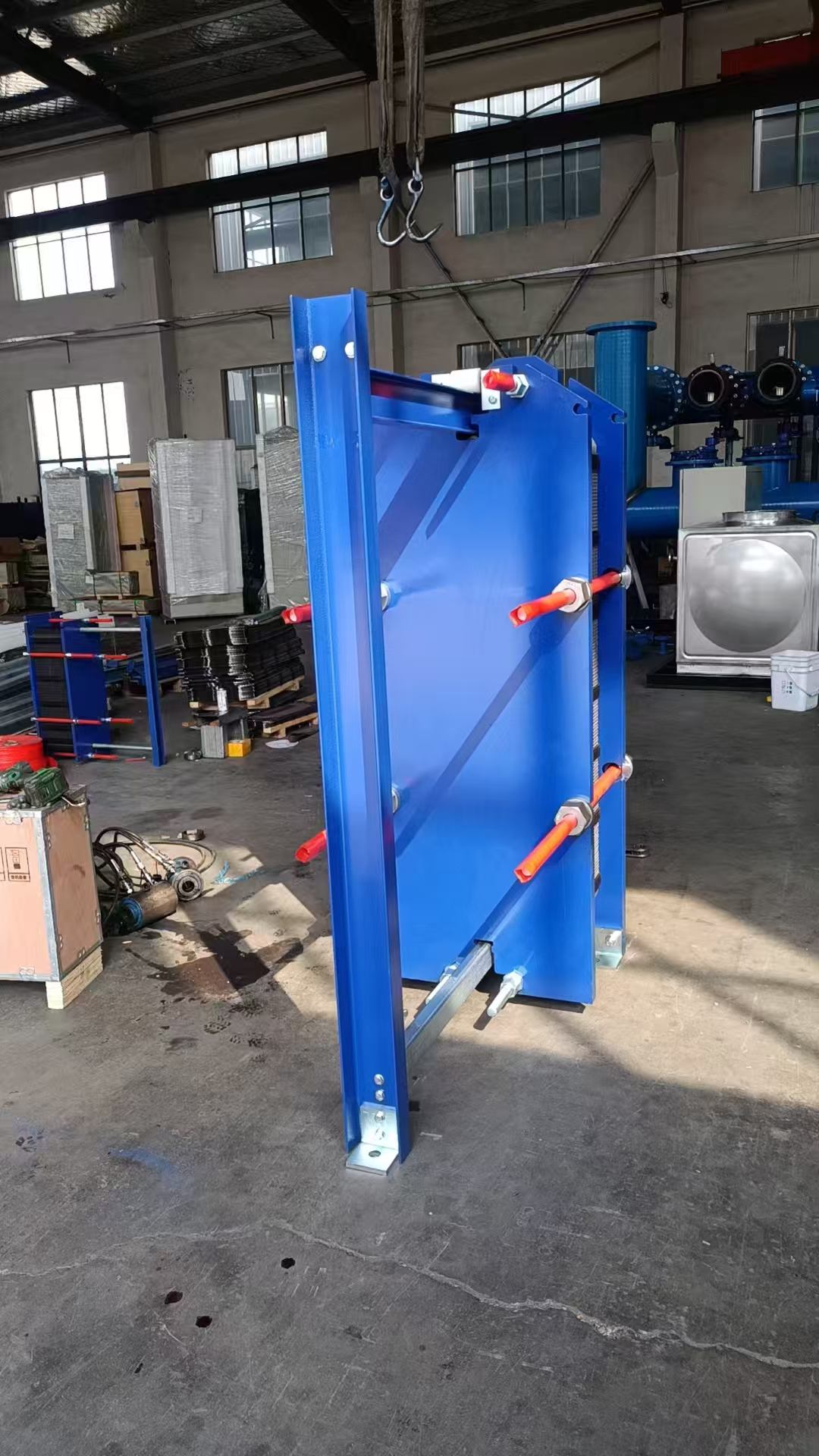
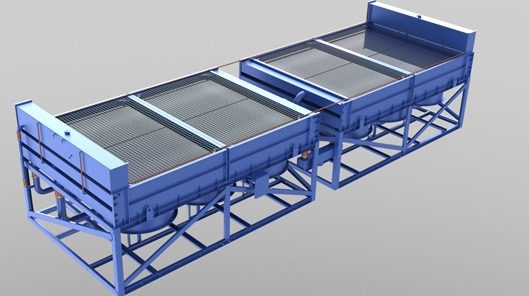
Dry Cooling Tower vs. Wet Cooling Tower Feature Dry Cooling Tower Wet Cooling Tower (Evaporative) Principle Sensible Heat Transfer (like a car radiator) Latent Heat Transfer (evaporation) Water Usage Very Low. Only minor makeup water for the closed loop. Very High. Continuous water loss due to evaporation, drift, and blowdown....
A Dry Cooling Tower is a heat rejection device that cools a working fluid (most often water or a water-glycol mixture) without direct contact with the air and without any water loss through evaporation. Think of it as a giant, industrial-sized radiator, similar in principle to the radiator in your car. It uses the principles...
Tube-Fin vs. Plate-Fin Oil Coolers: Key Differences Both are common air-cooled oil cooler designs, but they differ in construction, efficiency, and ideal applications. Here’s a detailed comparison: 1. Construction & Design Feature Tube-Fin Cooler Plate-Fin Cooler Core Design Tubes (round/flat) with external fins Stacked flat plates with...
Applications Air-cooled oil coolers are widely used in a variety of industries and applications, including: Other Industrial Processes: Gearboxes, welding equipment, die cooling, compressors, and more.
When to Avoid Air-Cooled Oil Coolers? Air-cooled oil coolers are practical for many applications, but certain conditions make them unsuitable. Here’s when you should avoid them and consider alternatives (like water-cooled or hybrid systems): 1. High Ambient Temperature Environments Hot climates (deserts, tropical regions) – If...
Limitations of Air-Cooled Oil Coolers While air-cooled oil coolers are cost-effective and simple, they have several limitations that make them unsuitable for certain applications. Below are the key drawbacks: . Limited Cooling Efficiency in High Temperatures Impact: Risk of oil overheating in high-load or high-temperature conditions....
Cost Comparison: Air-Cooled vs. Water-Cooled Oil Coolers When choosing between air-cooled and water-cooled oil coolers, several cost factors come into play, including initial purchase price, installation, maintenance, energy consumption, and operational efficiency. Below is a detailed breakdown of the cost differences. 1....
Air cooled oil coolers are used to regulate the temperature of lubricating oil in various applications by transferring heat from the oil to the surrounding air. They are commonly employed in engines, hydraulic systems, and other machinery where heat build-up can be detrimental to performance and longevity. Here’s a more...
Performance of Air-Cooled Oil Coolers: With Fins vs. Without Fins The presence of fins dramatically impacts the cooling efficiency, size, and overall performance of an air-cooled oil cooler. Below is a detailed comparison: 1. Heat Transfer Efficiency Factor With Fins Without Fins Surface Area High (5-10x more than bare tubes)....
Air-Cooled vs. Water-Cooled Oil Coolers: Key Differences When choosing between air-cooled and water-cooled oil coolers, factors like cooling efficiency, maintenance, installation, and operating environment play a crucial role. Below is a detailed comparison 1. Cooling Mechanism Feature Air-Cooled Oil Cooler...
Induced Draft Oil Cooler vs. Forced Draft Oil Cooler Air-cooled oil coolers rely on airflow to dissipate heat, and the method of air movement defines their efficiency. The two main types are Induced Draft and Forced Draft coolers. Below is a detailed comparison: 1. Airflow Mechanism Feature Induced Draft Oil Cooler Forced Draft...
Types of Air-Cooled Oil Coolers Air-cooled oil coolers come in different designs, each suited for specific applications based on cooling efficiency, space constraints, airflow conditions, and industry requirements. Below are the main types: 1. Tube & Fin Oil Coolers (Most Common Type) . Plate & Fin Oil Coolers (Compact &...
Aluminum Fins vs. Stainless Steel Fins in Air-Cooled Oil Coolers The choice between aluminum and stainless-steel fins depends on factors like heat transfer efficiency, corrosion resistance, weight, cost, and application environment. Below is a detailed comparison: 1. Heat Transfer Efficiency Material Thermal Conductivity...
Purpose of Fins in an Air-Cooled Oil Cooler Fins play a critical role in enhancing the cooling efficiency of air-cooled oil coolers. They are designed to maximize heat dissipation from the oil to the surrounding air. Here’s how they work and why they are essential: 1. Primary Functions of Fins Increase Surface Area for...
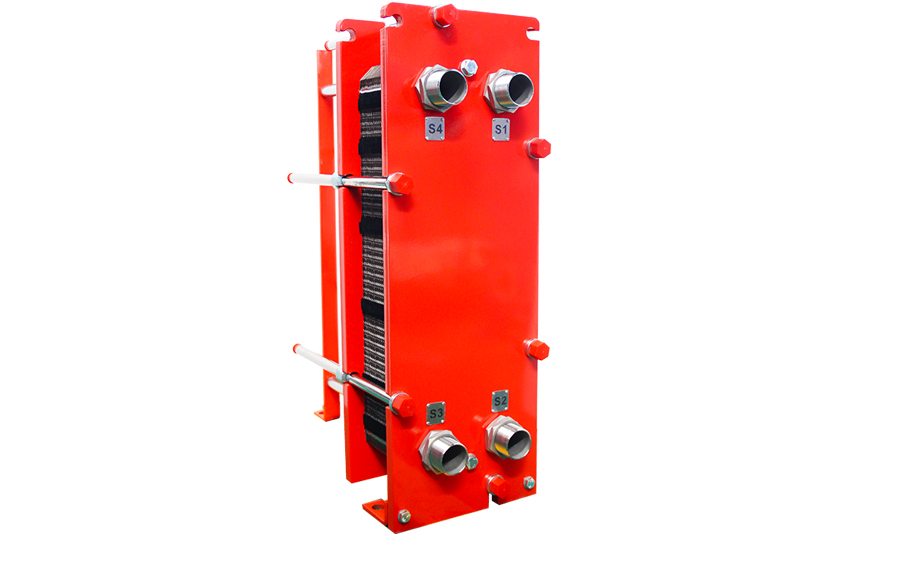
Key Industrial Applications of Air-Cooled oil Cooler 1. Power Generation 2. Heavy Machinery & Construction Equipment 3. Oil & Gas Industry 4. Manufacturing & Processing Plants 5. Marine & Offshore Applications 6. Compressed Air Systems 7. Food & Pharmaceutical Industry Used where water contamination must be avoided (hygienic...
Air-cooled oil coolers are widely used in industrial applications where efficient cooling of lubricating oils, hydraulic oils, or process fluids is required without relying on water-based cooling systems. Their robust design, low maintenance, and reliability make them ideal for harsh environments.
Use of Air-Cooled Oil Coolers in Vehicles Air-cooled oil coolers are essential in vehicles to maintain optimal oil temperatures, prevent overheating, and extend engine/transmission life. They are widely used in: 1. Engine Oil Cooling 2. Transmission Oil Cooling 3. Differential & Gearbox Cooling 4. Power Steering Oil Cooling 5. Turbocharger...
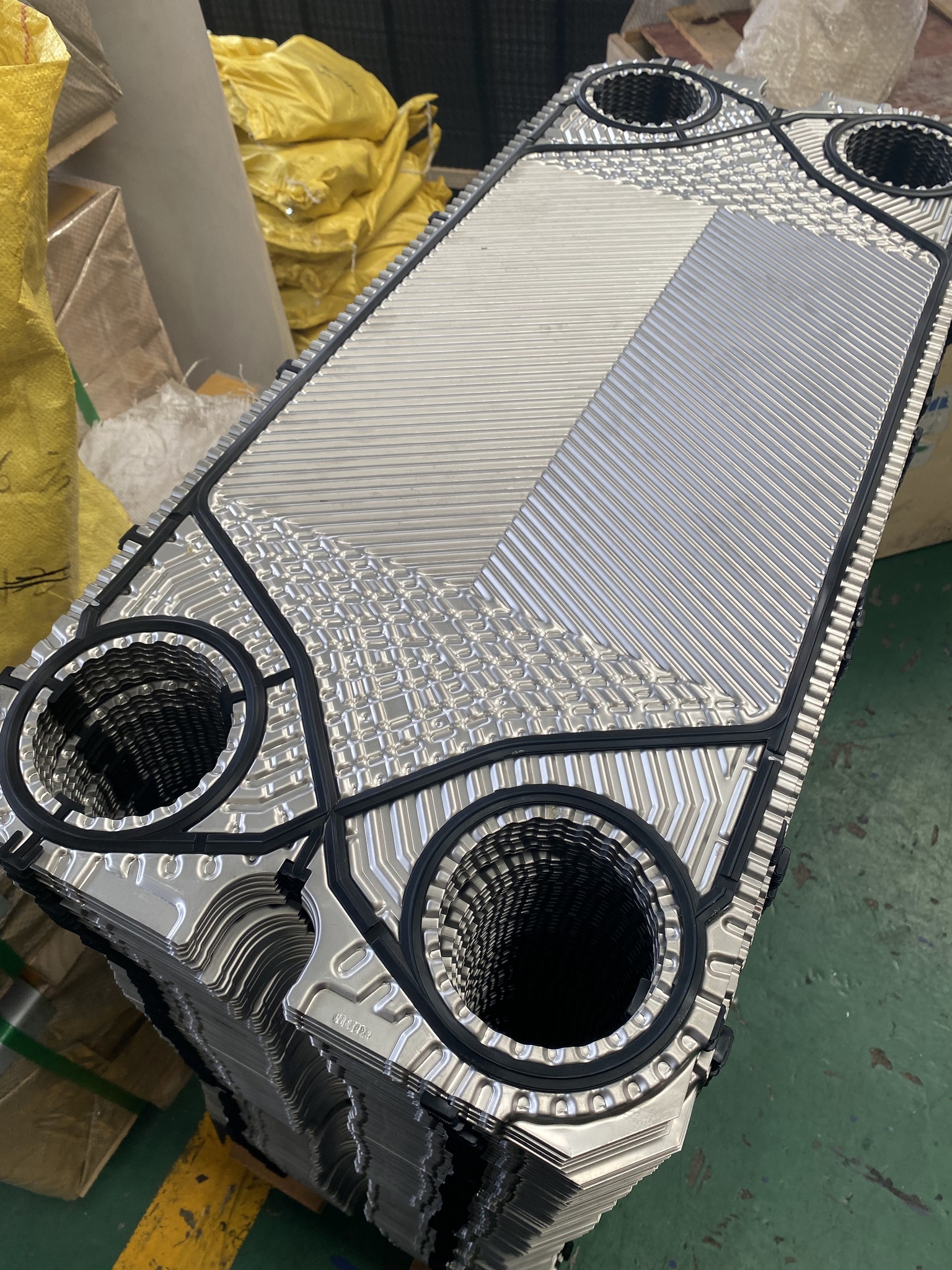
Material of construction of Heat Exchanger Coil in Air Oil Cooler The heat exchanger coil (core) in an air-cooled oil cooler is typically made from materials that offer high thermal conductivity, corrosion resistance, and mechanical strength. The most common materials used are: 1. Aluminum (Most Common) 2. Copper (Less...
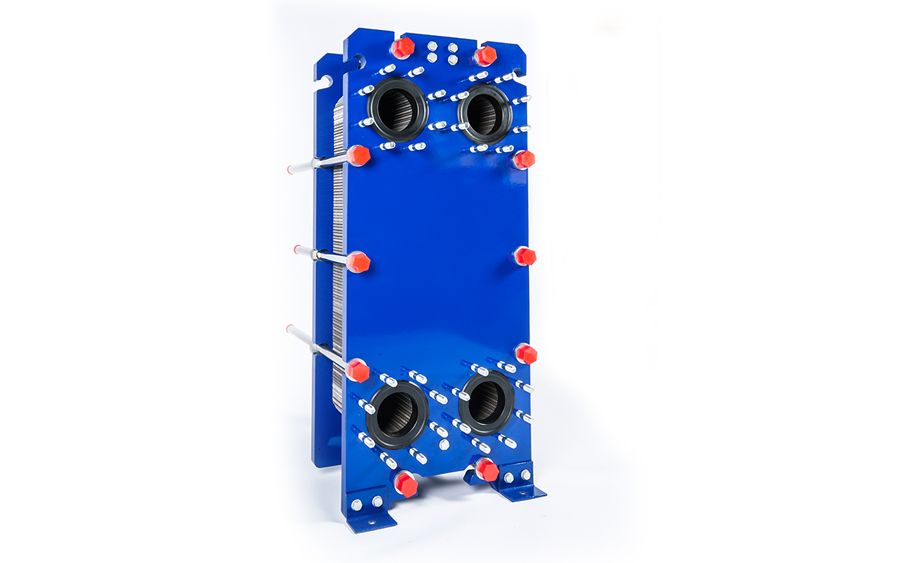
Air-cooled oil coolers are widely used in industries where efficient cooling of lubricating oil, hydraulic oil, or other process oils is required without relying on water-based cooling systems. Here are some common industrial applications: 1. Power Generation 2. Heavy Machinery & Construction Equipment 3. Automotive & Transportation 4....
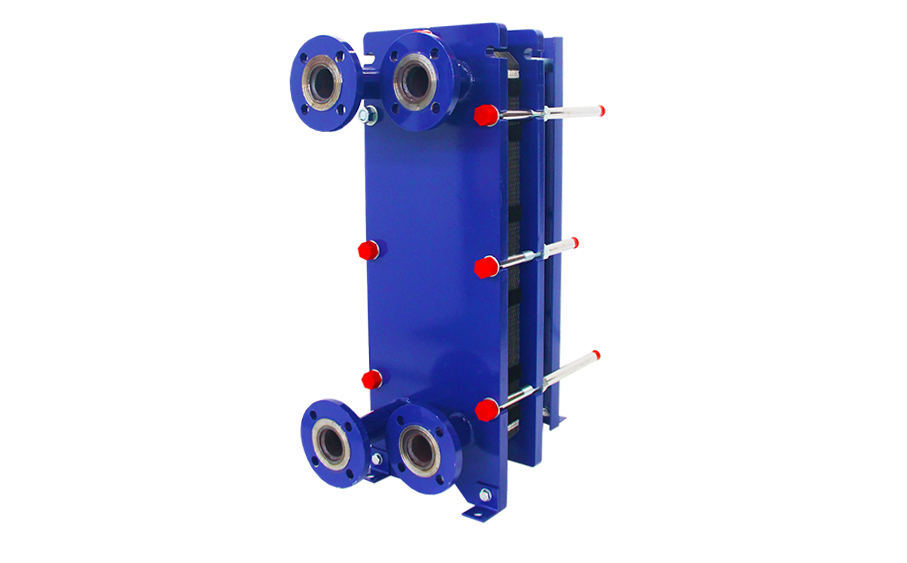
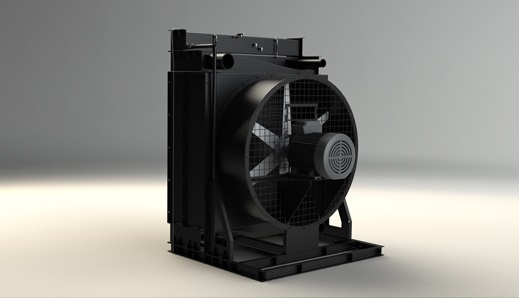
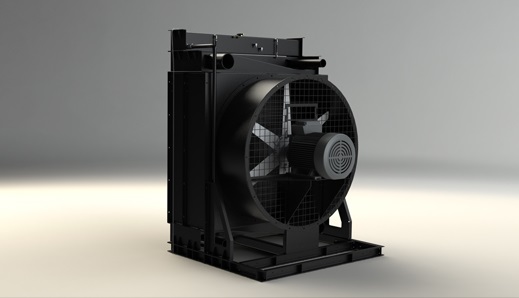
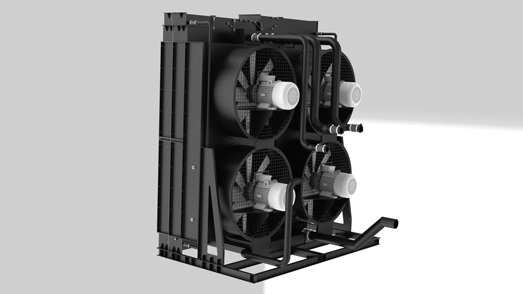
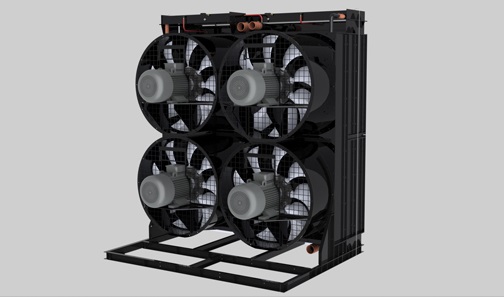
An Air Blast Oil Cooler is a specific type of air-cooled oil cooler that uses a powerful fan (blast of air) to force air over the cooler’s surface, significantly improving the cooling performance. What Is an Air Blast Oil Cooler? It’s a heat exchanger that cools down hot oil by blasting ambient air (using a […]
Air Blast Cooler What Is an Air Blast Oil Cooler? It’s a heat exchanger that cools down hot oil by blasting ambient air (using a fan or blower) across a fin-and-tube radiator, where the oil flows inside the tubes. How It Works: Cooled oil exits the cooler and goes back into the system Components: Thermostatic […]
Air-Cooled Oil Cooler An air-cooled oil cooler is a type of heat exchanger that uses air to reduce the temperature of oil in machinery, engines, or hydraulic systems. Here’s a breakdown of what that means: Purpose: Its main job is to remove excess heat from oil, which is essential for keeping equipment running efficiently and […]
Evaporative Condenser Introduction Evaporative condensers can replace the conventional water cooled condenser and the cooling tower. It rejects heat from a condensing vapour into the environment. ICELINGS tube ice plants can also be supplied with an Evaporative Condenser of reputed brand. They are widely used for condensing vapour in mechanical...
Air cooled Chiller Introduction: Our Tipo product designs too meet the latest and most demanding customer needs. Taking the culture of product perfection to consumer needs. Products are designed keeping in mind that the features should add more value to consumer need. There by ensuring cool, clean and breathable air. Also a specially designed...
FRP Cooling Towers Introduction FRP Cooling Towers manufactured with Glass reinforced plastic mostly in wind with standing bottle type and square type models. It is a mechanical type Counter Flow Tower. FRP Cooling tower intakes the air from bottom and discharge the waste heat at the top. Since the water […]
Evaporative Condenser Introduction Evaporative condensers can replace the conventional water cooled condenser and the cooling tower. It rejects heat from a condensing vapour into the environment. ICELINGS tube ice plants can also be supplied with an Evaporative Condenser of reputed brand. They are widely used for condensing vapour in mechanical...
Vertical Shell and Tube Heat Exchanger Introduction Vertical Shell and Tube Heat Exchanger in which the tubes extend through over sized holes in a liquid distribution plate. Liquid flows through the holes and down each tube exterior surface as a falling film. A spacer or clip, desirably of wire, is placed in each hole around […]
Air cooler Introduction: Our Tipo product designs too meet the latest and most demanding customer needs. Taking the culture of product perfection to consumer needs. Products are designed keeping in mind that the features should add more value to consumer need. There by ensuring cool, clean and breathable air. Also a specially designed ‘Completely...
Kettle Reboiler Type Heat Exchangers Introduction Tipo Kettle Reboiler Type Heat Exchanger is a retaining wall or overflow weir separating the tube bundle from the reboiler section where the residual reboiled liquid called the bottoms product, bundle is kept covered with liquid. Kettle reboilers are reliable in that they can handle high...
Shell and Tube Heat Exchangers Introduction Shell and tube heat exchangers consist of a series of tubes. Shell & tube heat exchangers set of these tubes contains the fluid that must be either heated. The Shell and Tube Heat Exchangers has the advantages of removability of tube bundle and access for cleaning both inner and outer […]
Oil Coolers Heat Exchangers Introduction Oil cooling refers to a process to heat displaced from a cooler oil is the principle behind oil cooler devices. The oil carrying the displaced heat usually passes a cooling unit such as a radiator, less commonly a gas decompresser. The oil cooler is connected to the lubrication system in […]
Flue Gas Air Pre Heater Introduction Tipo Flue Gas Air Pre Heater of the air pre heater is to recover the heat from the boiler flue gas which increases the thermal efficiency of the boiler by reducing the useful heat lost in the flue gas.This flue gases are also sent to the flue gas stack […]
Compact Heat Exchanger Introduction Compact heat exchangers transfer more energy cost-effective manner than other heat exchangers & save more energy when compared standard technology. Compact heat exchangers are to transfer heat from one fluid either gas or liquid to another. Compact heat exchangers (CHEs) have a significantly greater surface...
U Tube bundle Heat Exchanger Introduction U Tube bundle Heat Exchanger can build “U” tube bundles, straight tube “floating” tube bundles, or we can re tube fixed tubes heat exchangers when the bundles is not removable and multitherm is not locked into any one material. Heat-exchanger system consisting of a bundle of U tubes...
Pillow Plate Heat Exchangers About Pillow plate heat exchanger : – A pillow plate heat exchanger is commonly used in the dairy industry for cooling milk in large direct-expansion stainless steel bulk tanks. The pillow plate allows for cooling across nearly the entire surface area of the tank, without gaps that would occur between pipes […]
Fan less Cooling Towers The name “FAN LESS FILL LESS“ says it all. Devoid of either the fan or the fill media these towers are guaranteed for 100% savings in power & maintenance down time. The special aero dynamic designed FRP / GI louvers minimize spillage and evaporation losses. The Hot Dipped Galvanized structural and […]
Marine Type Heat Exchangers About: The Marine Type Heat exchangers are the most common way to cool a boat’s engine, using the lake, river or ocean water in which the boat floats and also there are three methods employed for water-cooled marine petrol and diesel engines. Specifications of Marine Type Heat Exchangers: A water-jacketed exhaust...
Brass Tube Heat Exchanger Introduction Tipo Brass is usually the first-choice material for many of the components for equipment made in the general, electrical and precision engineering industries. Brass is specified because of the unique combination of properties, matched by no other material, that make it indispensable where a long,...
Multi Cell Cooling Tower Multi Cell Cooling Tower, number of cells and motors can be clubbed together to create multi-cell cooling tower application. By installing multi-cell cooling tower, company can save tremendous power while receiving optimum level of performance. It belongs to the series of Counter-Flow Rectangular Shaped Cooling towers. It...
Floating Heat Exchangers About The Tipo Company actively involved in supplying Floating Heat Exchanger. It is a specially designed heat exchanger in which one end of the tube sheet is fixed to the shell and the other one can freely float inside the shell. It is widely used in applications where there is high stress […]
Copper Heat Exchangers Introduction Tipo Copper Heat Exchangers tubes normally supplied in straight length annealed and half hard temper. The copper tubes shaped by are metal industries have the stiff tolerances but also have the most dependable dimensions throughout tube length. The tube surface is clean both inside and outside with no caustic...