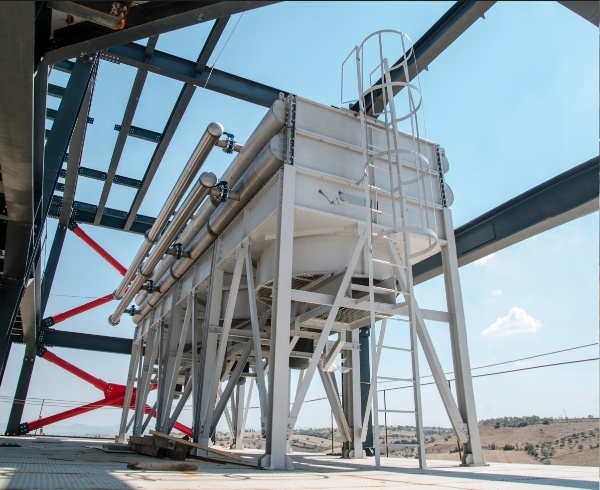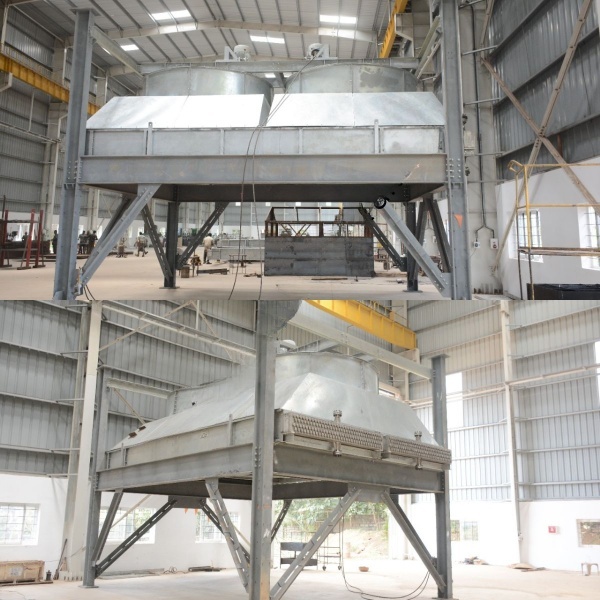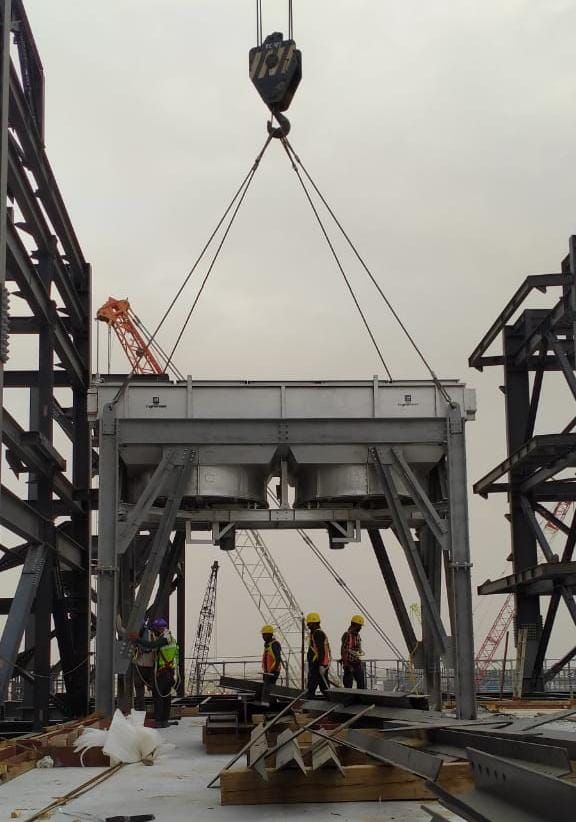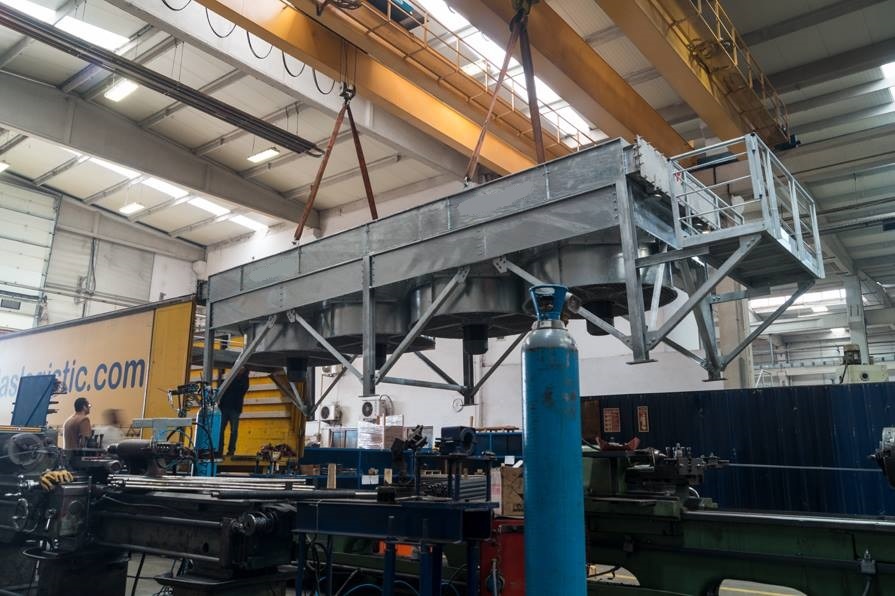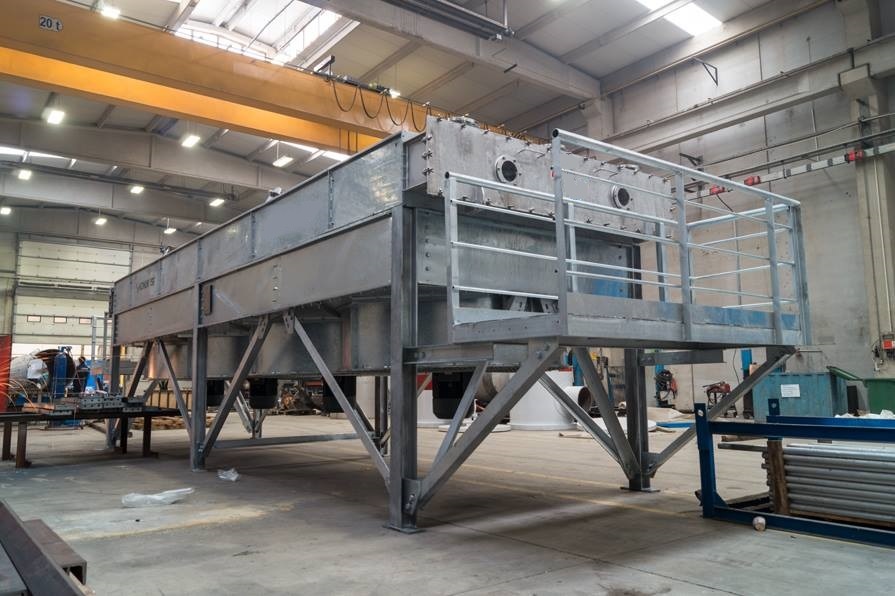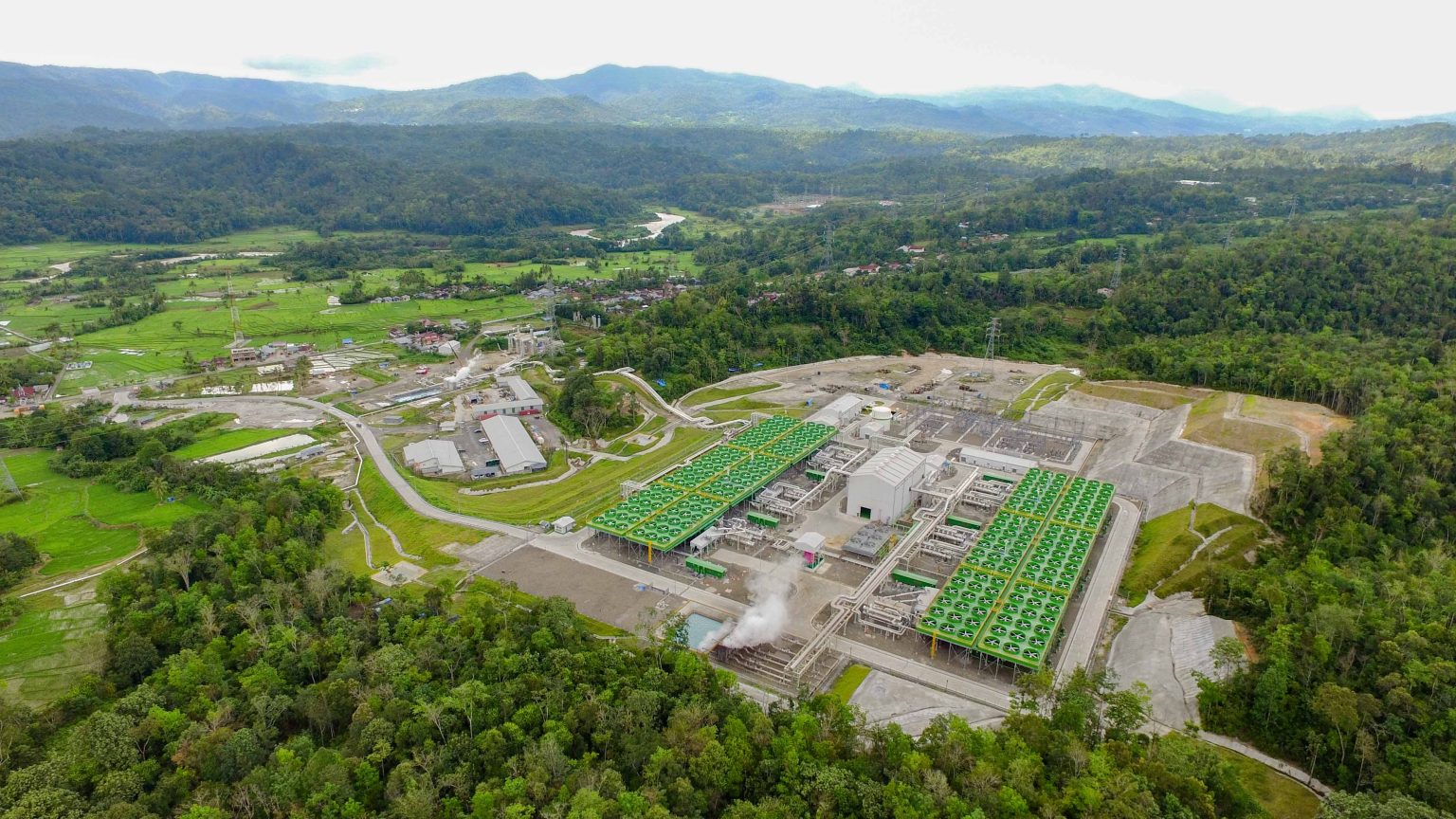
Advantages of Forced Draft Slightly lower horsepower since the fan is in cold air. (Horsepower varies directlyas the absolute temperature.) Better accessibility of fans and upper bearings for maintenance. Easily adaptable for warm air recirculation for cold climates. Better accessibility of bundles for replacement. ...
Advantages of Induced Draft of intake, or about 1500 ft/min. Increased capacity in the event of fan failure, since the natural draft stack effect is much greater with induced draft
For a given mass flow rate of air, induced-draft operation in principle entails greater power consumption than forced-draft operation due to the higher volumetric flow rate of the heated air that is handled by the induced-draft fan. In practice, however, this potential disadvantage tends to be offset by the more uniform flow distribution and lower...
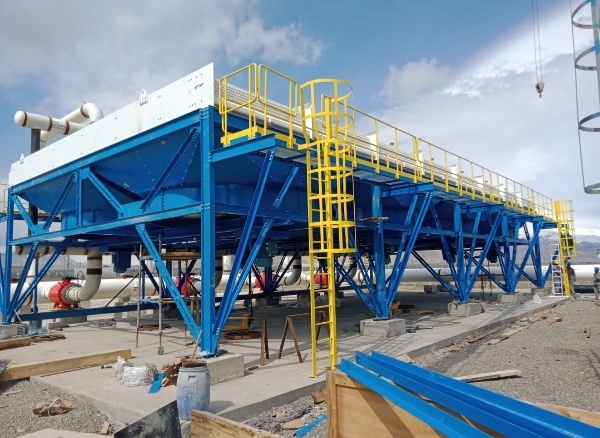
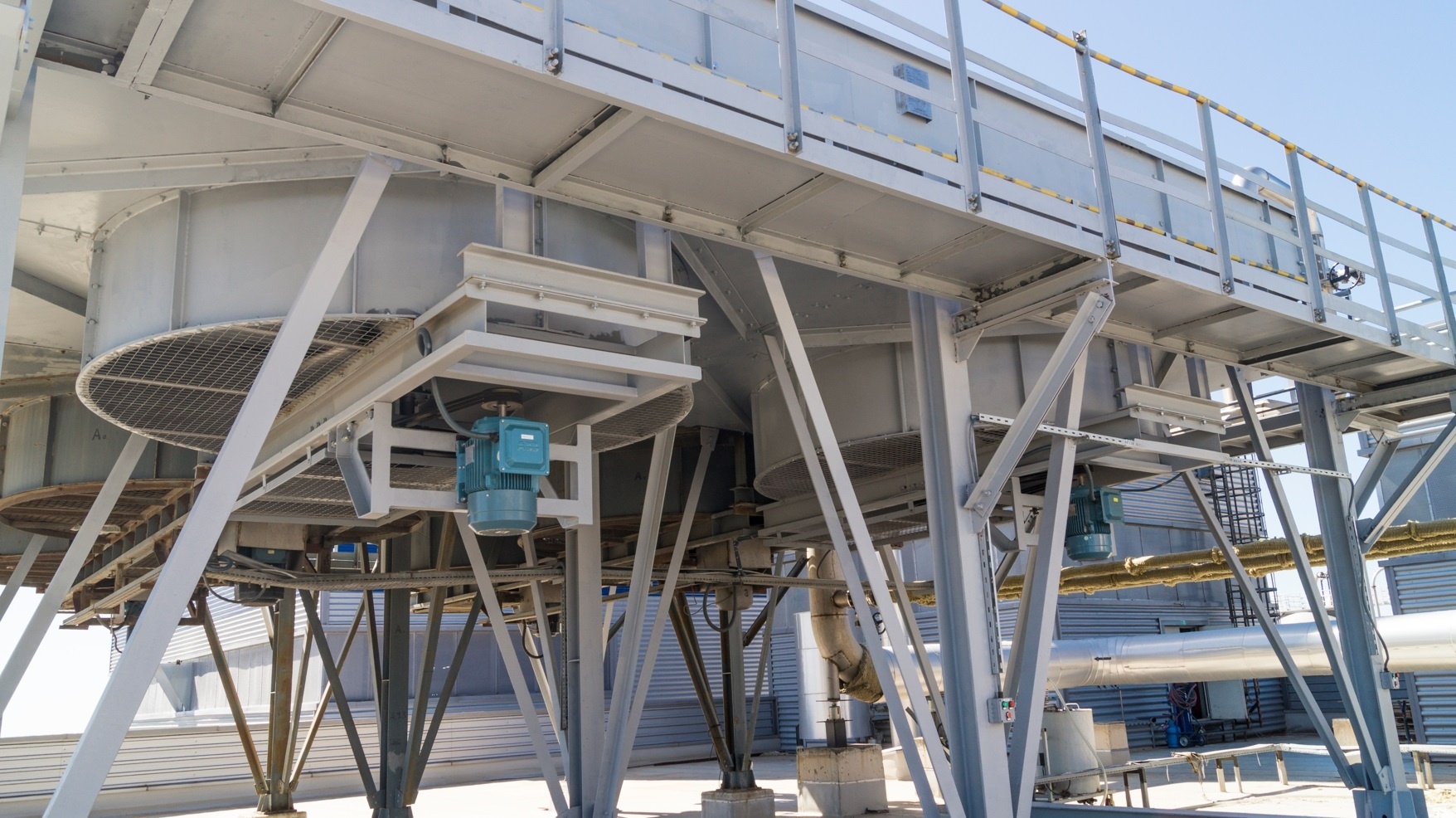
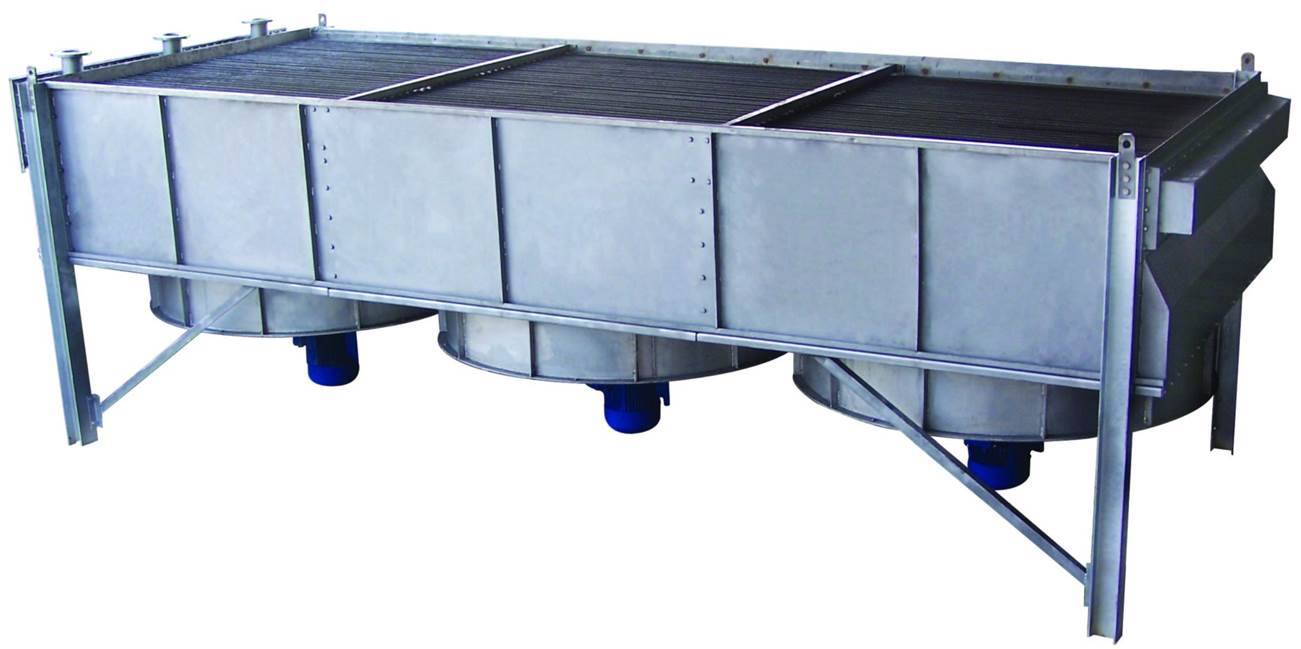
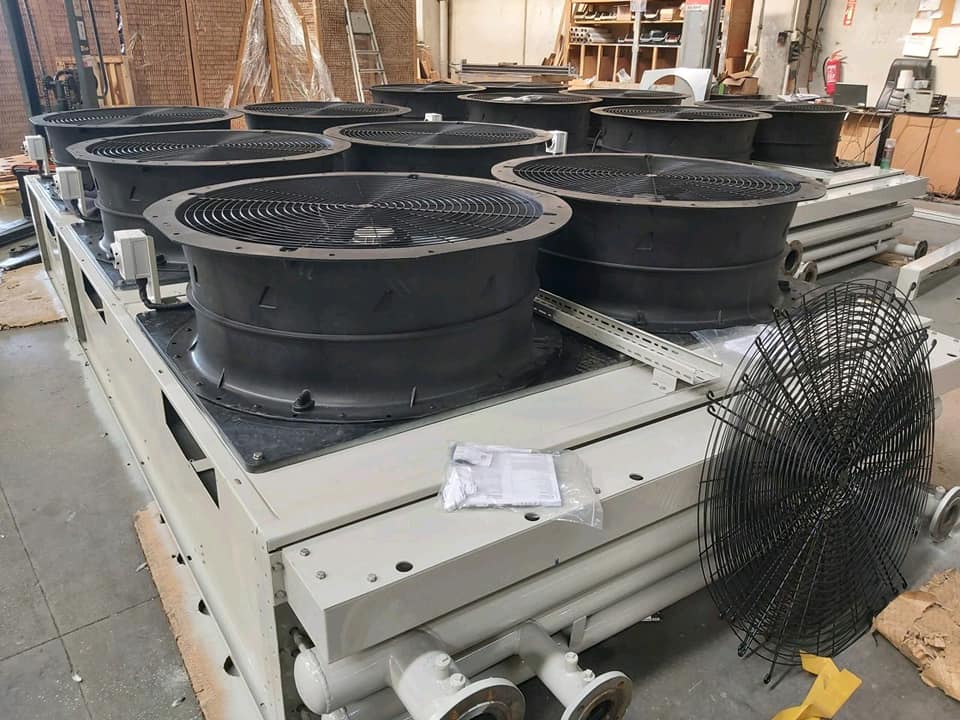
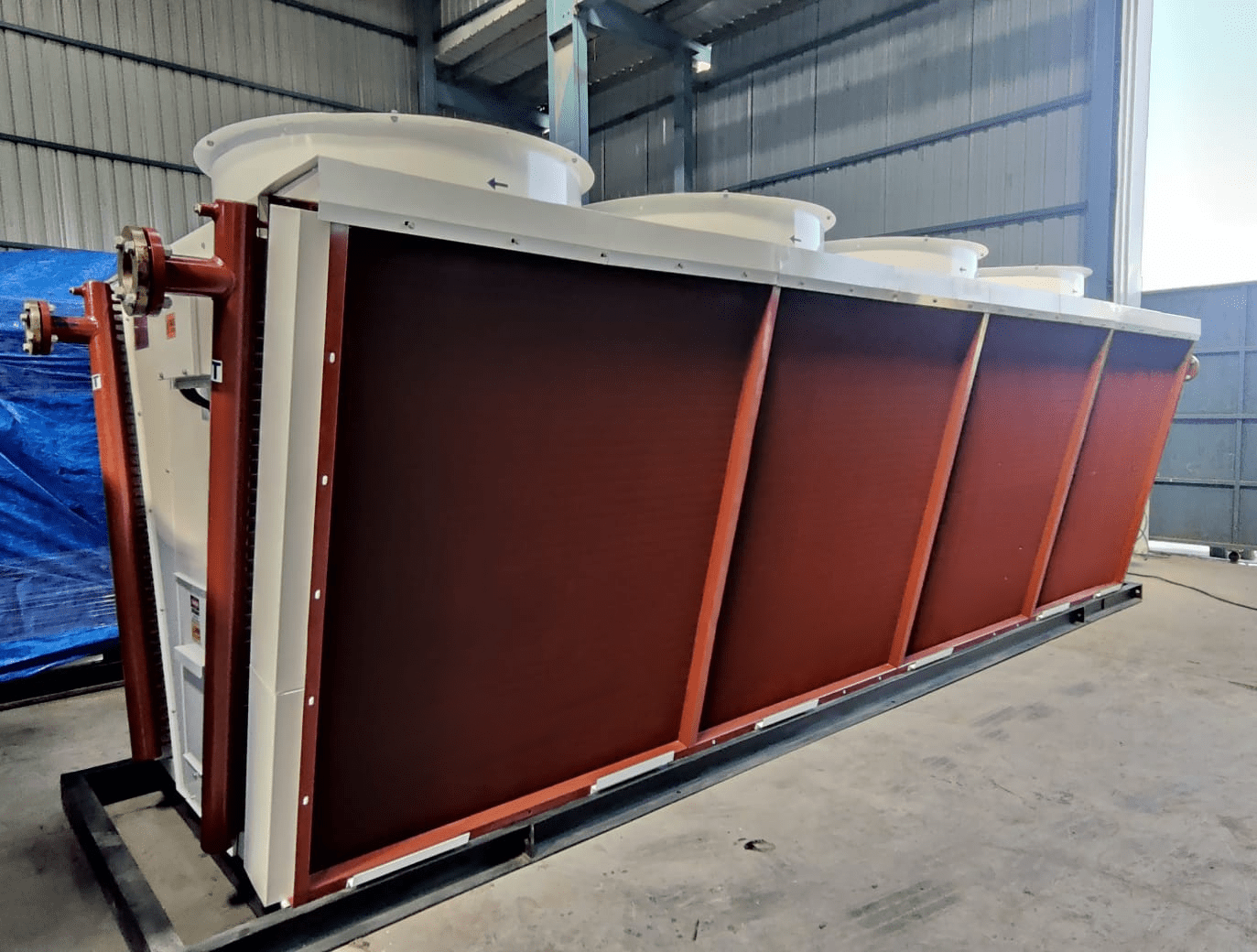
The forced-draft configuration provides the simplest and most convenient fan arrangement. With all blower components located below the tube bundle, they are easily accessible for maintenance and are not exposed to the heated air leaving the unit. However, these exchangers are susceptible to hot air recirculation due to the low velocity of the air...
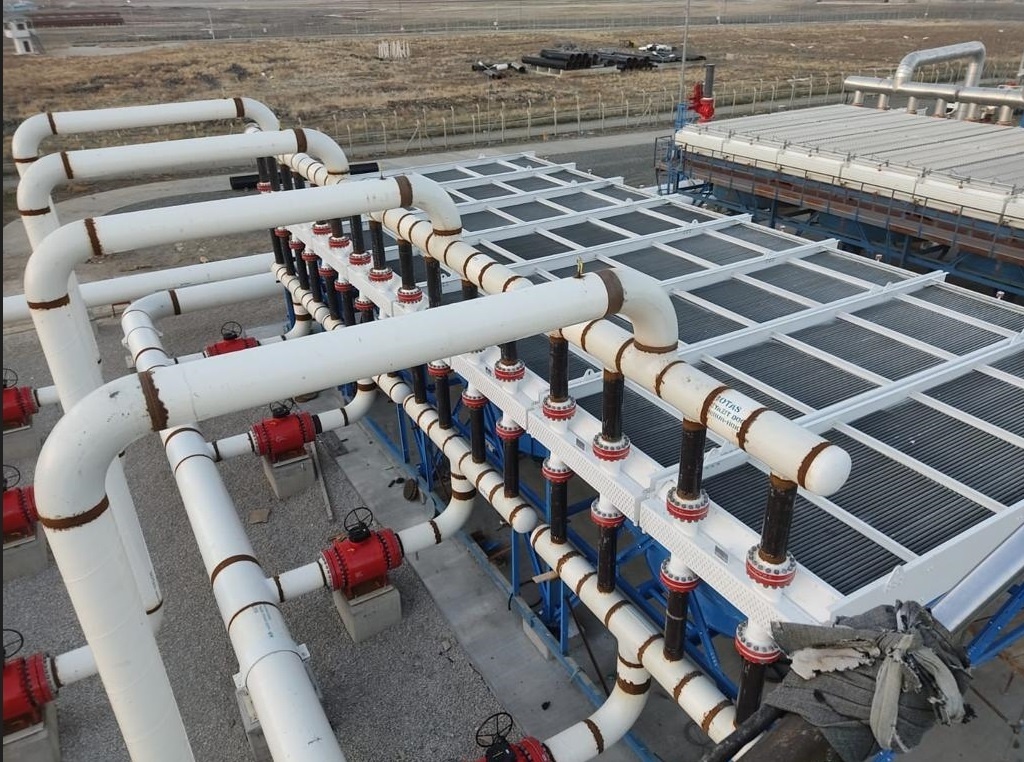
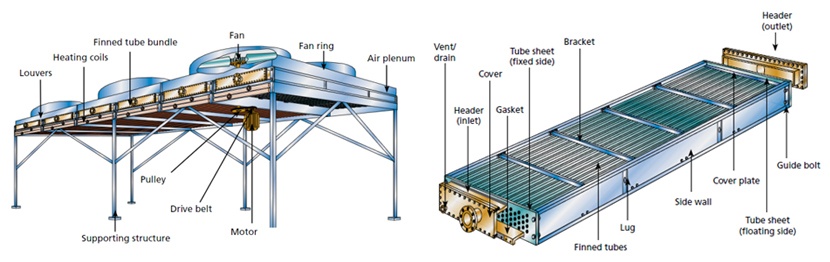
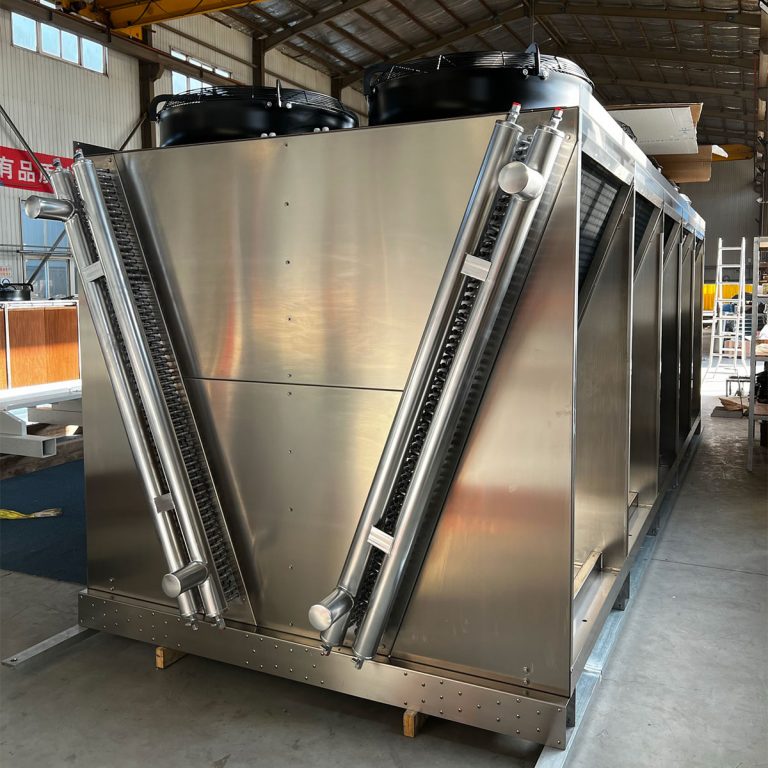
In an air-cooled heat exchanger, the hot process fluid flows through a bank of finned tubes, and ambient air is blown across the tubes by one or more axial-flow fans. For applications involving only sensible heat transfer, the tubes are oriented horizontally For condensers, an A-frame configuration (as shown in Figure) is often used,...
Air cooled heat exchangers are used to transfer heat from a process fluid to ambient air. The process fluid is contained within heat conducting tubes. Atmospheric air, which serves as the coolant, is caused to flow perpendicularly across the tubes in order to remove heat. In a typical air-cooled heat exchanger, the ambient air is […]
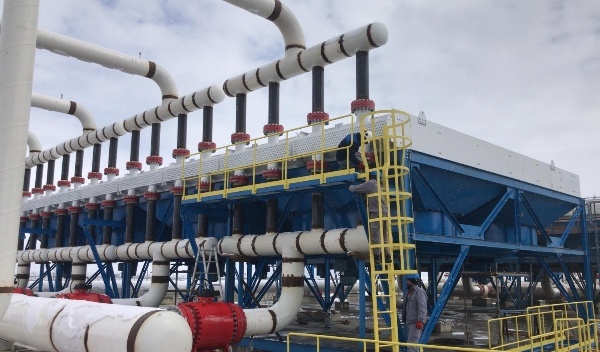
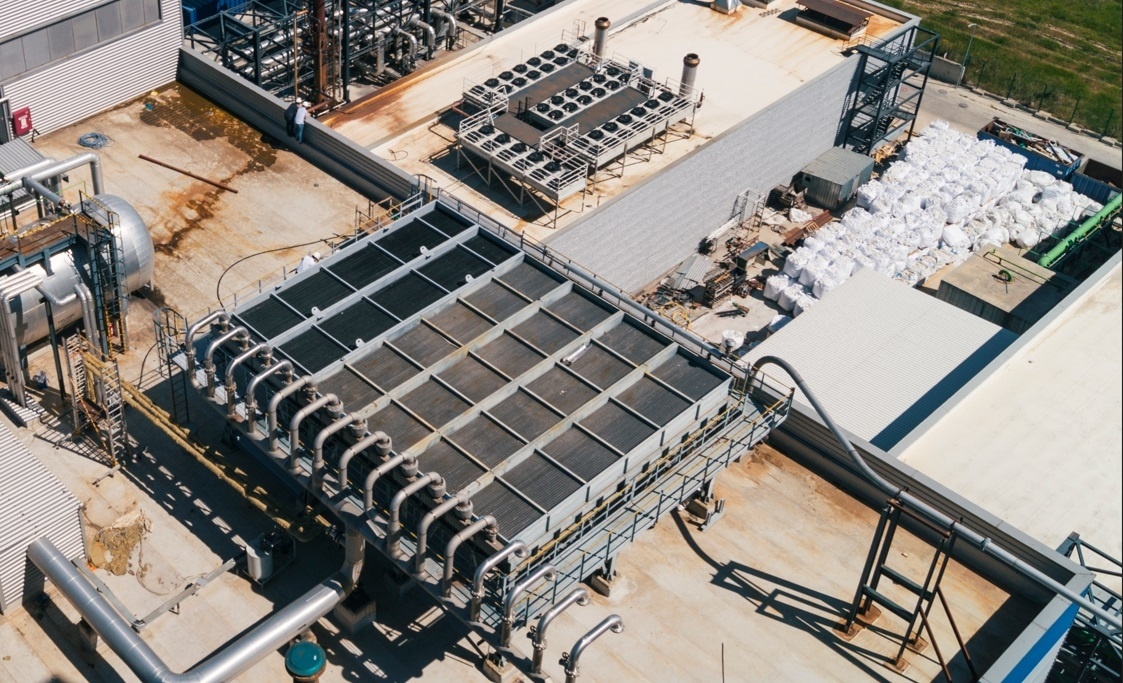
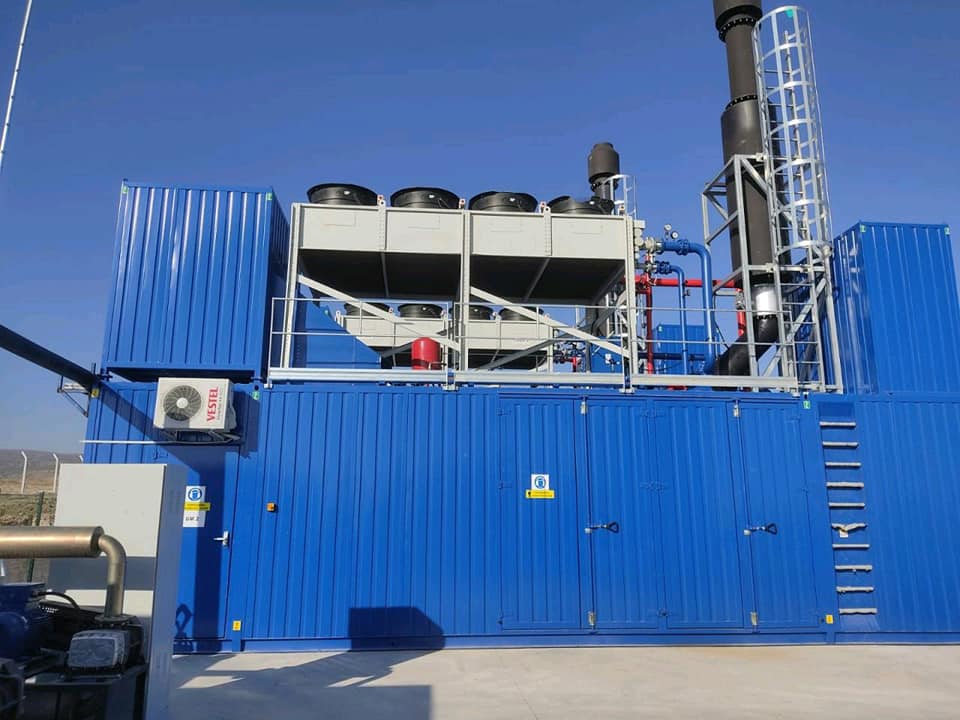
An air-cooled exchanger (ACHE) is used to cool fluids with ambient air. Air-cooled heat exchangers are second only to shell-and-tube exchangers in frequency of occurrence in chemical and petroleum processing operations. These units are used to cool and/or condense process streams with ambient air as the cooling medium rather than water. Cooling...
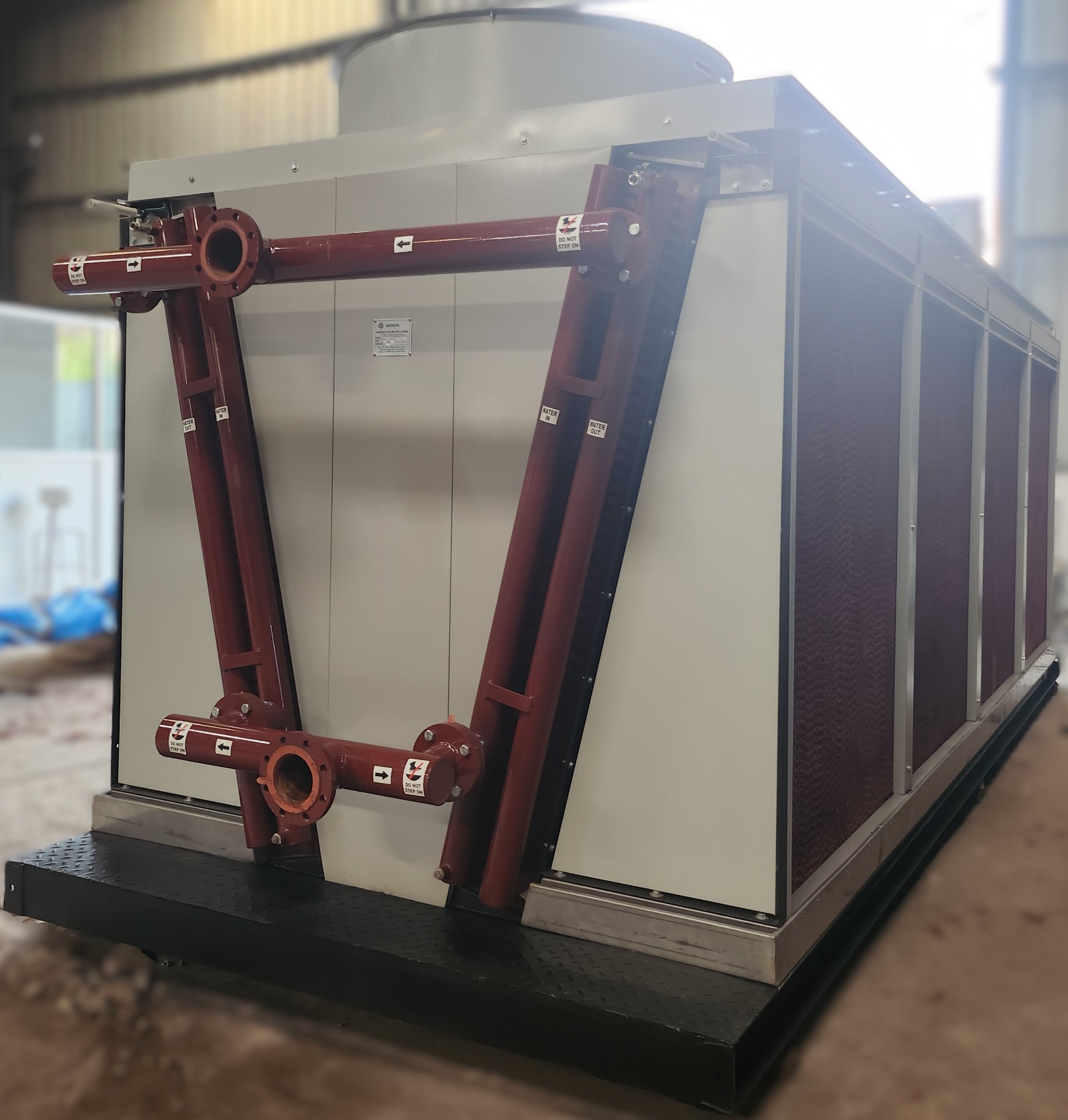
A dry cooler is a type of heat exchanger that uses ambient air to cool a fluid, typically water or glycol, without direct contact between the fluid and the air. It relies on convection and conduction to transfer heat from the fluid to the air, which is then expelled into the atmosphere. Dry coolers are commonly used in […]
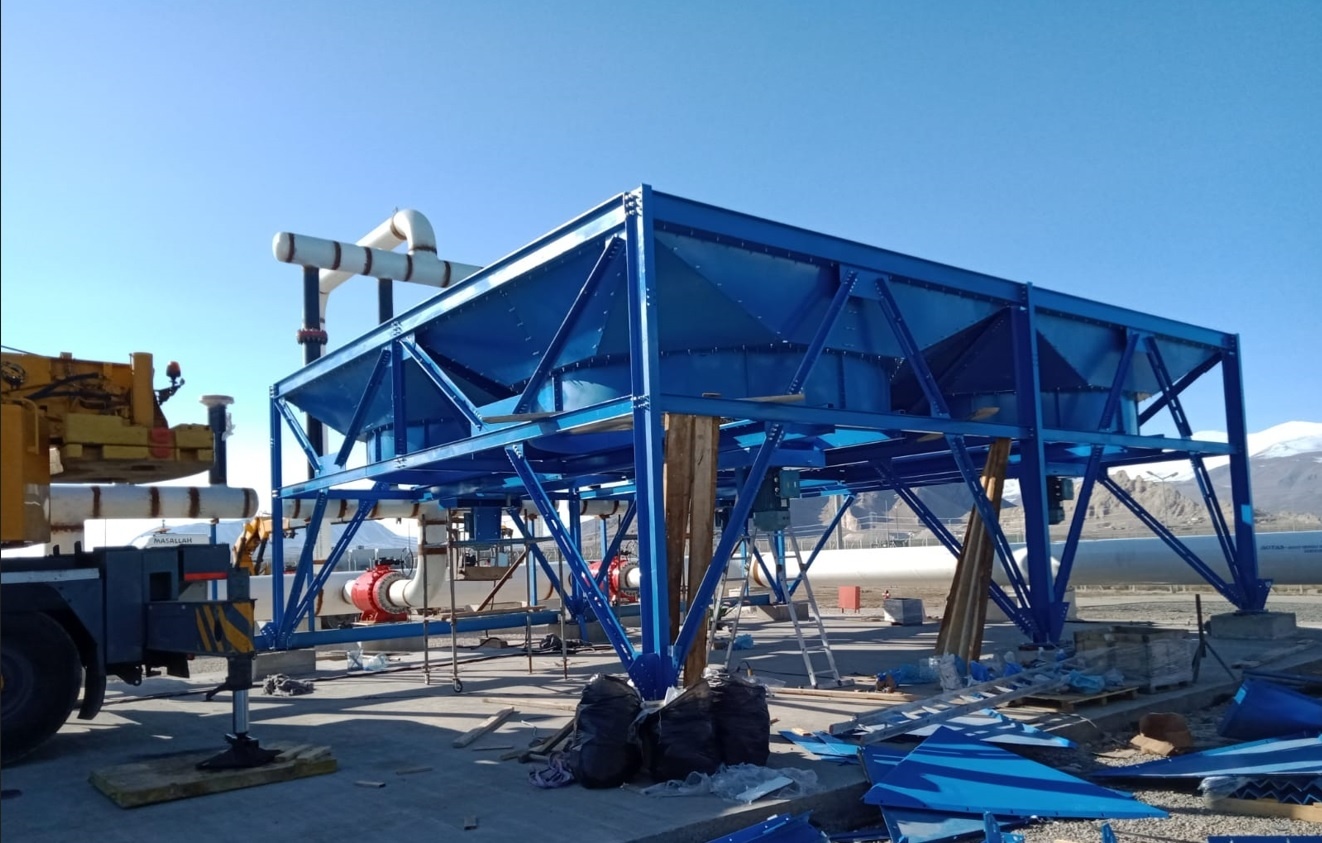
wo general classifications of air-cooler fans are: a) forced draft type where air is pushed across the tube bundle; b) induced draft type where air is pulled through the bundle Forced draft should be selected for all normal applications. Amongst other reasons, the accessibility of fans, actuators and drivers is much better for maintenance and...
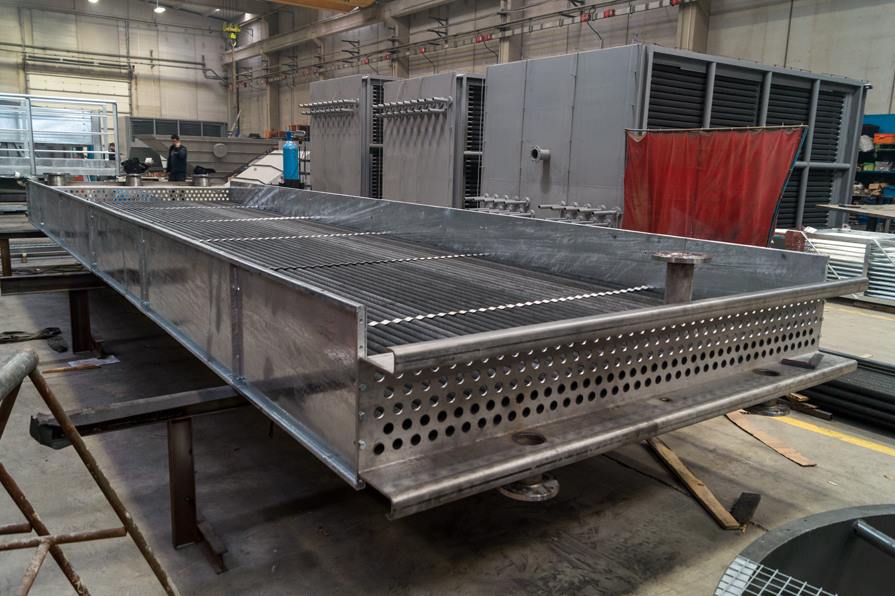
Air cooled exchangers are usually composed of rectangular bundles containing several rows of tubes on a triangular pitch. Heat transfer is generally counter current, the hot fluid entering the top of the bundle and air flowing vertically upward through the bundle. Since air is a universal coolant, there are numerous applications where economic and...
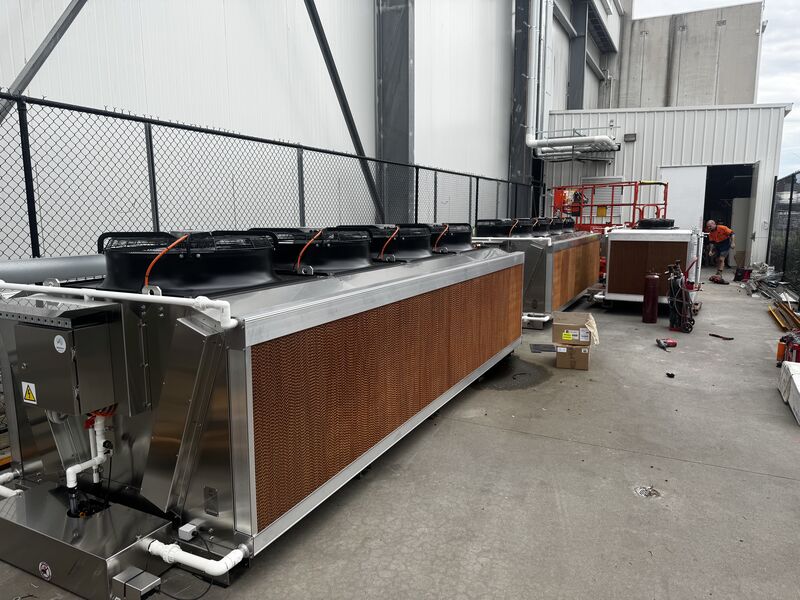
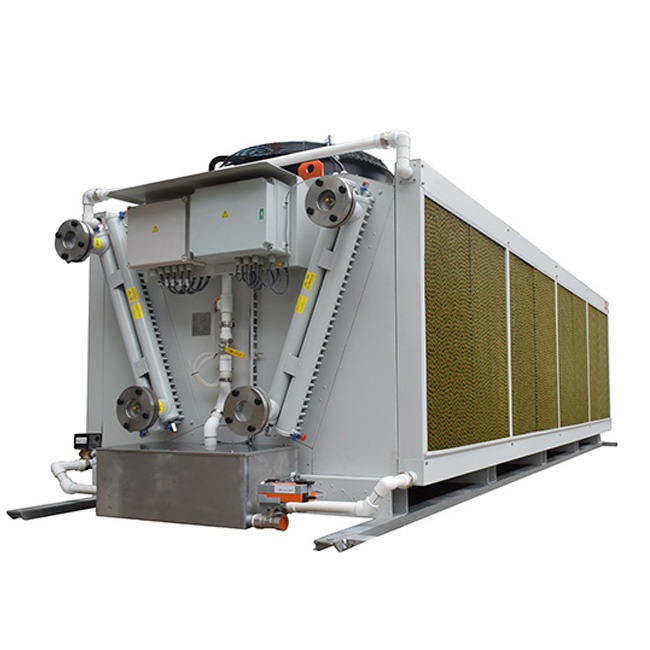
Adiabatic cooling systems have proven to be flexible enough to have established them as a crucial solution in various sectors, especially situations that demand precise temperature control. Waterman Engineers Australia designed their adiabatic coolers with the tight specifications of data centres, manufacturing, food processing, and HVAC industries...
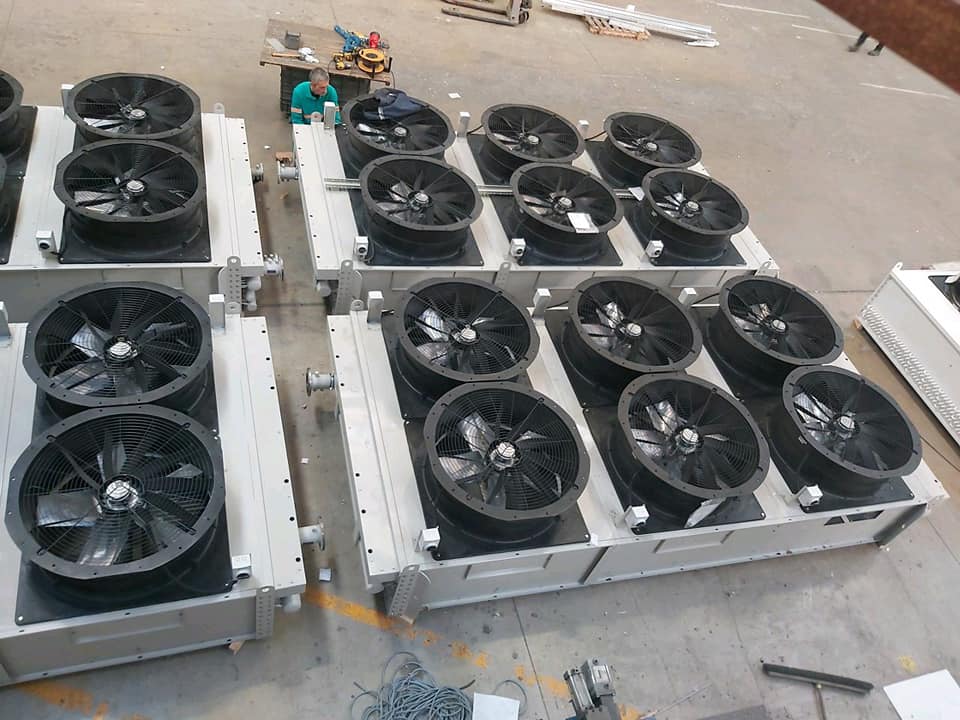
Ø Generally operating cost for Air Cooled Heat Exchanger (ACHE) is less than the same of water-cooled heat exchanger (WCHE). Operating cost of WCHE includes cost of make-up water for the cooling water, power required for the cooling tower fans and for the circulating pump, cooling tower maintenance, etc. while operating cost of ACHE includes...
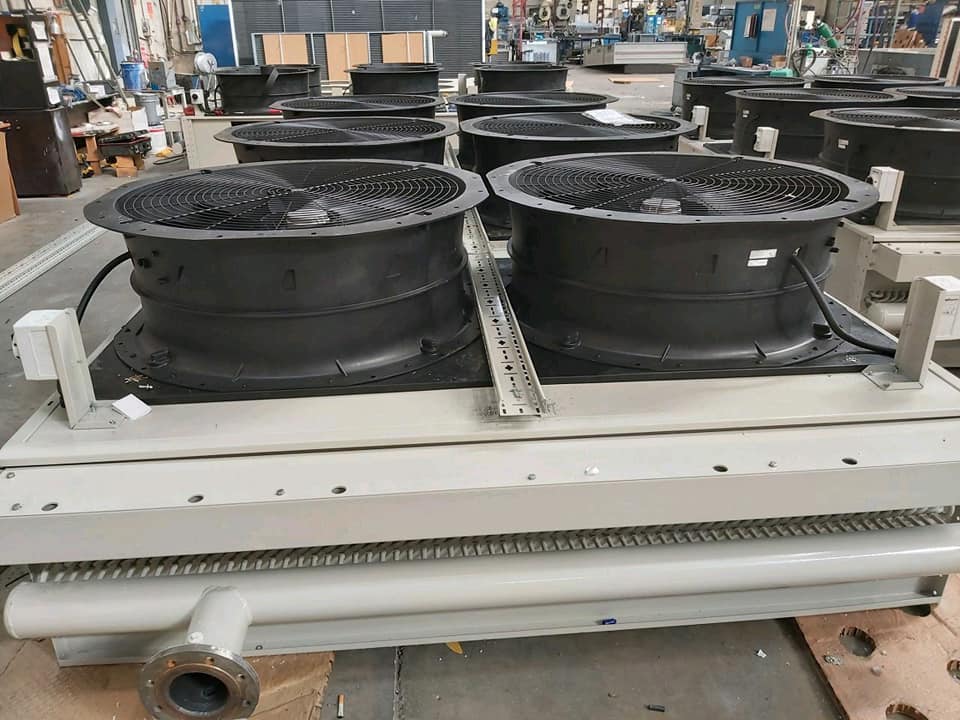
Air-cooled heat exchangers are designed to operate over a wide range of environmental conditions, including ambient temperatures from −600F to 1300F. Special design features are employed for operation in cold climates in order to prevent freezing of the process fluid. If the wall temperature of a tube carrying a hydrocarbon stream reaches the...
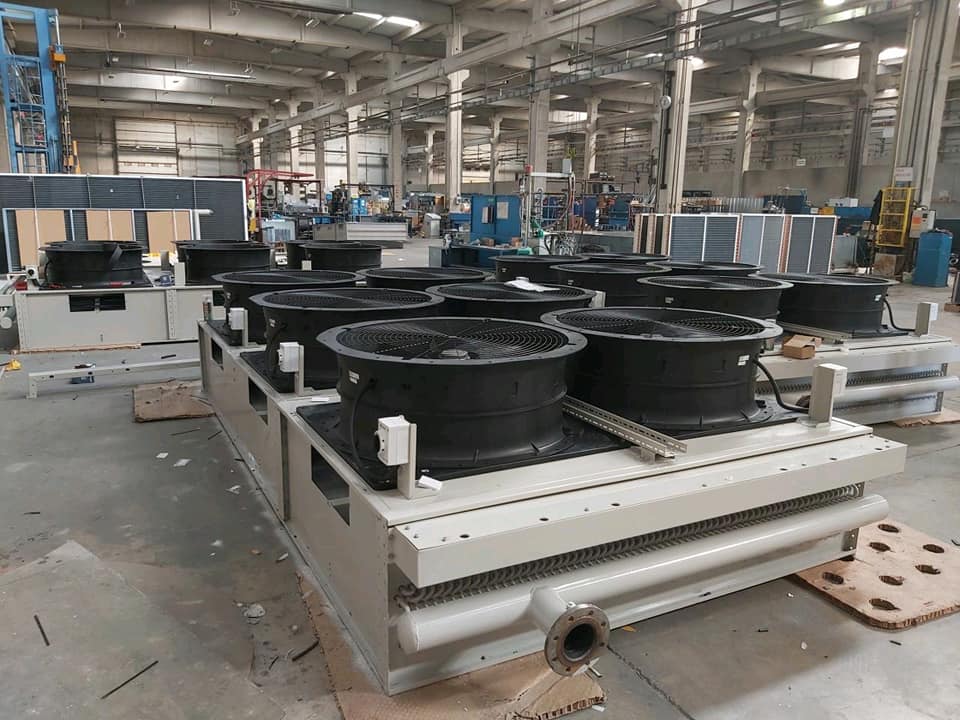
Air-cooled heal exchangers represent a growing segment of equipment being applied in the heat transfer field. It is quite common, these days, for air-cooled heat exchangers to handle more than half the heat dissipation load in a refinery or petrochemical plant. This rapid growth has occurred because of certain advantages inherent in air-cooled heat...
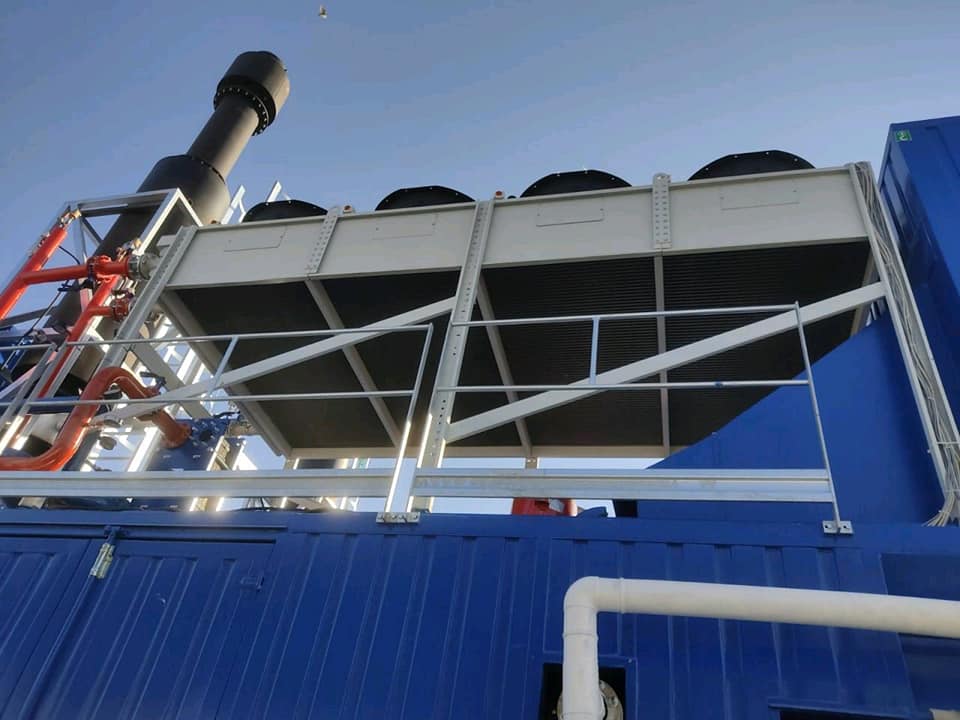
A standard dry cooler works through a simple principle: the fluid to be cooled (usually water or water and glycol) is pumped through a series of pipes inside a unit. Outside air is forced through fins adjacent to the pipes, absorbing heat from the fluid and cooling it A dry cooler is a cooling device […]
The economic life of the cooling unit depends on the selection of materials that are appropriate for the operating conditions. The cooling coil within the unit in particular must be manufactured in conformity with industrial specifications. Properties of the Cooling Coil Cooling coils must be manufactured in conformance to the SEP (Sound...
Adiabatic Coolers – Advantages Next to cooling towers adiabatic coolers offer the next most efficient means of cooling water § Smaller plan area than a dry cooler § Lower power consumption than a dry cooler § Noise levels lower than a dry cooler § No water loss from system § Water consumption significantly lower than […]
There are various designs of Adiabatic or hybrid cooler, which are basically dry coolers that have a spray or water trickle system to precool the air prior to it reaching the coil through which the cooling water flows. Precooling of the air is only required at higher ambient temperatures so for much of the time […]
Dry Coolers – Advantages § No problem with legionella the system is completely closed § Zero water loss ideal where water is scarce § Can be installed in a variety of configurations § Require very little water treatment
Dry coolers cool by sensible cooling only. Heat is conducted to the air from the surface of a finned coil through which the cooling water flows. They are able to cool the water to within 3 deg C of the dry bulb temperature which for typical UK summer design conditions means that minimum cold-water temperatures […]
A dry cooler is essentially a fluid cooler that uses air, a relatively dry, non-liquid fluid, to accomplish deg Celsius cooling. Fluid coolers more accurately refer to cooling equipment that uses fluids (liquid or gas) to regulate pre deg Celsius temperatures
The plant layout designer, with input from the design engineers, determines the piping layout using common sense, his or her knowledge of how the plant operates and the way the equipment is maintained, and certain general principles to arrive at an optimum configuration that meets the client’s requirements, standards, and specifications. The...
Material selection is made on the basis of design conditions, most notably temperature and pressure. Additional guidelines for material selection include economics, availability, properties, code rules, and corrosive properties of the contents. These guidelines may dictate the use of alternate materials if the first choice is not available at a...
Thermohydraulic of air-cooled heat exchanger In a dry cooling system, the hot fluid flows inside the heat exchanger tubes while the ambient air flows outside the tubes. Because the air-side heat transfer coefficient is much lower than that of the hot fluid inside the tubes, the surface area of the heat exchanger has to be...
Air-cooled heat exchangers also known as fin fan heat exchangers are typically used in applications where water is not available or the desired pre deg Cess outlet temperature can be achieved given the maximum ambient temperatures. Ambient air is used as the cooling media to cool hot fluids flowing through finned tubes. Air-cooled...