
Inside the Efficiency Machine: Key Components of FRP Cooling Towers
Fiberglass Reinforced Plastic (FRP) Cooling Towers are the modern standard for heat rejection in commercial and industrial applications. Prized for their superior corrosion resistance, lightweight nature, and long service life, these towers are critical for maximizing the efficiency of chillers, air compressors, and industrial processes. Understanding the individual FRP cooling tower components is key to proper maintenance and optimal performance.
The Core Elements of an FRP Cooling Towers
An FRP cooling tower is essentially an engineered system designed to facilitate maximum contact between hot water and cool air through evaporation. Here are the major components that make this process possible:
1. The Structure and Casing (FRP Body)
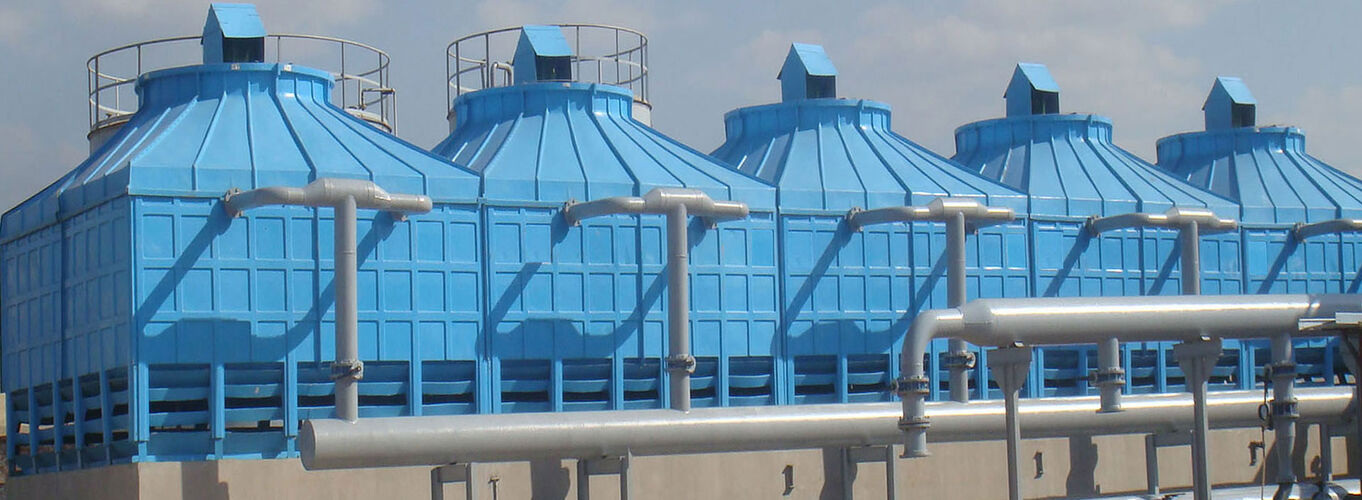
The most distinguishing part is the body itself, constructed from FRP (Fiber-Reinforced Plastic). This material is chosen because it is highly resistant to waterborne chemicals, corrosion, and UV radiation, ensuring the tower can withstand harsh operating environments without rusting or deteriorating—a major advantage over older steel or wooden towers. The FRP casing and frame provide the robust, leak-proof structure for the entire system.
2. Fills: The Heat Transfer Zone
The cooling tower fills are arguably the most crucial component for thermal performance. Typically made from PVC or polypropylene, these elements break the hot water into thin films (film fills) or small droplets (splash fills), vastly increasing the water’s surface area. This maximization of contact allows air to efficiently absorb heat, driving the evaporation process and rapidly cooling the water.
3. Drift Eliminators
As air passes through the fill, small water droplets (drift) can be carried out with the exhaust air. Drift eliminators are designed to capture these droplets. Located above the fill, they force the air to make several sudden directional changes, causing the water particles to separate and fall back into the basin. This component is vital for minimizing water loss and reducing the spread of chemicals outside the tower.
4. Fan Assembly and Motor
The cooling tower fan (often propeller or axial flow) is responsible for creating the necessary airflow (induced draft) through the tower. The fan and its motor—which may be connected via a gearbox or drive shaft—must be durable and weatherproof. The efficiency of the fan system directly impacts the tower’s overall power consumption and cooling capacity.
5. Water Distribution System
This system, which includes headers, nozzles, or rotary sprinklers (in round towers), is responsible for evenly spreading the hot condenser water over the fills. Uniform distribution is paramount; poor water coverage leads to dry spots and reduced thermal efficiency.
By investing in high-quality FRP cooling towers components and regular maintenance, you ensure your industrial cooling system delivers reliable, energy-efficient performance for years to come.