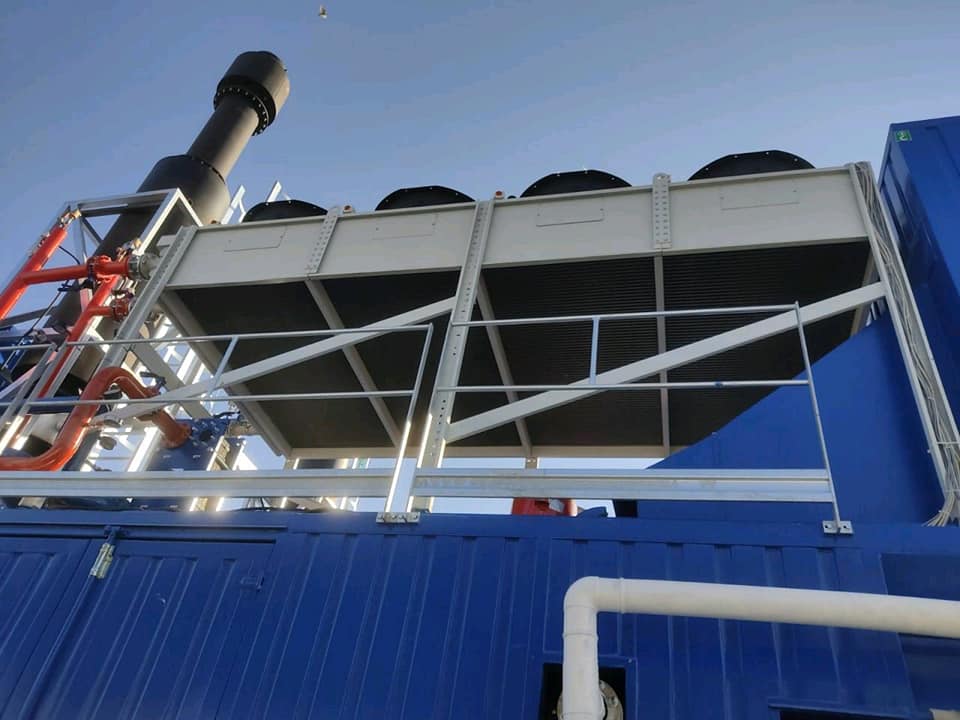
Advantages of Induced Draft of intake, or about 1500 ft/min. Increased capacity in the event of fan failure, since the natural draft stack effect is much greater with induced draft
For a given mass flow rate of air, induced-draft operation in principle entails greater power consumption than forced-draft operation due to the higher volumetric flow rate of the heated air that is handled by the induced-draft fan. In practice, however, this potential disadvantage tends to be offset by the more uniform flow distribution and lower...
The forced-draft configuration provides the simplest and most convenient fan arrangement. With all blower components located below the tube bundle, they are easily accessible for maintenance and are not exposed to the heated air leaving the unit. However, these exchangers are susceptible to hot air recirculation due to the low velocity of the air...
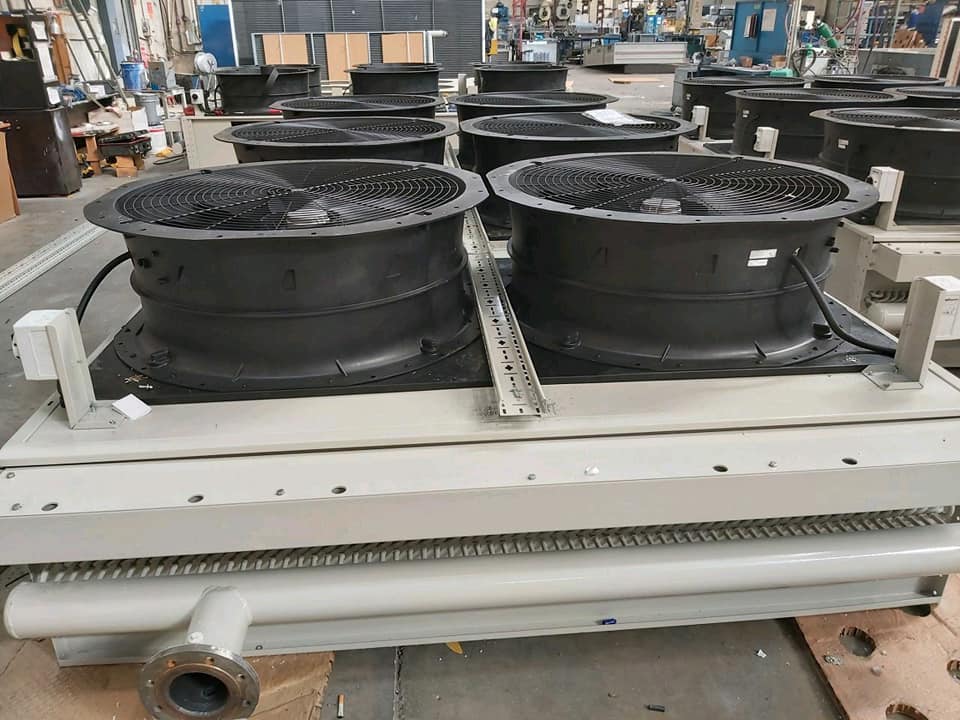
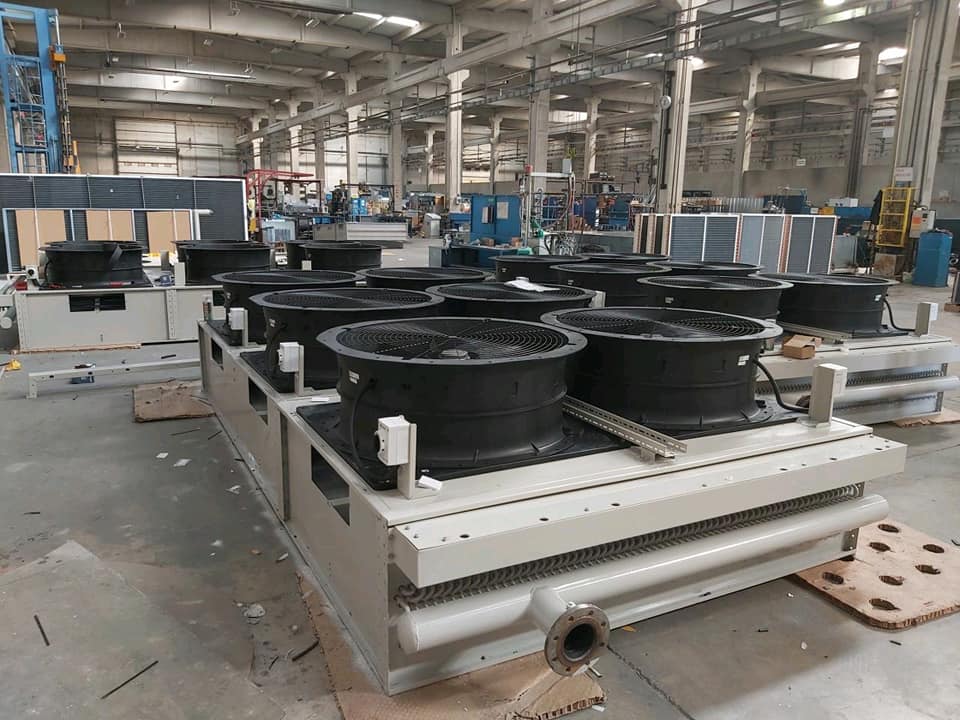
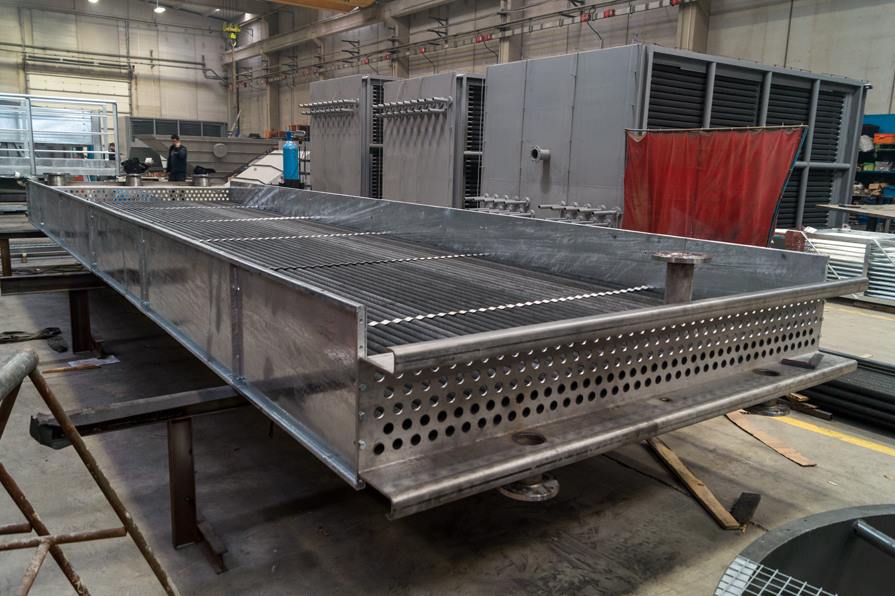
In an air-cooled heat exchanger, the hot process fluid flows through a bank of finned tubes, and ambient air is blown across the tubes by one or more axial-flow fans. For applications involving only sensible heat transfer, the tubes are oriented horizontally For condensers, an A-frame configuration (as shown in Figure) is often used,...
Air cooled heat exchangers are used to transfer heat from a process fluid to ambient air. The process fluid is contained within heat conducting tubes. Atmospheric air, which serves as the coolant, is caused to flow perpendicularly across the tubes in order to remove heat. In a typical air-cooled heat exchanger, the ambient air is […]